Your ticket to an open-source playground of real-world robotics & AI — for fun, learning & experiments — made accessible with OpenCat
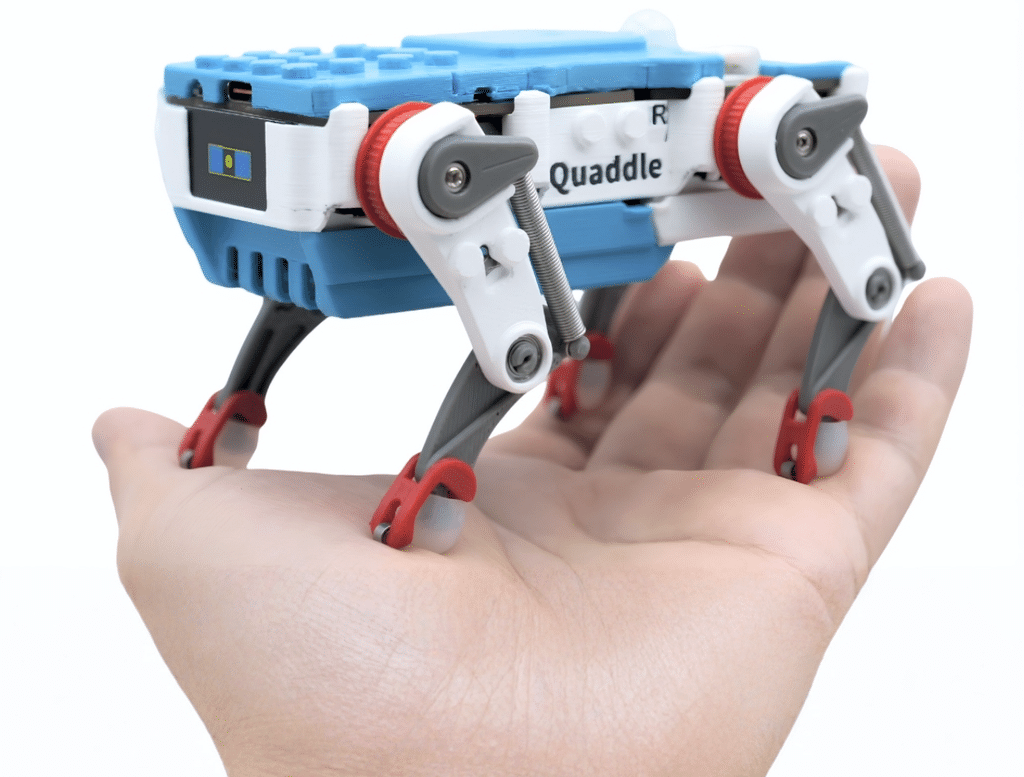
Quaddle is the next robot to democratize access to robotics and physical AI — a palm-sized quadruped that:
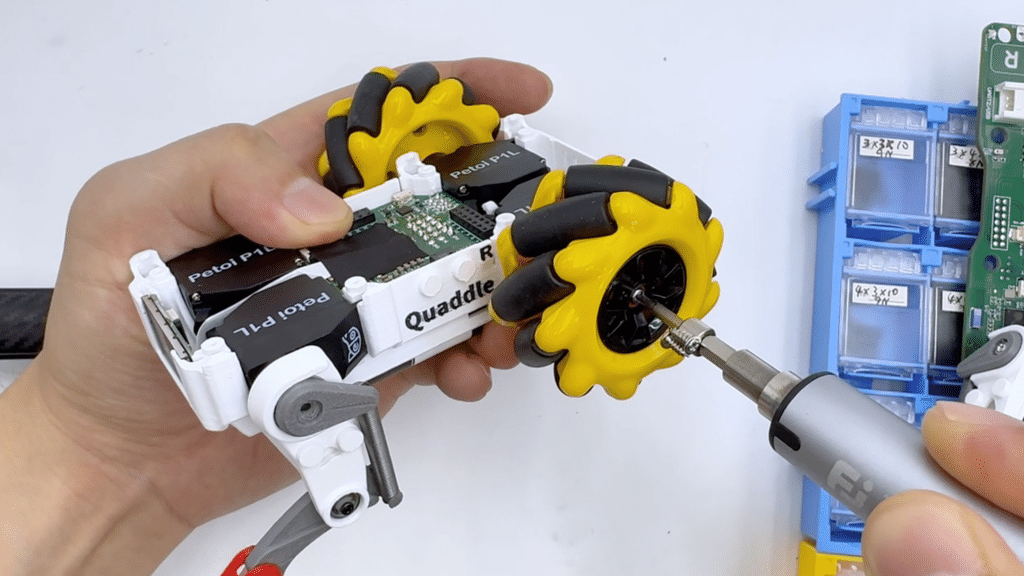
- assembles with only 4 screws in under 20 minutes
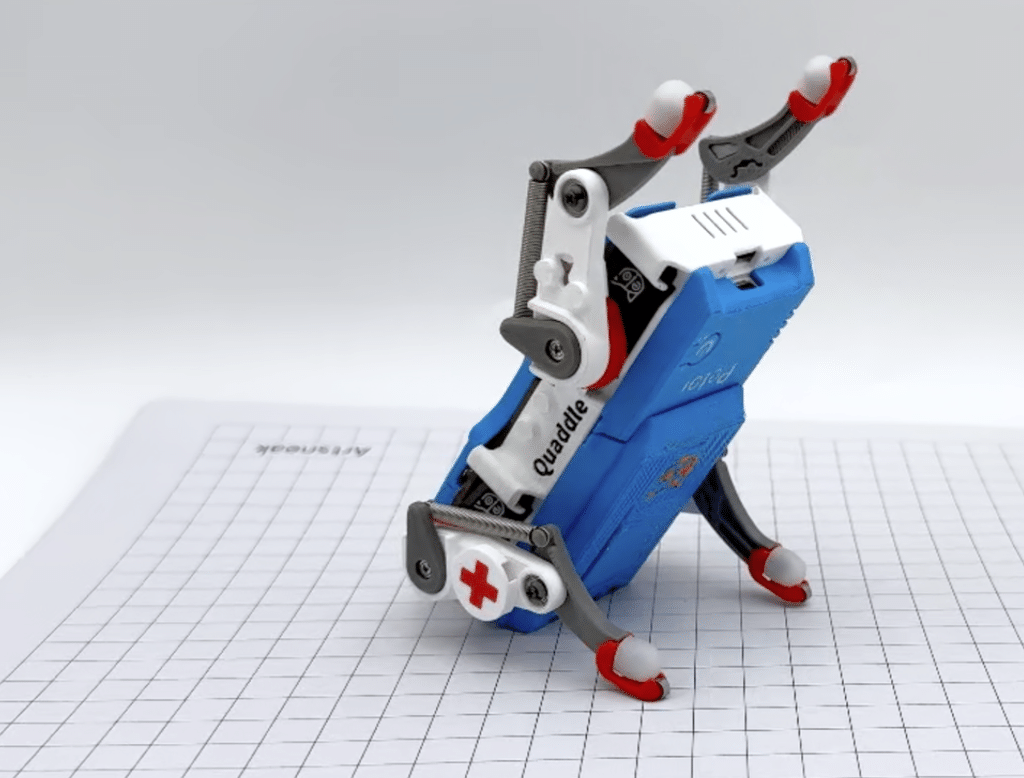
- walks, flips, skates, and reacts
- lets you teach it a new trick in seconds with no code
- is a companion in learning robotics, coding & physical AI
Starting at $109, it’s the most accessible legged physical AI kit available — nothing else in this category comes close. It’s also a versatile robot that moves like something alive, not something mechanical or just on wheels.
A real answer to physical AI’s accessibility problem, no matter who wins the „GPT moment“ race. The industry is debating which frontier AI model or world model will produce robotics‘ „GPT moment.“ Quaddle doesn’t claim to answer that. What it addresses is a narrower, separate problem: almost nobody can actually touch a real robot outside a toy aisle.
- Quaddle closes that gap directly: an affordable, playful robot you can actually own, not just watch
- Once it’s on your desk, Petoi’s own APIs let anyone vibe-code new robot behaviors — no embedded-systems background, no touching firmware internals required
- AI-assisted „vibe coding“ can even reach into the open firmware itself for those who want to go deeper — it took as little as 15 minutes for Quaddle’s own mood-expression feature
There’s already something on a desk people can pick up and try for themselves today.
Goal: $50,000 — achieved in the first two days. Delivery: targeting early December 2026 — in time for Christmas. Current funding progress: see the live Kickstarter page.
Who Quaddle is for
Primarily an educational robotics & physical AI platform, built around students, makers, educators, and researchers who want to build on it and customize it, not just watch it.
| Audience | Why Quaddle fits |
|---|---|
| Students (8+) & young builders | Block-to-Python-to-C++ coding path grows with them; Learn & Replay gives an instant, no-code first win |
| Makers & hobbyists | Open OpenCat platform, LEGO-compatible mounting, feedback servos you can read and reprogram — not a sealed toy |
| K-12 & university educators | Classroom-ready without depending on Wi-Fi; a two-level path from AI-assisted prompts to hands-on robotics |
| Researchers & developers | URDF (the robot’s 3D description file, used to load it into a simulator) is published and portable to standard simulators (Gazebo, PyBullet, Isaac Sim) for sim-to-real and reinforcement-learning work |
| Gift buyers | Price and Deskpet/companion appeal make it approachable even without a robotics background |
Quaddle is already in production and shipping on the stated timeline — no months-long wait.
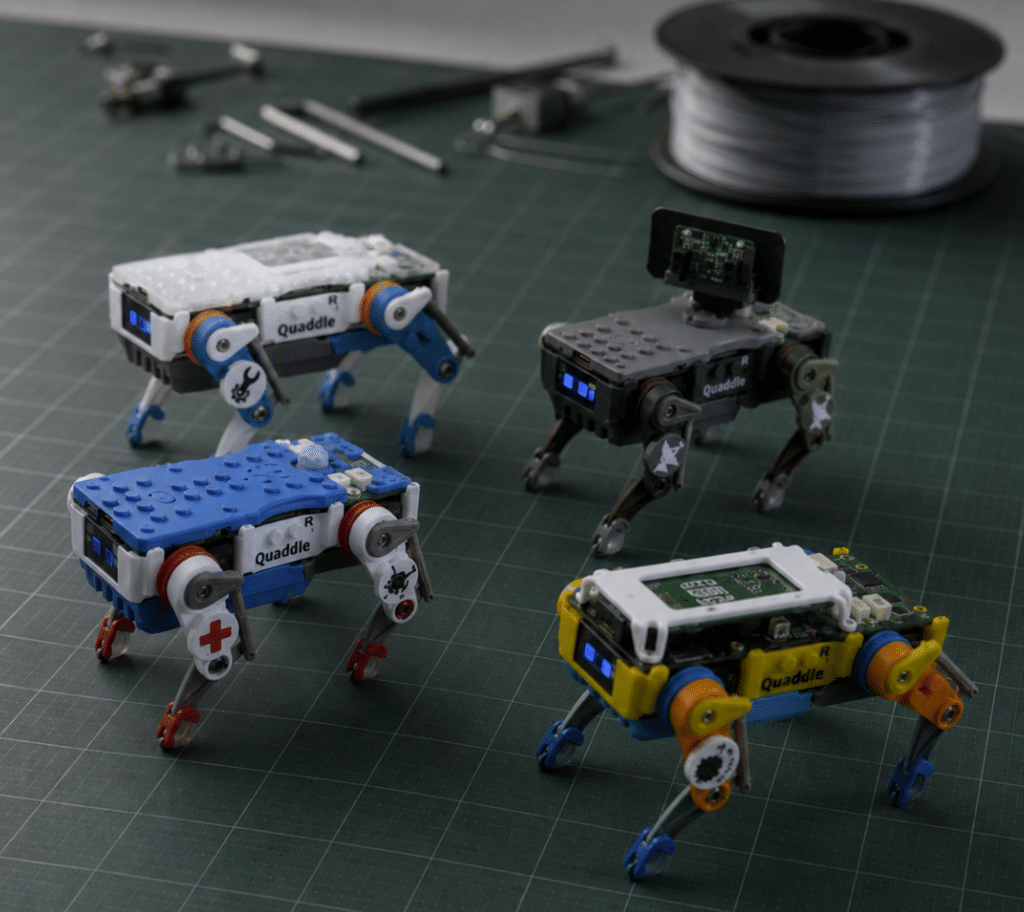
Petoi also invites the community to help design the robot itself: anyone can create a custom color scheme at qd.petoi.com and submit it for community voting. Designs with strong support that pass production review may become an official Quaddle colorway, with the designer credited. More on the campaign.
Key features
| Feature | Detail |
|---|---|
| 90+ Lifelike movements | Active balancing, self-righting, forward flips, backflip, skating (slides ~½m), crab walk, three-leg gait |
| Learn & Replay Your Trick (Buddy/Scout) | See „Moments that define Quaddle“ above |
| Voice + AI (Buddy/Scout) | Natural language → motion; cloud LLM, typical <1s latency; locomotion stays local |
| Deskpet mode (Buddy/Scout) | On-desk AI companion: chats, reacts with movements and mood, keeps you company |
| Offline capable | Mobile app, gamepad controller, back touch buttons trigger all signature moves without Wi-Fi |
| Build time | ~15 minutes, snap-fit, swappable battery, Type-C charging |
| Open platform | Full Petoi toolchain (OpenCat, Petoi’s open-source robotics framework), ROS (Robot Operating System, the standard robotics software framework) via Raspberry Pi; compatible with Arduino modules and sensors |
| Customizable | Mood expression, 3D-printable shells, mounts, and accessories (official STL files — load-bearing joints stay injection-molded for durability); LEGO-compatible mounting points for sensors and add-ons |
| Privacy switch | Hardware slide switch fully cuts power to AI module — classroom-safe |
About Petoi
Founder Dr. Rongzhong Li built a robot cat as a personal project in 2016 while a physics lecturer at Wake Forest University, publishing the designs as OpenCat; he founded Petoi LLC in 2017 to commercialize it. Nybble (2018, Indiegogo) and Bittle (2020, Kickstarter — 11x its funding goal) followed. Quaddle is the next generation: more interaction surfaces, richer AI, and roughly half the price of prior flagship tiers.