Moldova Robotics Team Wins FIRST Global Challenge 2026

A team built around students from the rural community of Boșcana helped Moldova secure the tournament title, silver for engineering design and silver for its Ember Mesh wildfire-detection innovation.

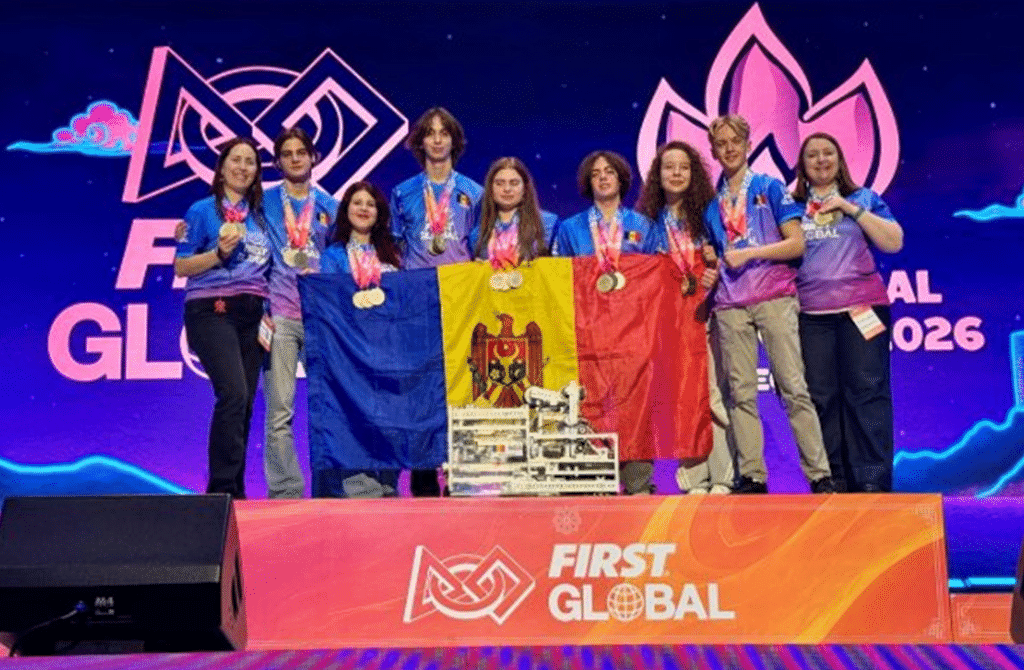
CHIȘINĂU, Moldova — October 12, 2026 — FIRST Global Team Moldova has won the FIRST Global Challenge 2026 in Incheon, Republic of Korea, securing one gold and two silver medals at the international robotics competition bringing together national teams from nearly 190 countries. Moldova won gold as part of the tournament’s winning alliance alongside Uzbekistan, Venezuela and El Salvador, while also earning silver for the engineering design of its robot and silver for its Ember Mesh innovation project.

The Moldovan national team was represented by ENIGMA, a team with its roots in the village of Boșcana, Criuleni district. Four of its five student members — Uliana Vîntu, Gabriel Josan, Valeria Untila and Augustin Leșan — study at the “Mihai Stratulat” Theoretical High School in Boșcana, making a rural school the backbone of Moldova’s national team. Daniel Țanga, from the “Boris Dinga” Theoretical High School in Criuleni, completed the student team. They were mentored by Elena Frunza, from the Boșcana school, and Veronica Eșanu, Coordinator of the National Educational Robotics Program and mentor with the Innovate Moldova Programme. ENIGMA was selected to represent Moldova following its performance at the 2026 FIRST Tech Challenge Moldova National Championship.

To solve contest’s challenge, the team brought their technology concept to the global stage. Ember Mesh is a network of autonomous sensor capsules designed to detect forest fires early beneath the tree canopy, where conventional aerial monitoring can be less effective. The capsules transmit environmental data to a monitoring platform and can be deployed by drones or helicopters in remote and difficult-to-access areas. Designed as an affordable solution that could be deployed by communities internationally, Ember Mesh advanced to the final round of the FIRST Global New Technology Experience and received the silver FIRST Global Innovator Award, finishing among the competition’s leading innovation projects.

The result further strengthens Moldova’s exceptional record at FIRST Global. Moldova entered the 2026 competition at the top of FIRST Global’s all-time gold-medal ranking with eight gold medals; the victory in Incheon brings the country’s tally to nine gold medals. Since joining FIRST Global in 2017, Moldova has won bronze in Mexico in 2018; three gold medals in Dubai in 2019; gold in Geneva in 2022; gold and silver in Singapore in 2023; two gold medals in Athens in 2024; and gold and an honorable mention in Panama in 2025. The 2026 edition adds another gold and two silver medals — the Zhang Heng Award for Engineering Design and the FIRST Global Innovator Award — to that record.

Moldova’s international performance is rooted in more than a decade of investment in educational robotics. Launched in 2014 as the RoboClub pilot, the National Educational Robotics Program has expanded from a handful of participating schools into a nationwide network of more than 270 robotics clubs in schools and libraries, engaging more than 60,000 students in practical STEM learning. The programme gives students hands-on experience in programming, engineering, design, teamwork and problem-solving, creating a pathway from introductory school robotics to advanced national and international competition. The preparation and participation of FIRST Global Team Moldova were supported by the Ministry of Education and Research and the National Agency for Curriculum and Evaluation; the Innovate Moldova Programme, funded by Sweden and the United Kingdom and implemented by the Foundation for Development of the Republic of Moldova; Premier Energy Distribution; the Technical University of Moldova and FabLab Chișinău; and Ozonteh.
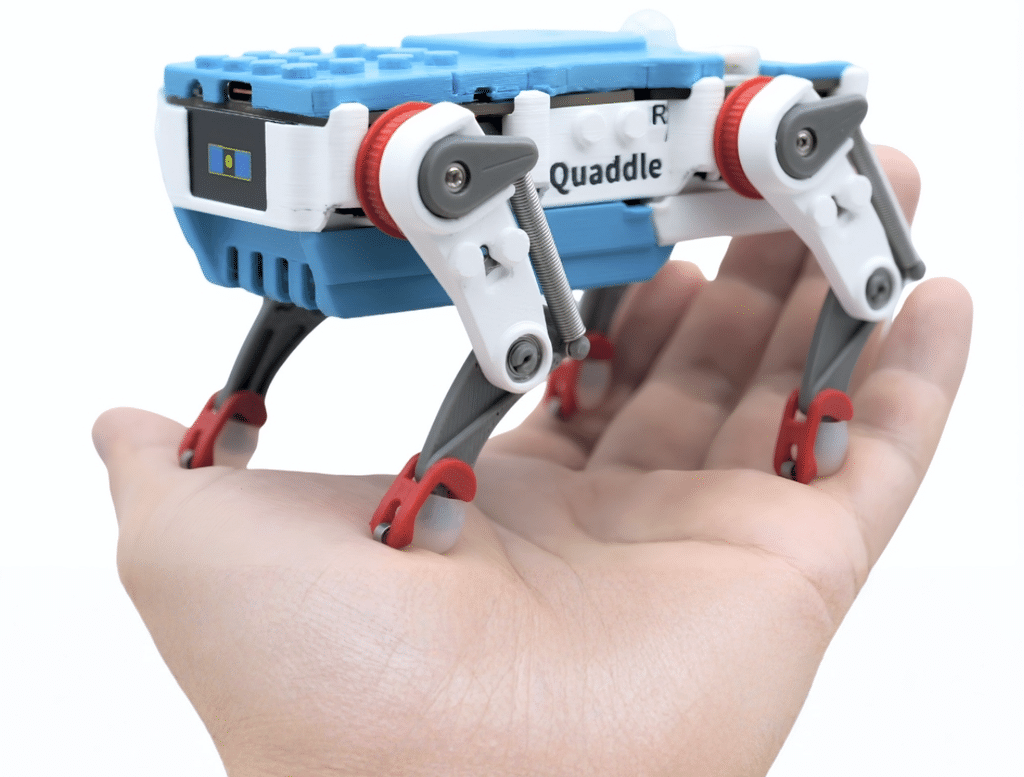
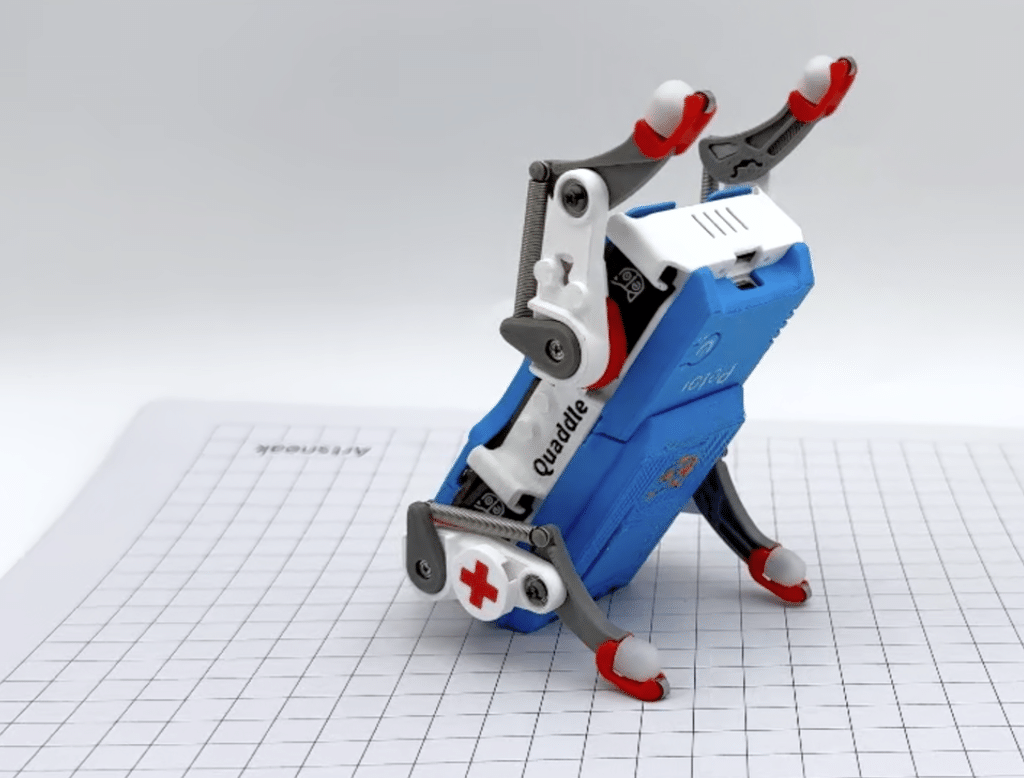
Petoi Quaddle: A Do-It-All Mini Robot Dog for Physical AI

Your ticket to an open-source playground of real-world robotics & AI — for fun, learning & experiments — made accessible with OpenCat

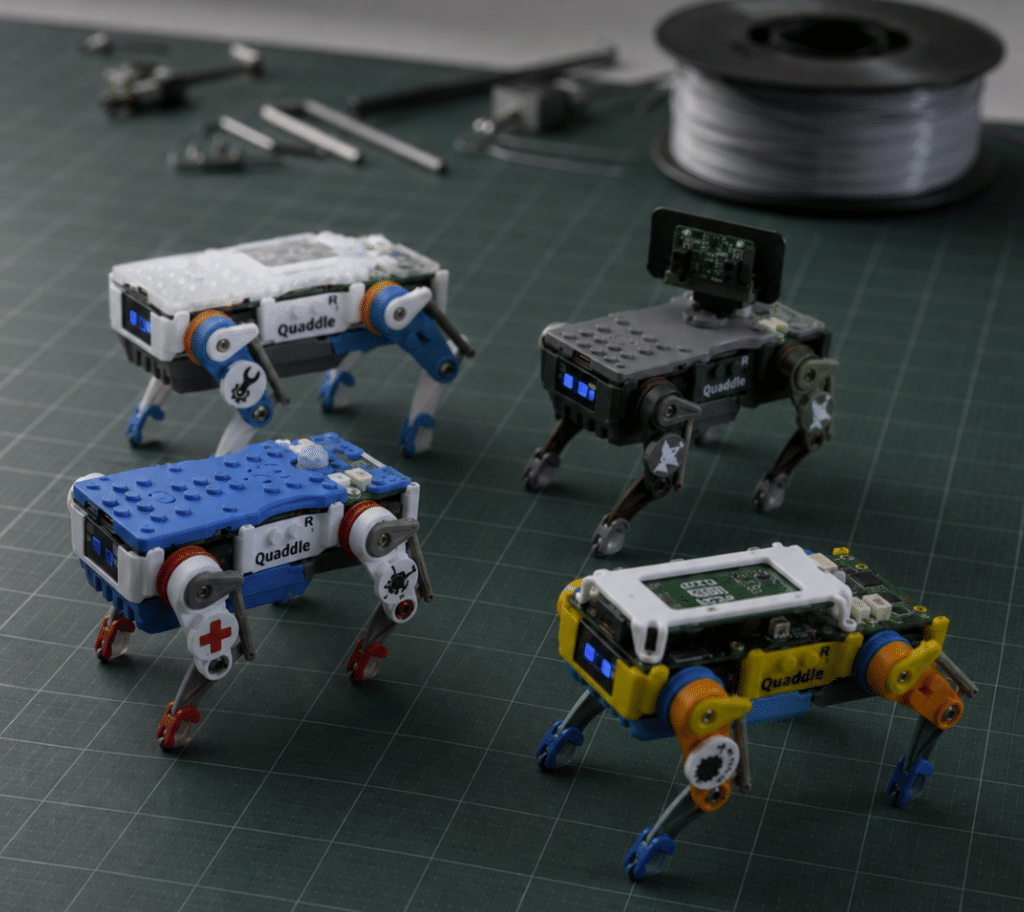
Quaddle is the next robot to democratize access to robotics and physical AI — a palm-sized quadruped that:

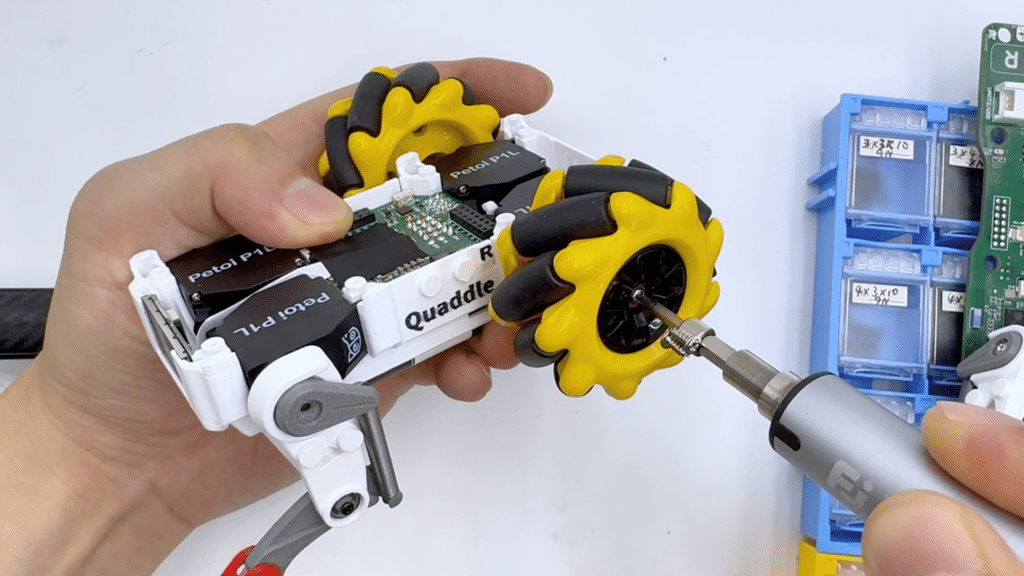
  • assembles with only 4 screws in under 20 minutes
  • walks, flips, skates, and reacts
  • lets you teach it a new trick in seconds with no code
  • is a companion in learning robotics, coding & physical AI

Starting at $109, it’s the most accessible legged physical AI kit available — nothing else in this category comes close. It’s also a versatile robot that moves like something alive, not something mechanical or just on wheels.

A real answer to physical AI’s accessibility problem, no matter who wins the „GPT moment“ race. The industry is debating which frontier AI model or world model will produce robotics‘ „GPT moment.“ Quaddle doesn’t claim to answer that. What it addresses is a narrower, separate problem: almost nobody can actually touch a real robot outside a toy aisle.

  • Quaddle closes that gap directly: an affordable, playful robot you can actually own, not just watch
  • Once it’s on your desk, Petoi’s own APIs let anyone vibe-code new robot behaviors — no embedded-systems background, no touching firmware internals required
  • AI-assisted „vibe coding“ can even reach into the open firmware itself for those who want to go deeper — it took as little as 15 minutes for Quaddle’s own mood-expression feature

There’s already something on a desk people can pick up and try for themselves today.

Goal: $50,000 — achieved in the first two days. Delivery: targeting early December 2026 — in time for Christmas. Current funding progress: see the live Kickstarter page.

Who Quaddle is for

Primarily an educational robotics & physical AI platform, built around students, makers, educators, and researchers who want to build on it and customize it, not just watch it.

AudienceWhy Quaddle fits
Students (8+) & young buildersBlock-to-Python-to-C++ coding path grows with them; Learn & Replay gives an instant, no-code first win
Makers & hobbyistsOpen OpenCat platform, LEGO-compatible mounting, feedback servos you can read and reprogram — not a sealed toy
K-12 & university educatorsClassroom-ready without depending on Wi-Fi; a two-level path from AI-assisted prompts to hands-on robotics
Researchers & developersURDF (the robot’s 3D description file, used to load it into a simulator) is published and portable to standard simulators (Gazebo, PyBullet, Isaac Sim) for sim-to-real and reinforcement-learning work
Gift buyersPrice and Deskpet/companion appeal make it approachable even without a robotics background

Quaddle is already in production and shipping on the stated timeline — no months-long wait.

Petoi also invites the community to help design the robot itself: anyone can create a custom color scheme at qd.petoi.com and submit it for community voting. Designs with strong support that pass production review may become an official Quaddle colorway, with the designer credited. More on the campaign.

Key features

FeatureDetail
90+ Lifelike movementsActive balancing, self-righting, forward flips, backflip, skating (slides ~½m), crab walk, three-leg gait
Learn & Replay Your Trick (Buddy/Scout)See „Moments that define Quaddle“ above
Voice + AI (Buddy/Scout)Natural language → motion; cloud LLM, typical <1s latency; locomotion stays local
Deskpet mode (Buddy/Scout)On-desk AI companion: chats, reacts with movements and mood, keeps you company
Offline capableMobile app, gamepad controller, back touch buttons trigger all signature moves without Wi-Fi
Build time~15 minutes, snap-fit, swappable battery, Type-C charging
Open platformFull Petoi toolchain (OpenCat, Petoi’s open-source robotics framework), ROS (Robot Operating System, the standard robotics software framework) via Raspberry Pi; compatible with Arduino modules and sensors
CustomizableMood expression, 3D-printable shells, mounts, and accessories (official STL files — load-bearing joints stay injection-molded for durability); LEGO-compatible mounting points for sensors and add-ons
Privacy switchHardware slide switch fully cuts power to AI module — classroom-safe

About Petoi

Founder Dr. Rongzhong Li built a robot cat as a personal project in 2016 while a physics lecturer at Wake Forest University, publishing the designs as OpenCat; he founded Petoi LLC in 2017 to commercialize it. Nybble (2018, Indiegogo) and Bittle (2020, Kickstarter — 11x its funding goal) followed. Quaddle is the next generation: more interaction surfaces, richer AI, and roughly half the price of prior flagship tiers.

CircuitMess Launches MAKERphone 2.0 on Kickstarter — a Real 4G Phone You Build Yourself and Code with AI

Eight years after 2,154 backers soldered together the original DIY phone, CircuitMess returns with a sequel anyone can assemble in about two hours — and program in plain English, Python, or C++.

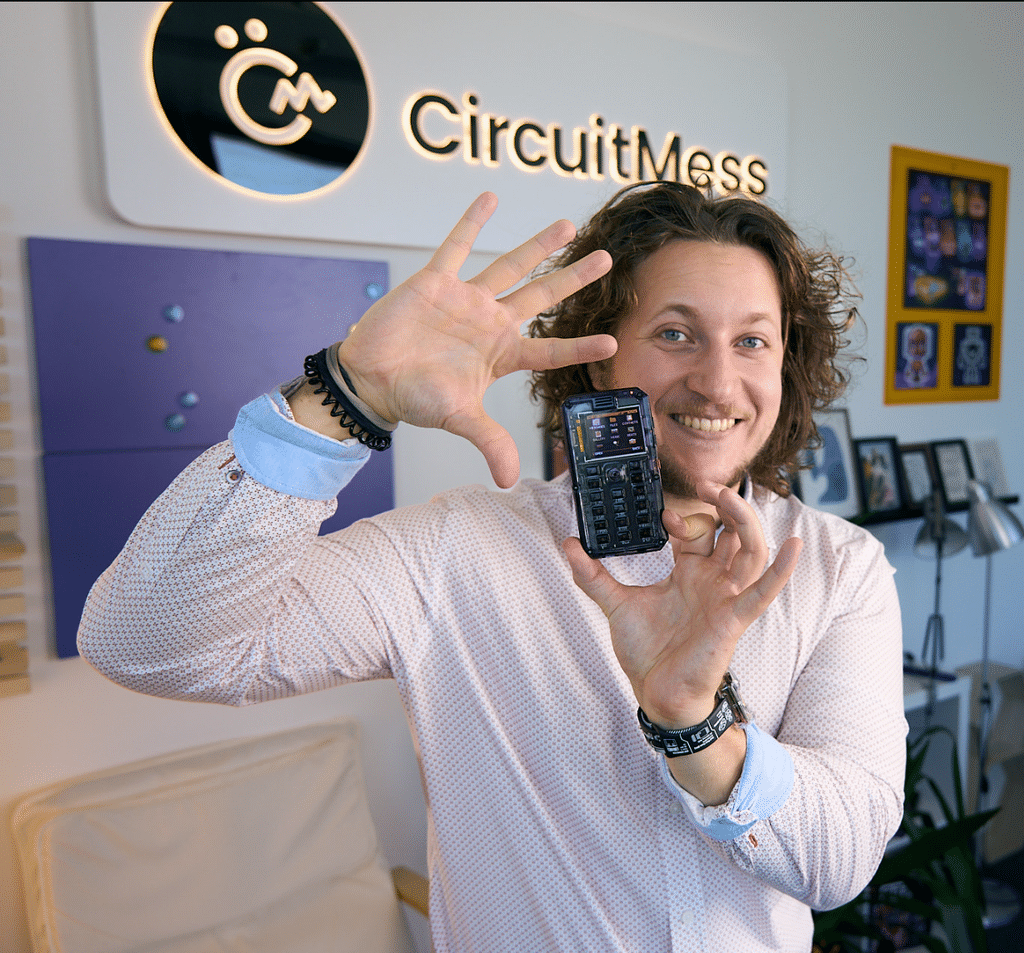
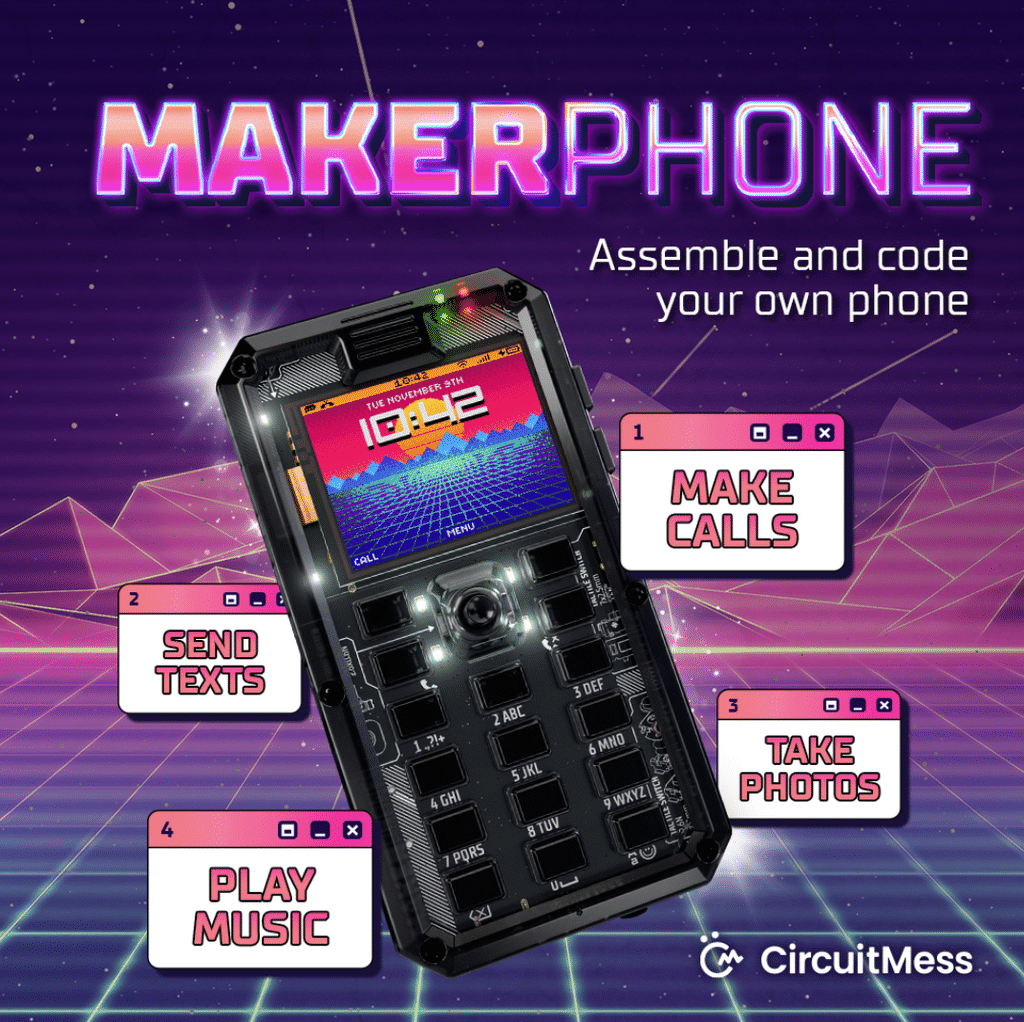
Middletown, Delaware, USA — September 10th, 2026 — CircuitMess today launched its Kickstarter campaign for MAKERphone 2.0, a fully functional 4G mobile phone that arrives in pieces. Builders assemble it themselves in about two hours — no soldering and no experience required — insert a nano-SIM, and it makes real calls and sends real texts on live cellular networks. Then comes the part no other phone offers: its owner programs it, starting by describing ideas in plain English in VibeBoy, CircuitMess’s AI-assisted coding studio, and progressing to real Python and C++.

From Seven Hours of Soldering to a Two-Hour Build

The original MAKERphone, launched on Kickstarter in 2018, asked backers to spend roughly seven hours with a soldering iron — and 2,154 of them did. Eight years and feedback from more than 6,000 MAKERphone users later, MAKERphone 2.0 keeps the build-it-yourself soul and removes the barriers: every component clicks, screws, or plugs into place, guided by a LEGO-style illustrated manual and video guides. Along the way, builders learn what a phone actually is from the inside out — the processor, the modem, the display, the battery.

A Phone With No Locked Doors

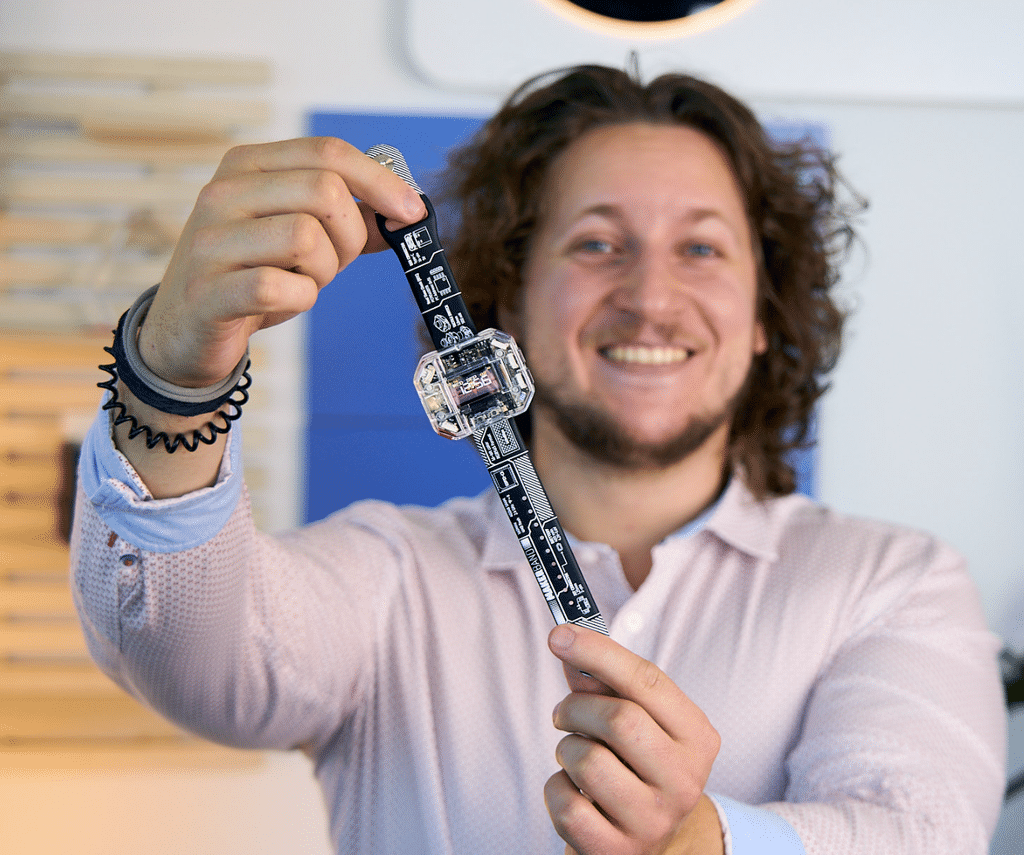
Assembled, MAKERphone 2.0 is a complete classic phone: calls, texting, contacts, ringtones, alarms, a music player, and more than 10 built-in retro games on a 1.77-inch color display — 104 grams of open, hackable hardware built around the Arduino-compatible ESP32-S3. Its UMAX expansion port takes six snap-on modules — Camera, Big Speaker, Flashlight, Environment, Infrared, and a DIY Perf Board for custom circuits — each auto-detected the moment it is plugged in. An optional companion, the buildable MAKERband smartwatch, pairs with the MAKERphone as well as iOS and Android, with 15 watchfaces, five mini-games, and phone notifications.

For parents, it is a first phone that calls and texts the people a child needs — with no social media, no app store, and no infinite feed. When a kid wants a new app, they build it.

Coding That Starts in Plain English

MAKERphone 2.0 is programmed through VibeBoy, CircuitMess’s AI-assisted coding studio: describe an idea in plain English — „make me a game where a taco dodges falling pickles“ — watch AI write the code, and send it to the phone in one click. Then open that code, learn to read it, fix it, and make it your own: a four-level learning ladder takes builders from Pixel Rookie (ages 9+) to Vibe Coder, writing their own Python and C++ from a blank file. VibeBoy is not autocomplete — it teaches users how to think with AI: how to describe problems, read generated code, and correct it when it is wrong. Every MAKERphone 2.0 comes with three months of unlimited AI usage and a free VibeBoy tier for life.

The philosophy behind the product: MAKERphone 2.0 doesn’t fight screen time — it turns it into create time.

„The original MAKERphone taught thousands of kids that a phone isn’t magic — it’s parts and code, and both can be mastered,“ says Albert Gajšak, founder and CEO of CircuitMess. „MAKERphone 2.0 takes away everything that used to stand in the way. You build it in an afternoon, and with VibeBoy you can make it do things no phone in any store can do — even if you have never written a line of code.“

Ready for Manufacturing, Not a Prototype

MAKERphone 2.0’s hardware design is complete and final production hardware exists; the software is feature-complete and in final testing. The Kickstarter campaign funds manufacturing at scale, not R&D, and deliveries to backers are expected in Q3 2027. The campaign offers backers exclusive early-bird pricing and limited launch rewards.

To back the project, visit the MAKERphone 2.0 Kickstarter page, or explore CircuitMess’s other kits at circuitmess.com.

About CircuitMess

CircuitMess is a team of engineers and designers based in Karlovac, Croatia, founded in 2017 by Albert Gajšak after a successful Kickstarter campaign for MAKERbuino. Its mission is turning kids — and kids at heart — from tech consumers into tech creators. CircuitMess has shipped more than 300,000 kits to customers in over 100 countries, developed 37 products, and raised over $2.2M across 6 Kickstarter campaigns, every single one delivered. Its kits have been featured in Forbes, TechCrunch, Wired, BBC, The Verge, The New York Times, Popular Science, Tom’s Hardware, and GameSpot. Find out more at www.circuitmess.com.

Robots, fire, AI and hundreds of makers take over Eindhoven during Maker Days 2026

EINDHOVEN – An eight-metre-tall AI robot, spectacular robot battles, a giant mechanical sculpture shooting fireballs into the air, a Mars rover, 3D-printed fashion and hundreds of creative projects. On 12 and 13 September 2026, Maker Days Eindhoven will transform Klokgebouw at Strijp-S into a huge playground for technology, creativity and innovation.

For two days, makers, inventors, engineers, artists, designers, students and programmers will show what happens when you stop talking about ideas and actually start building them.

And visitors are invited to join in. Maker Days is not a festival where everything is displayed behind glass. Throughout the venue, visitors can build, program, experiment, play, test and talk directly to the people behind the projects.

Eight metres of AI: meet Re-Bot E1

One of this year’s biggest attractions is impossible to miss. Re-Bot E1 stands an impressive eight metres tall and is an interactive show robot built from recycled materials and reused technical components.

Powered by AI, Re-Bot can listen, have conversations, answer questions and respond to visitors. Movement, voice, light, sound and special effects bring the giant robot to life.

Re-Bot is a perfect example of what Maker Days is all about: combining technology, creativity and craftsmanship to create something unexpected.

Robot battles and a Mars rover

Visitors looking for action can head to the Dutch Robot Games, where self-built robots battle each other in the arena. Behind the spectacle lies some serious engineering, from electronics and drive systems to construction, control and strategy.

Robotics can be found throughout Maker Days. Mars Rover Cydonia, developed by RoboTeam Twente for the European Rover Challenge, can autonomously navigate rough terrain, collect soil samples, manipulate objects with a robotic arm and perform complex tasks.

There are also balancing robots, competition robots, robot animals, droids and many other moving creations.

Seven metres high, twelve metres wide – and it shoots fire

Robots aren’t the only giants coming to Eindhoven.

Garuda is the result of twelve years of sketching, model building, 3D design, structural analysis and an intensive construction process involving welding, pneumatics and hydraulics.

The result is a spectacular mechanical sculpture measuring more than seven metres high and twelve metres wide.

And there’s one more detail: Garuda shoots enormous fireballs into the air.

Hundreds of projects to explore

Beyond the headline acts, Maker Days offers hundreds of projects covering AI, robotics, electronics, 3D printing, games, Fashion Tech, digital art, sustainability, music, open-source hardware and new ways of making.

Visitors can see medical scans transformed into physical 3D models, discover experimental musical instruments, explore 3D-printed fashion, play unusual games, interact with electronics and meet makers who are happy to explain not only what they created, but also how they created it.

Maker Days is about finished projects, but just as much about the process behind them: trying, failing, adapting and building again.

A festival for young makers too

Children and teenagers will find plenty to do. They can build their own wooden race car and test it on the Nerdy Derby track, learn to code, control robots, build marble runs, experiment with electronics and discover technology through games and hands-on activities.

The idea is simple: technology becomes much more exciting when you can touch it, control it and try it yourself.

The Future Parade

On both Saturday and Sunday, Maker Days also takes to the streets of Strijp-S with the Future Parade.

Starting at 13:00 from Ketelhuisplein, this inspiring parade brings together robots, unusual vehicles, moving artworks and spectacular maker creations. The line-up includes Lumi, Dicyclet, Droidbuilders, Professor Bombastix and the enormous Re-Bot E1, among others.

The Future Parade takes place outside the festival venue and can be watched without a Maker Days ticket. Times and routes may be adjusted depending on weather conditions.

Innovation Awards 2026

Maker Days also puts innovative makers in the spotlight with the Innovation Awards 2026. Ten projects have been nominated this year, ranging from metal 3D printing and medical technology to electronics, games, music and 3D-printed fashion.

The nominated projects can be seen during Maker Days, giving visitors the opportunity to meet the makers behind the innovations.

Even bigger in 2026

Maker Days Eindhoven has grown even further this year. In addition to Halls A and B, Hall C of Klokgebouw has now also been added to the festival, providing almost 2,000 square metres of additional space for even more makers and projects.

Three halls will be filled with things that move, light up, make noise, solve problems, raise questions and, above all, show what is possible when people are given the freedom to make.

Practical information

Maker Days Eindhoven 2026
Saturday 12 & Sunday 13 September 2026
11:00 – 18:00
Klokgebouw, Strijp-S, Eindhoven

More information, programme details and tickets are available via Maker Days Eindhoven.

About Maker Days Eindhoven

Maker Days Eindhoven is a festival dedicated to technology, creativity and innovation. For two days, makers, artists, inventors, engineers, students and creative innovators come together at Klokgebouw in Eindhoven. Through demonstrations, workshops, interactive projects, performances and experiments, Maker Days shows what can happen when technology, craftsmanship and imagination come together

SpikerBot by Backyard Brains Lets Kids Build Brain-Controlled Robots with Neural Networks

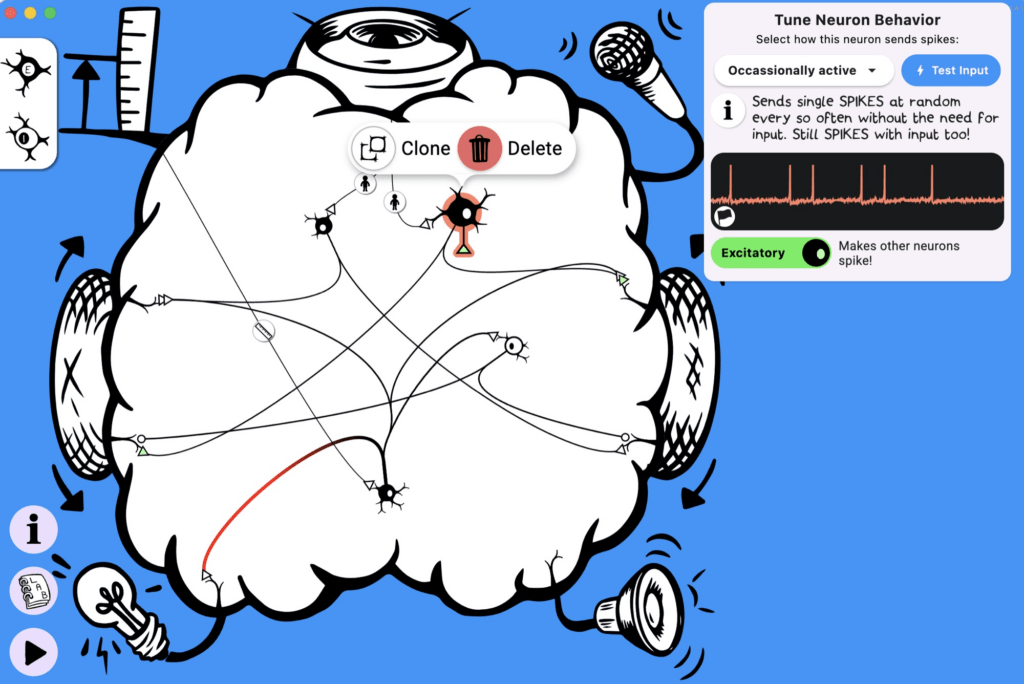
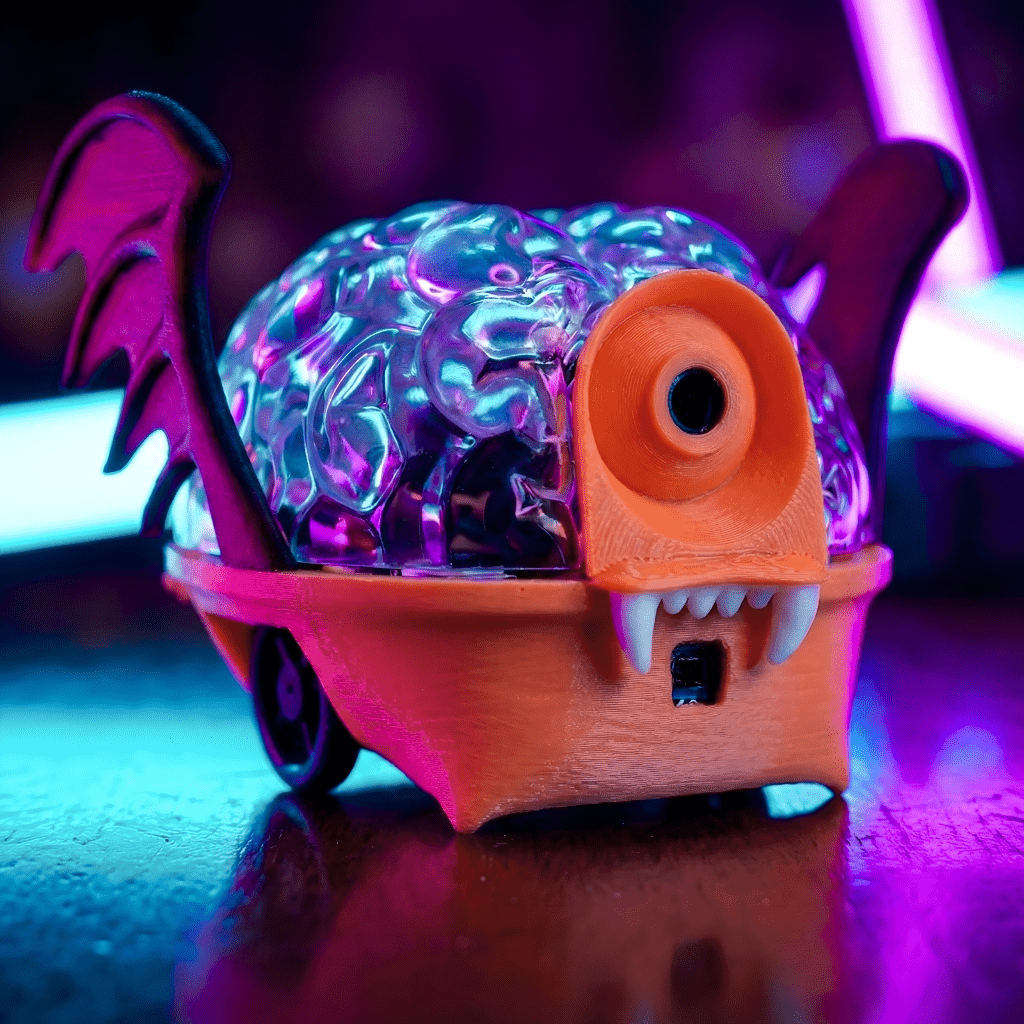
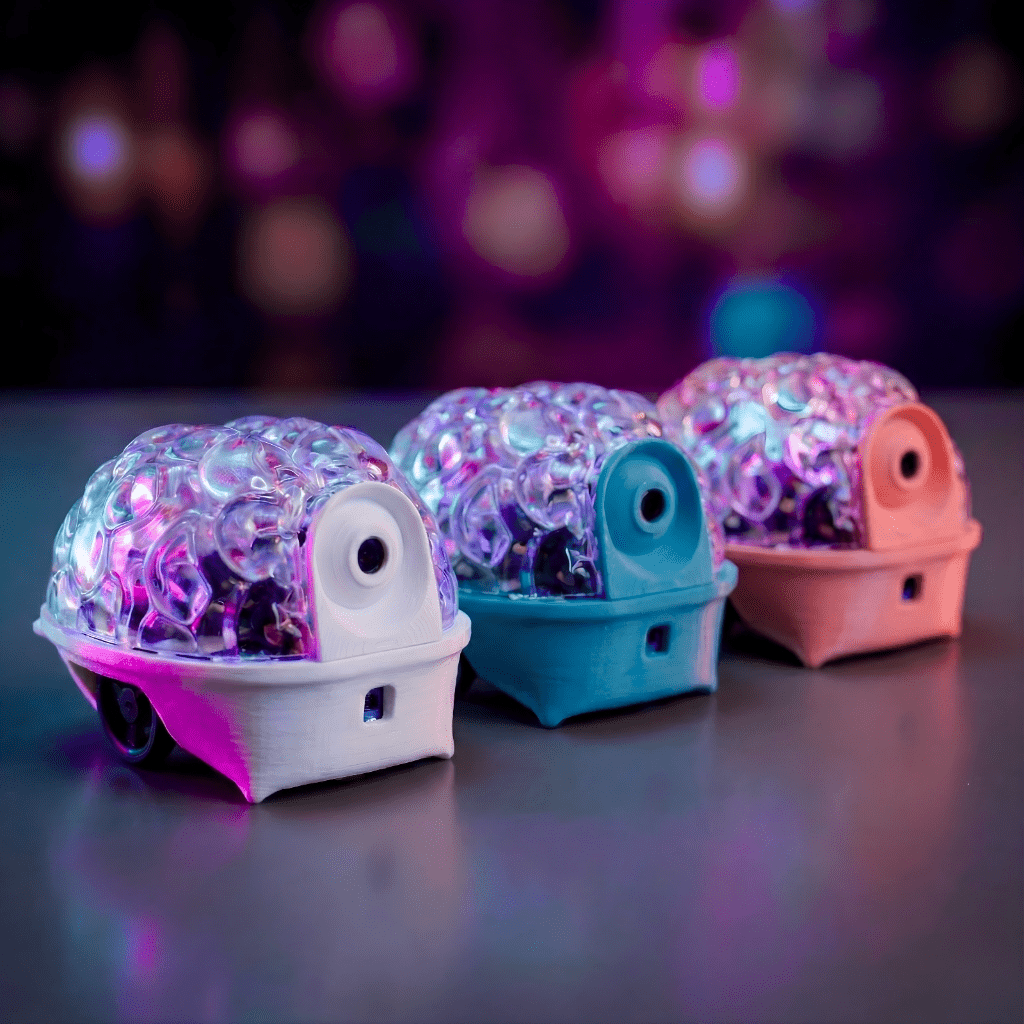
Backyard Brains launched SpikerBot on Kickstarter, a desktop robot whose behavior is controlled by spiking neural networks that kids build themselves. Instead of typing code or prompting a chatbot, students drag biologically inspired neurons into a no-code app, connect them to sensors and motors, and watch the robot move, react, speak, and change behavior in real time.

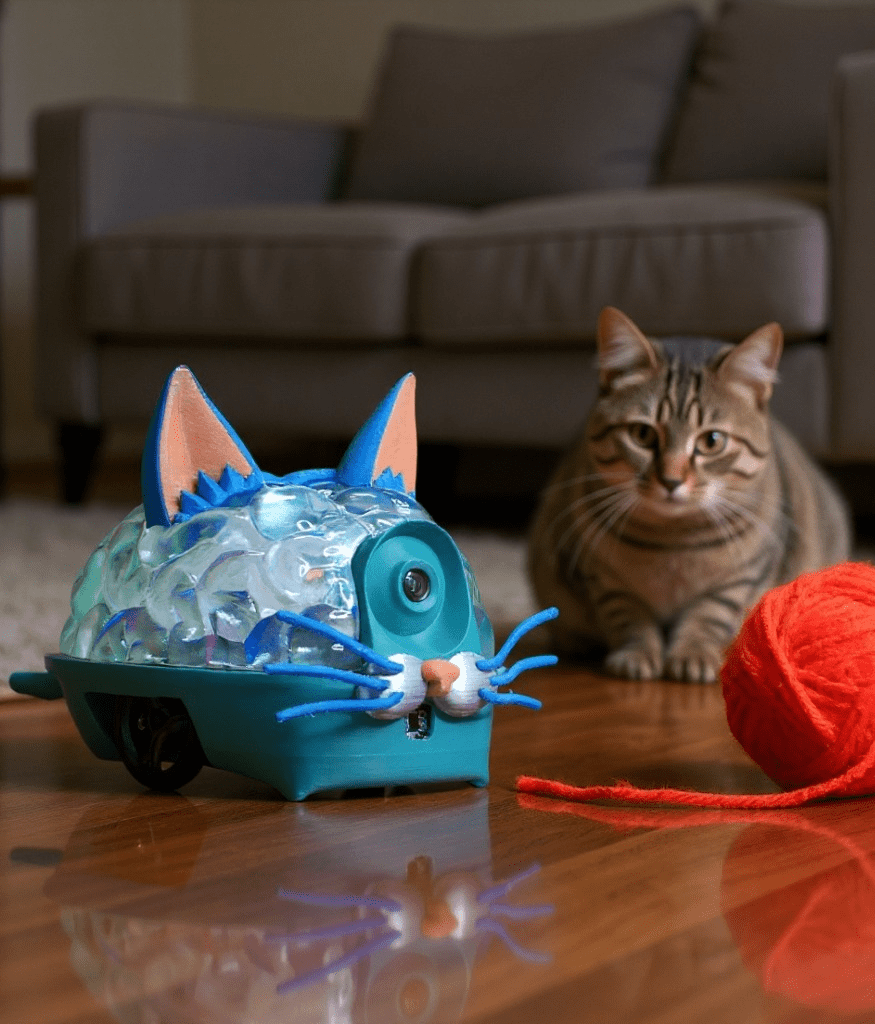
SpikerBot is designed to feel like a creature, not a robot. Wire visual neurons to the motors and it can chase a red ball. Change the connection and it can avoid that same object. Add sensors, sounds, inhibition, circuits that can hold short-lived internal states, or a second robot, and the behavior starts to feel less scripted and more alive. The point is not to memorize neuroscience vocabulary. The point is to test an idea, see what happens, and rebuild the brain until the creature behaves the way the child imagined.

That makes SpikerBot an educational robot with a concrete outcome: kids practice prediction, debugging, iteration, and critical thinking while learning how neurons and circuits shape behavior. It is built for families, classrooms, maker spaces, and curious adults who want a hands-on alternative to passive screen time and black-box AI tools.

SpikerBot grew out of years of NIH-supported research by Backyard Brains, the Ann Arbor company known for making neuroscience accessible outside the laboratory. In earlier classroom workshops using the neurorobotics platform, 295 high-school students built and tested robot brains over a one-week unit. The peer-reviewed study, published in Frontiers in Neurorobotics (doi.org/10.3389/fnbot.2020.00006), found significant gains in students‘ understanding of key neuroscience concepts and confidence in neuroscience.

„Kids do not need another device that gives them answers,“ said Greg Gage, co-founder and CEO of Backyard Brains. „They need something they can question, change, break, and fix with their own hands. SpikerBot makes the brain visible. You change a synapse, and the creature changes.“

The robot includes a camera, microphone, speaker, distance sensors, drive wheels, RGB LEDs, a customizable body shell, and a free SpikerBot app with pre-built brain examples. Learners can start with simple predator, explorer, reflex, or shy-creature circuits, then take them apart and build their own. Advanced users can hack the open-source platform and connect external sensors, game controllers, or Backyard Brains SpikerBit Brain-Machine Interface product.

Backyard Brains‘ SpikerBot development was supported by the National Institutes of Health through NINDS SBIR Phase II grant 2R44NS108850-03A1. „Public science funding helped us turn a research idea into something students can hold, test, and understand,“ Gage said. „Kickstarter is the path to move it from final development into the hands of families and teachers.“

SpikerBot is available on Kickstarter beginning May 12, 2026. Early-bird pledges begin at $199, with standard Kickstarter pledges at $239 and a planned retail price of $300. Units are expected to ship in September 2026. The recommended age range is 10 to 99.

ABOUT BACKYARD BRAINS

Backyard Brains was founded in 2009 in Ann Arbor, Michigan, to make neuroscience
accessible. The company builds hands-on tools that let students, teachers, families,
and curious citizens investigate the nervous system directly. Its products and
curricula are used in classrooms, labs, makerspaces, and homes around the world,
supported by grants from the NIH, NSF, and the Department of Defense, and have been
featured in The New York Times, BBC, WIRED, TED, Netflix, NPR, Science Friday, Good
Morning America, and Last Week Tonight.

StackChan by M5Stack Now Available on Kickstarter

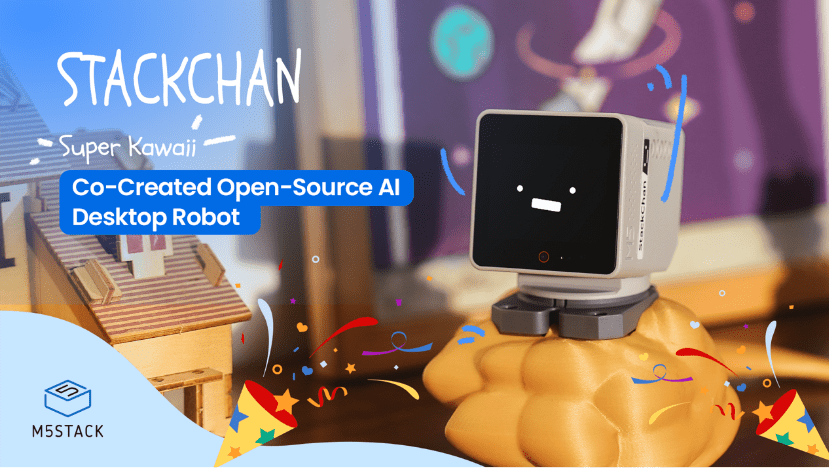
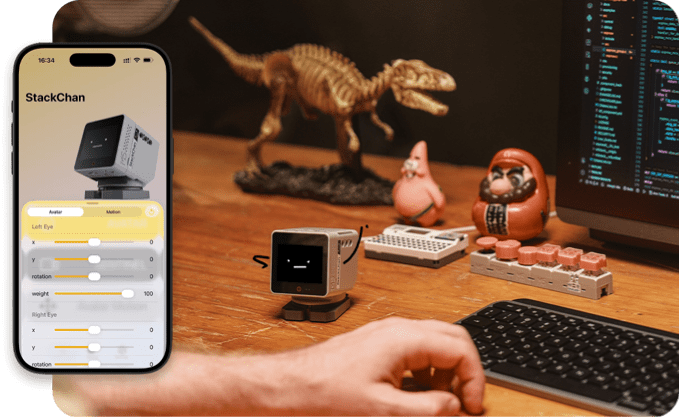
January, 2026 — M5Stack, a global leader in modular IoT and embedded development platforms, today launched StackChan, the first community-co-created open-source AI desktop robot, built on a proven ESP32 platform and designed to be endlessly hackable by makers worldwide.

Unlike closed, concept-driven AI robots, StackChan exposes its hardware, firmware, and interaction logic from day one — turning a playful desktop companion into a real development platform.

StackChan is now live on Kickstarter with a $65 Super Early Bird offer available for the first 72 hours.

From Community to the Globe: How StackChan Was Born 

Before its official launch by M5Stack, StackChan had already existed as a community-driven project since 2021. Built on M5Stack standard controller, Core series, it began as a personal open-source project by maker Shinya Ishikawa, sustained and shaped through ongoing community contributions. 

As more enthusiasts joined the project, contributors like Takao, who helped popularize the DIY kits, and Robo8080, who introduced AI capabilities, played key roles in expanding StackChan beyond its original form. 

Inspired by StackChan’s expandability and creative potential, M5Stack officially brought the project to life as its first ready-to-play yet endlessly hackable desktop robot—while keeping its community-driven spirit at the core. 

What Remains: Core Computing & Interaction Capabilities 

As with the original version, StackChan continues to use the M5Stack flagship Core Series (CoreS3) as its main controller. CoreS3 is powered by an ESP32-S3 SoC with a 240 MHz dual-core processor, 16 MB Flash, and 8 MB PSRAM, and supports both Wi-Fi and BLE connectivity. 

To enable richer interactions, the main unit integrates a 2.0-inch capacitive touch display, a 0.3 MP camera, a proximity sensor, a 9-axis IMU (accelerometer + gyroscope + magnetometer). It also includes a microSD card slot, a 1W speaker, dual microphones, and power/reset buttons. Together, these hardware components form a solid foundation for StackChan’s audio-visual interactive experiences. 

For more technical details, please refer to the StackChan documentation: https://docs.m5stack.com/en/StackChan 

What’s New: Ready-to-Play Functions Powered by Advanced Hardware  

For the robot body, several advancements have been made to make it easier to get hands-on and improve the out-of-box experience. It features: 

Power & connectivity: A USB-C interface for both power and data, paired with a built-in 700 mAh battery.  

Movement system: 2 feedback servos supporting 360° continuous rotation on the horizontal axis and 90° vertical tilt—enabling expressive movements with real-time position feedback. 

Visual feedback: 2 rows totaling 12 RGB LEDs for expressive system and interaction feedback. 

Sensors & interaction: Infrared transmission and reception, a three-zone touch panel, and a full-featured NFC module enabling touch- and identity-based interactions. 

On the software side, StackChan is ready-to-play for starters with no coding required. The pre-installed factory firmware delivers: 

Expressive faces and motions: Preloaded with vivid facial expressions and coordinated movements that bring personality and liveliness to StackChan. 

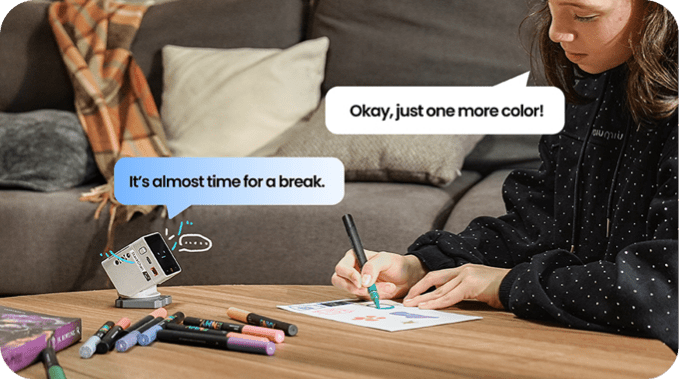
Built-in AI agent: Integrates an AI agent for natural voice-based interaction and conversational experiences. 

App-based remote interaction: Supports official iOS app for video calls, remote avatar control, and real-time interaction with StackChan. 

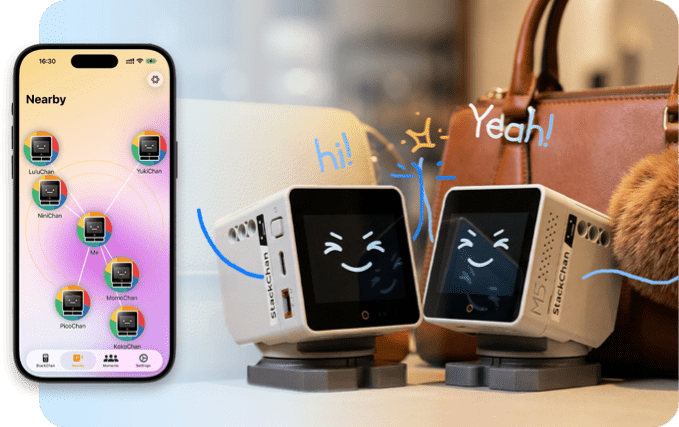
Chan-to-Chan Friends Map: Enables discovery of nearby StackChan devices, unlocking playful multi-device and social interaction scenarios. 

Open for customization: While beginner-friendly by default, the firmware supports further development via Arduino and UiFlow2, making it easy to create custom applications. 

100% Open-Source: Built to Be Customized and Extended 

In an era filled with closed, concept-driven “AI robot” products, StackChan stands out with its open-source core. From firmware and hardware interfaces to development tools, every layer is designed to be explored, modified, and extended by users. 

Beyond code, StackChan also encourages physical customization. With 3D printing and creative accessories, users can personalize their StackChan’s appearance and turn it into a unique desktop companion. 

Open-source repository: https://github.com/m5stack/StackChan 

 
Fun with Global Community: Share, Extend, and Evolve Together 

Since its birth, StackChan has grown into a vibrant global community of makers, developers, and enthusiasts. From sharing projects and source code online to hosting meetups and anniversary events offline, the community continues to expand what StackChan can be. 

Owning a StackChan is not just about building a robot—it’s about being part of an open ecosystem where ideas and creativity evolve together. 

StackChan is not built to its end at launch. It is built to grow—through open technology, creative experimentation, and a global community that continues to redefine what a desktop robot can be.  

Discover your StackChan on Kickstarter now: https://www.kickstarter.com/projects/m5stack/stackchan-the-first-co-created-open-source-ai-desktop-robot?ref=d5iznw&utm_source=PR 

Open Source Humanoid Robot pib Released in New Version

3D-printed robot becomes simpler, smarter, and even more flexible

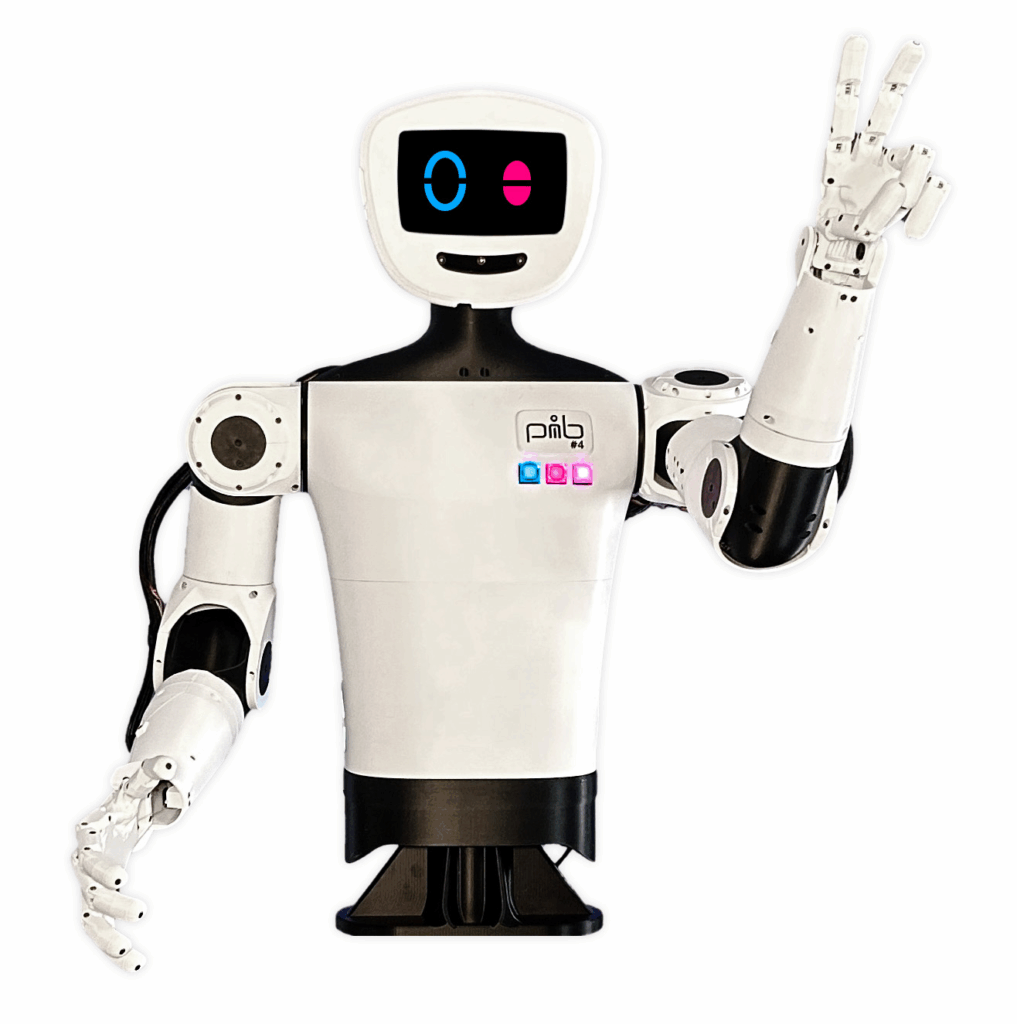
Nuremberg, November 11, 2025 +++ The fourth version of pib (printable intelligent bot) is now available. The humanoid open-source robot can be 3D-printed, built, programmed, and enhanced with AI by anyone. All 3D printing files and assembly instructions are freely available on the project website, with support and exchange provided by a community of more than 1,800 members. The project has already received several prestigious awards, including the German Design Award 2025 and the German Innovation Award 2025.

pib – the robot from the 3D printer

The humanoid robot pib was developed by isento GmbH in Nuremberg and is aimed at tech enthusiasts, educational institutions, and maker communities. Using a standard 3D printer, all mechanical components can be produced. All STL files, material lists, and detailed assembly guides are freely available.

pib combines a modular humanoid structure with servo motors, sensors, and open software components. It can be printed, assembled, programmed, and customized. As an open-source project, pib offers an accessible entry point into robotics and AI—free from high costs and proprietary systems. The international community continuously drives its development forward, making pib ideal for makers, research, and education. The goal: to make robotics and AI accessible to everyone and to lower entry barriers sustainably.

Simplified design thanks to community feedback

The new version features a significantly simpler and more flexible design. Motor calibration has been made easier, and access to the electronics and power button is now more convenient. Many of these improvements are direct results of valuable feedback from the active community.

New technology and features

pib now includes a microphone array that not only improves audio quality but also detects the direction of sound. New speakers provide a more natural interaction experience and feature blue accent lighting as a design highlight. Three programmable RGB buttons on the torso allow for customizable control commands.

Open robotics for everyone

“With pib, we pursue the vision of making robotics accessible to everyone. The new release demonstrates how open source drives innovation: a humanoid robot that anyone can build, extend, and understand. We’re especially proud that many improvements came directly from our community’s valuable feedback,” says Dr. Jürgen Baier, Co-Founder and CEO of pib.rocks.

From the workbench to the classroom

pib appeals equally to makers, robotics enthusiasts, and AI tinkerers. Beyond that, the robot is already being used in more than 70 schools and educational institutions—as a cross-disciplinary learning platform for future-focused topics such as robotics, 3D printing, and artificial intelligence.

More information, building plans, and guides: www.pib.rocks

ABot Advanced by Avishkaar

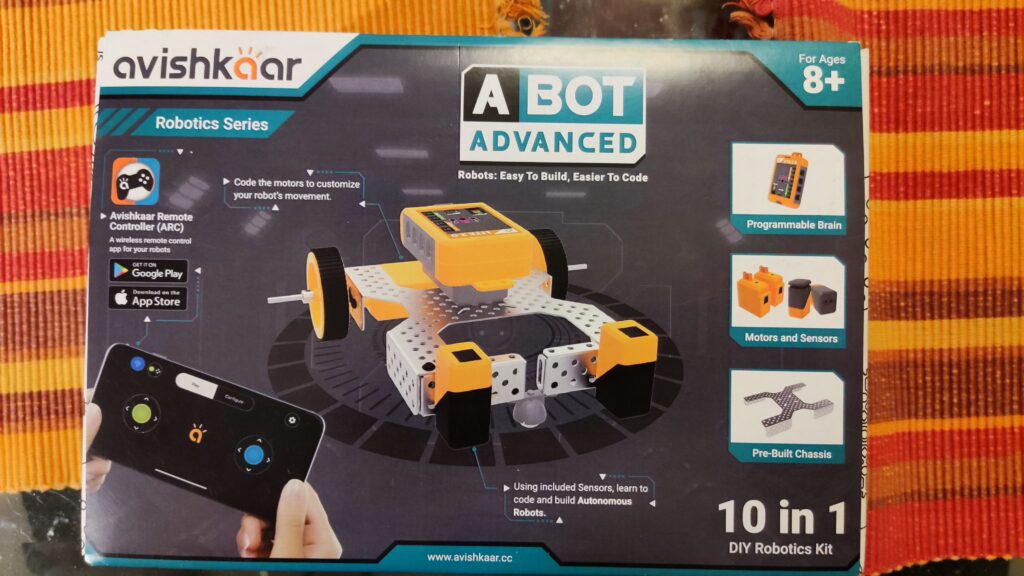
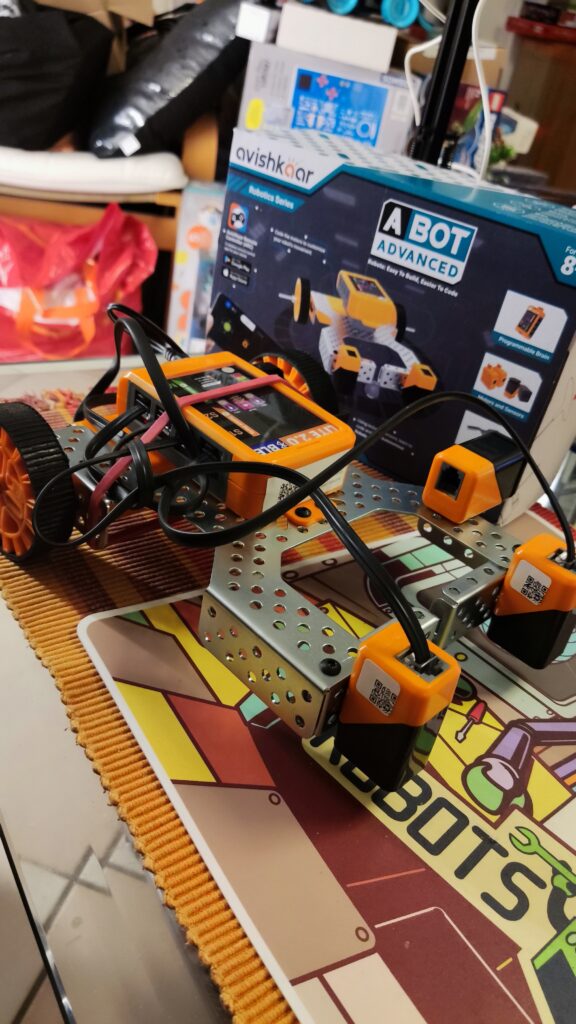
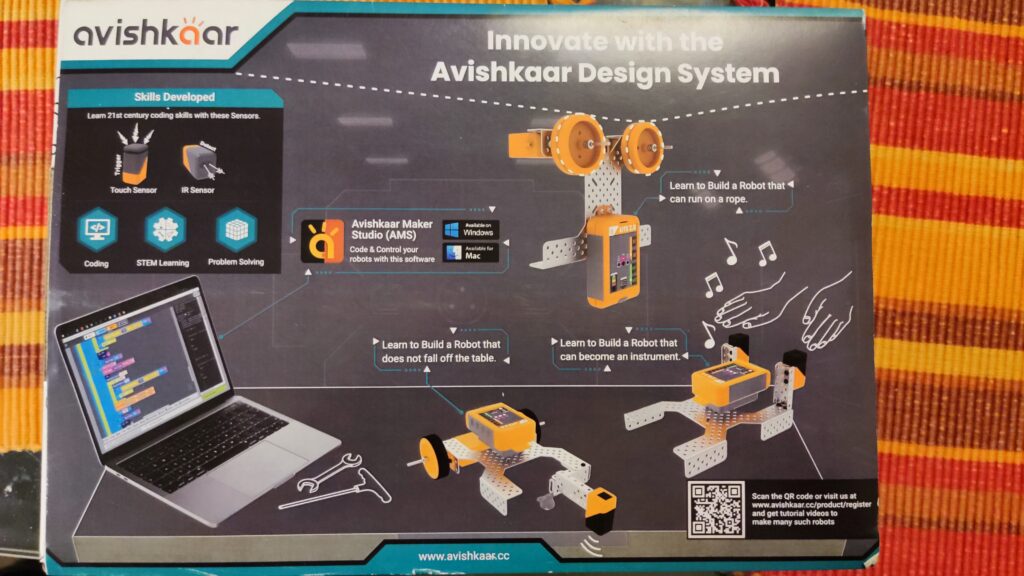
The Avishkaar ABot Advanced Kit is a comprehensive DIY kit for STEM robotics and coding designed specifically for children aged 8 and up. It contains over 60 parts, including metal parts, motors, sensors, wheels, USB cables, screws, nuts, an Allen wrench, and a wrench. With these parts, children can build 10 different robots, from simple vehicles to more complex constructions The set reminded me of the mBot when I set it up, as it was also based on a sturdy metal construction. The included stickers and the tool are nice. The instructions were easy to understand and I didn’t find any errors or had any problems assembling. The app for remote control and programming must be activated with the product code and the user must be registered before using it for the first time. When deploying, e.g. in the classroom, you should have done this in advance. By the way, the 9V block battery visible in the video is not included when purchased from a dealer, but a full-fledged battery pack. I only use the 9V battery because of delivery problems. Overall, however, it is interesting that the robot makes this possible at all. I’m playing with the idea of connecting a solar cell here and operating the robot with solar energy…like a real Mars rover…

Here is more detailed information:

  • Easy to build programmable robots: With this kit, kids can create 10 different robots with over 60 pieces. This includes metal parts, an easily programmable brain, motors, sensors (2x light sensor, 1x touch sensor/button), wheels, USB cables, screws, nuts, an Allen key, a wrench, cables, and instructions.
  • Control via mobile app: The robots can be controlled via a remote control app. They can also be programmed using a visual block-based programming environment (similar to Scratch/Blockly).
  • Learning Objectives: With the ABot Advanced Kit, children learn robotics, programming, construction, mechanical design and problem solving.
  • Compatibility: The mobile app is compatible with iOS 11 or later and Android 10 or later.
  • Inexpensive Kit: The ABot Advanced Kit offers a sturdy metal frame to which motors and sensors can be attached. For the equivalent of about 60€, the set offers good value for money. Maybe the set will soon be available at a German retailer.

You can find a comprehensive assembly video of one of the 10 robot models here:

The set is available here: https://shop.avishkaar.cc/products/abot-advanced

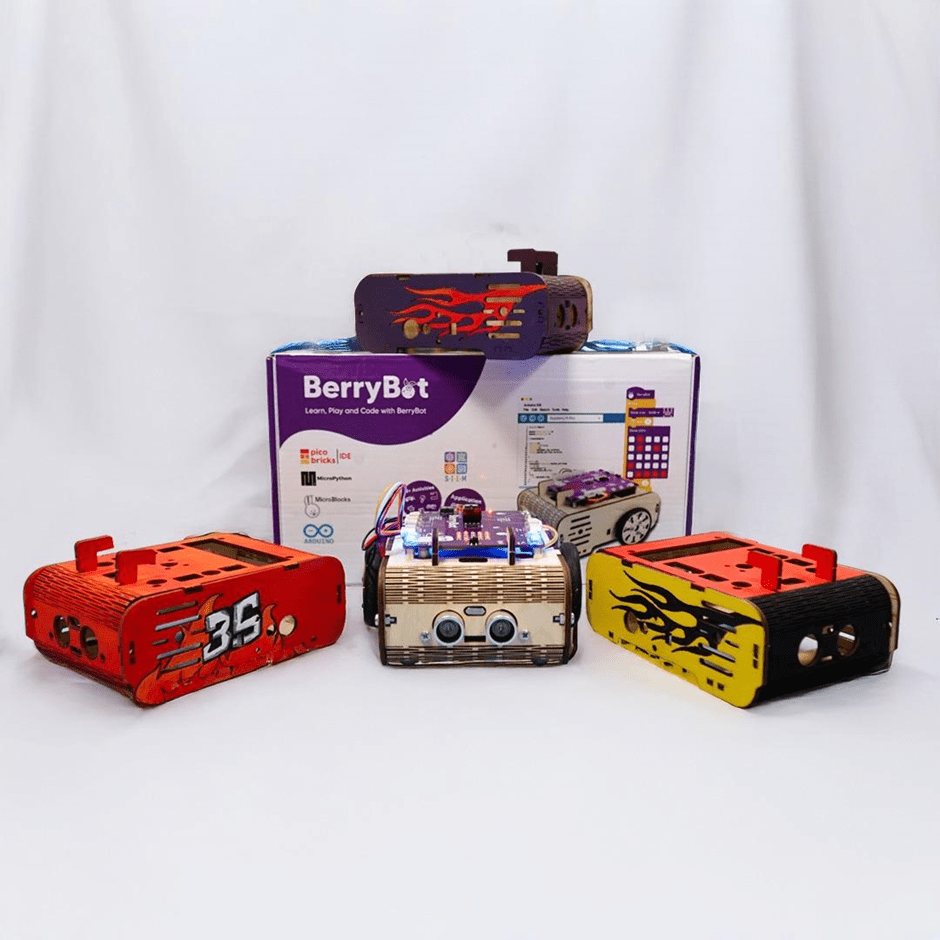
BerryBot: STEM Education for Young Engineers with a wooden robot

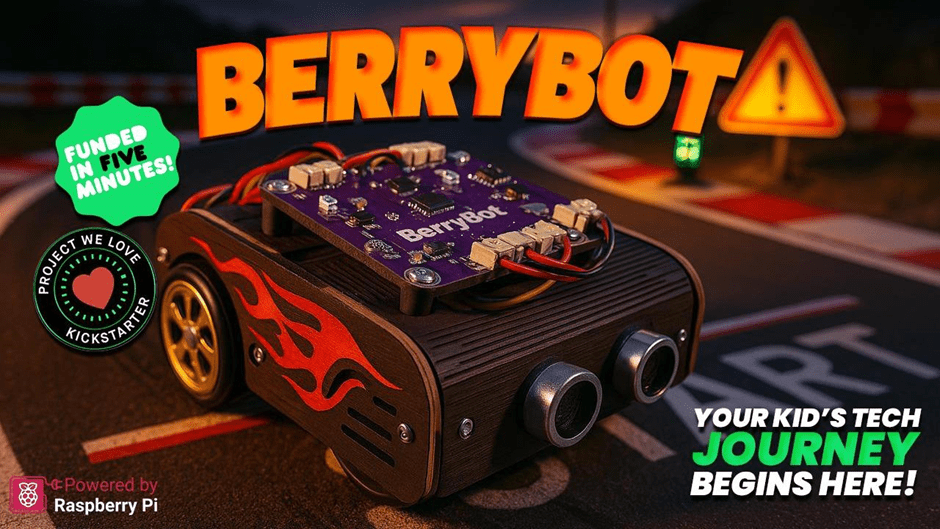
Robotistan, a pioneer in innovative educational solutions, has introduced a new STEM robot called BerryBot. Designed to help children develop coding and robotics skills, this creative and educational robot offers practical experiences in science, technology, engineering, and mathematics (STEM).

A New Era in Robotics Education

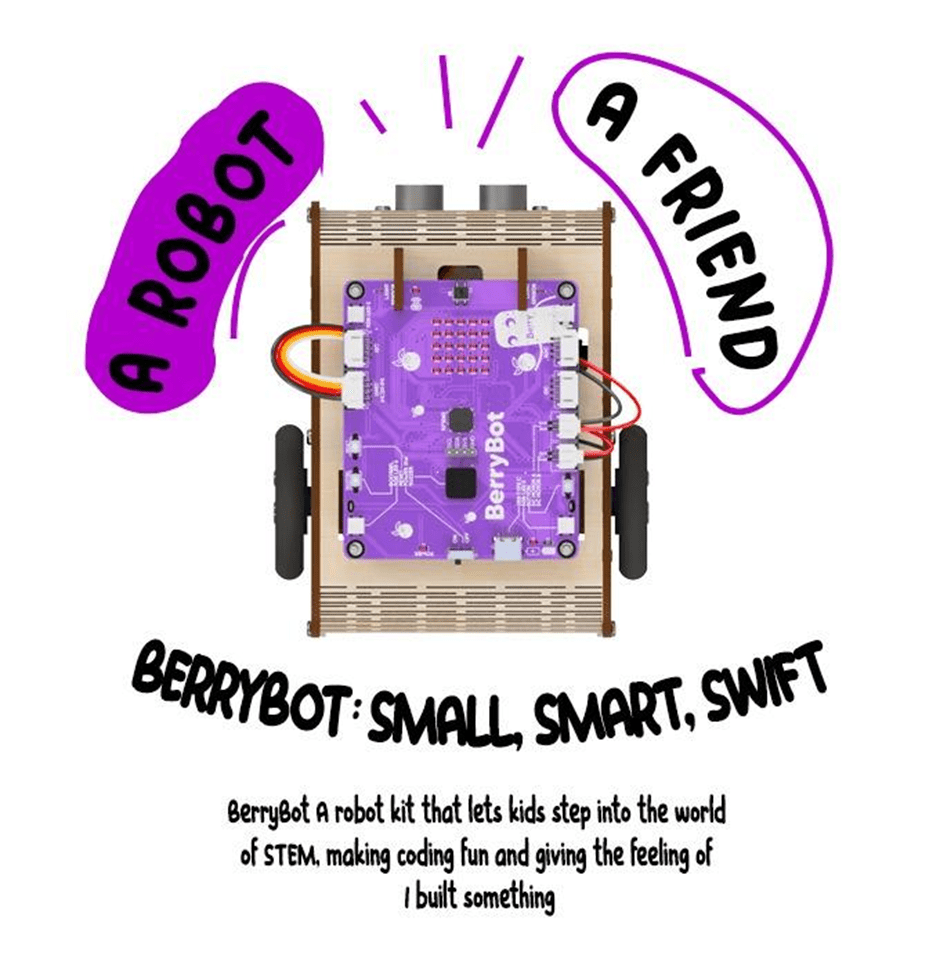
BerryBot is more than just a robot; it’s a learning platform that nurtures creativity and problem-solving skills. With its compact and customizable design, BerryBot allows users to paint and personalize their robot, thanks to its wooden body.

The wooden structure not only reflects an eco-friendly design approach but also allows children to shape their robots according to their own style. BerryBot is designed to be flexible enough for both classroom and home use.

Key Features

BerryBot’s innovative features support the development of both technical and creative skills:

  • Customizable Wooden Body:

    • Kids can paint their robots to reflect their unique style.
    • Durable and sustainable construction.

  • Versatile Coding Options:

    • Block-based programming for beginners.
    • Advanced programming with Python and Arduino IDE.
    • User-friendly interface for an easy learning process.

  • Multi-Mode Movement:

    • Line-following, sumo, and free movement modes.
    • Real-time visual feedback via the LED matrix display.
    • Wireless control through Bluetooth connectivity.

An Educational Tool Combining Coding Skills with Creativity

BerryBot offers young aspiring engineers a fun and educational experience. While creating different movement scenarios, children not only enhance their problem-solving skills but also develop creative projects.

Thanks to BerryBot’s multi-mode structure, users can program the robot’s movement capabilities in various ways. This feature transforms BerryBot from being just a toy to a valuable educational tool that encourages creative thinking.

Mehmet Akçalı, Marketing and Product Director at Robotistan, highlighted the educational features of BerryBot:

„BerryBot offers a practical and fun way for children to step into the world of STEM. Combining coding skills with creative projects, this robot will become an indispensable educational tool for both teachers and parents.“

He also mentioned a special opportunity for early supporters:

„We’re thrilled to announce our Kickstarter campaign, where backers can take advantage of the Early Bird offer. Additionally, as part of our commitment to supporting STEM education, for every 10 pledges, we will gift one BerryBot to a school or an educational organization in need. This way, our supporters not only get an amazing educational robot but also help inspire the next generation of young innovators.“

Shaping the Engineers of the Future

As the importance of STEM education continues to grow, innovative tools like BerryBot are preparing young minds for the future. With its fun yet educational nature, BerryBot strengthens children’s coding, algorithmic thinking, and problem-solving skills while also inspiring creative projects.

Robotistan emphasizes that BerryBot is not just an educational robot but also a platform where children can express themselves. Produced with this vision in mind, BerryBot is ready to make a difference both at home and in educational environments.

To learn more about BerryBot and to be among the first to own it and take advantage of the Early Bird offer, visit the Kickstarter page!