DEN HAAG, Netherlands, Dec. 23, 2016 — Anyone searching for a cool personal robot might be interested in Dawody Robotics, Bobbie 1S robot. This cute humanoid robot is voice controlled and can be used as a home guard, personal assistant, educational robot and family member in one.
The robot can be described as a Smartbot. A telephone and robot in one, Bobbie is equipped with a touch screen monitor and a camera that enables it to monitor the house, make calls, surf the web, receive messages and much more.
Bobbie has a simple program, making it easy for young and old to develop new applications for it. The robot has its own, sometimes annoying character that makes him special. Sometimes Bobbie will give surprising answers while having a chat with him. While shooting a promotion video, the founder of Dawody Robotics asked Bobbie who the President is. Bobbie’s answer was that he is officially running for president himself, promising to make Dawody Robotics great again.
Dawody Robotics‘ aim is to introduce Bobbie’s little brother in 2017 in collaboration with a partner company that will truly change the way we look at robots. „Our aim is to have robots in every household in a time span of 5 years from now, just like people have mobile phones nowadays,“ said Safa Dawody, the founder of Dawody Robotics. The price for Bobbie 1S is from $300 USD for the Super Early Birds and will be shipped estimated in March 2017 to its new owners. Who knows, maybe Bobbie 1S will make it to the White House one day.
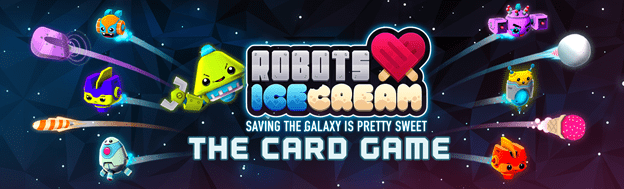
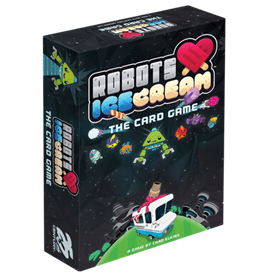
Robots Love Ice Cream the Card Game, a semi-cooperative family friendly card game for ages 8+, launches on Kickstarter November 13th, from tabletop publishing studio 25th Century Games.
The card game is based on the hit video game Robots Love Ice Cream™ by mobile experience studio Dragon Army, also located in Atlanta, GA. The video game was released in 2014 and named one of the best games of the year on both iOS and Android. This tabletop version features all of the same characters and art style found in the video game plus new illustrations only available in the card game version.
“In the card game version, we capture all of the fun, fast-paced dynamics from the much beloved mobile game. The vibrant art, quirky characters, and semi-cooperative gameplay make it a must have addition to your family’s game collection,” said Chad Elkins, creator of Robots Love Ice Cream the Card Game. “It’s hard not to like both robots and ice cream, so layering that theme on an easy to learn set collection card game proved to be a big hit in play testing.”
One to four players travel in their ice cream trucks to five different planets across the galaxy. They must work together to collect matching sets of weaponized ice cream cards and use them to destroy waves of attacking robots. If all of the robots are defeated, Spinston’s plans are foiled, collectively saving that planet’s supply of ice cream treats.
The crowd-sourced Kickstarter campaign for Robots Love Ice Cream the Card Game will help raise funds for the manufacturing costs to produce the game. The campaign will begin on November 13th and conclude on December 14th.
25th Century Games is an Atlanta startup dedicated to publishing entertaining tabletop games and puzzles that bring people together. The company recently published their first project, a 1000 piece puzzle featuring a historic map of Atlanta from 1892. Their focus is designing games and puzzles which are family friendly and are suited for a variety of age levels.
About Dragon Army
Dragon Army, based in Atlanta, GA, is a mobile experience agency built to deliver the best entertainment to mobile devices everywhere. Consisting of a blended group of marketers, game designers, developers and artists, the team applies their diverse skills to create rewarding mobile experiences for the world’s top brands. The company currently partners with The Coca-Cola Company, The Home Depot, Red Bull and InterContinental Hotels Group.
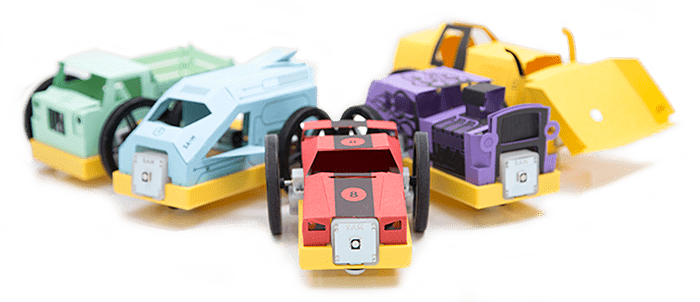
After raising $4.5m, led by Imperial Innovations in May 2016, SAM Labs announces the release of a new kit, Curious: an immersive out-of-the-box inventing experience, allowing users to build and program their own cars and games.
Empowering youngsters worldwide to get hands on with smart tech, SAM Labs makes smart construction kits of clever little blocks and a fun app that gives everyone the power of technology to build awesome inventions. With the Curious building blocks and the SAM Space app, you’ll be stretching your imagination to create projects, games, inventions and hacks in no time.
Equipped with five paper-fold car bodies, a car base, and remote control, kids can build and program their own vehicles with SAM, whilst gaining 21st century skills. A step-by-step tutorial booklet, and the informative SAM app, both filled with detailed instructions, will guide you through an array of other smart projects and hacks. The kit even encases an additional booklet with even more offers a diverse range of wireless blocks, that when paired with the app, SAM Space, provides for a fun, experiential, and open-ended learning session.
The kit also comes with its own unique new app: SAM’s Curious Cars. Available across iOS and Google Play, the app, made with Unity, encompasses the ‘connect the dots’ feel of SAM Space, with an added gaming element. Explore challenges and tasks to connect SAM blocks together by playing in both the game and in real life.
The kit will launch for $199 (£149), debuting both in stores, at John Lewis in the United Kingdom and Barnes and Nobles in the United States throughout the month of October, and online on Amazon and on the company’s own site, samlabs.com on the 1st October. CURIOUS buyers will also receive a complimentary 20% off code for their next purchases at samlabs.com.
“Curious is the future of SAM, where creativity can be unleashed through an epic immersive experience. When you think about inventing, you think Curious.” – Joachim Horn, Founder and CEO
bionicTOYS Launches Flexible Building Bricks on Kickstarter An Award-Winning Design That Turns Child’s Play Into STEM Learning
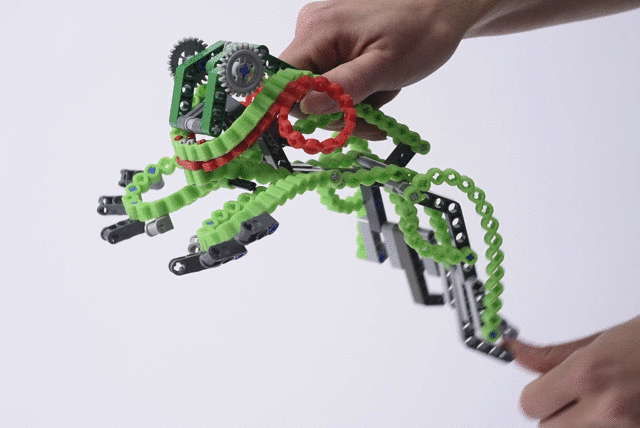
BERLIN, November 29, 2016 — Inspired by nature’s own flexibility, bionicTOYS has launched its first collection exclusively on Kickstarter. These highly-elastic building bricks let children and adults explore the art and science of motion through play.
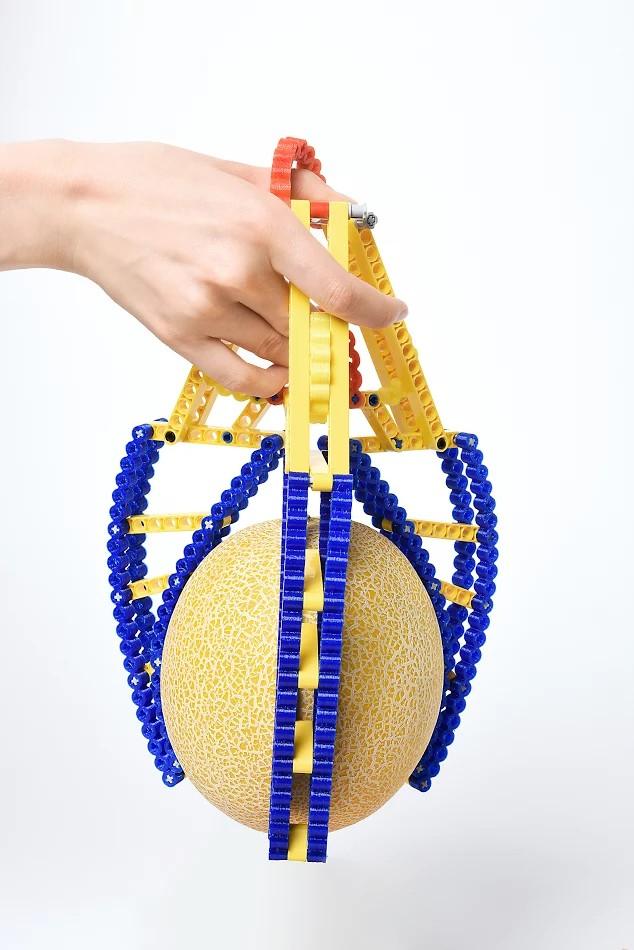
bionicTOYS was created by German product designer Marcel Pasternak as a way to introduce important STEM-based skills to children. Through creative building, they are able to replicate organic actions found in nature and learn about bionics, mechanics, potential energy and other important principles of physics. The patent-pending flex-brick design allows for inventive, multi-functional play that can also interact with existing building bricks, such as LEGO® Technic or TinkerBots®.
With its Kickstarter launch, bionicTOYS is reimagining construction-based play. “It’s quite handy because you can just bend it in all directions,” says 13-year-old Felix. Its colorful design and easy-to-construct sets allow school-age children, parents, teachers, LEGO® fans, and design enthusiasts to explore a great range of creative possibilities.
About bionicTOYS bionicTOYS was created by 29-year-old Marcel Pasternak as part of his master’s thesis in product design. It has quickly developed into an educational toy company that has won the Green Product Award (Kids category), the Marianne Brandt Award – Material Effects (Product category) and is one of the winners of DMY ́s New Talent Award.
Slant Concepts is creating a robot arm that anyone can use.
Robot arms have been doing redundant tasks in manufacturing for nearly 70 years. These hundred thousand dollar behemoths manage assembly lines and pack boxes. But they only exist on the assembly-line. Why aren’t they in the home cleaning counters, feeding the pet, and prepping breakfast.
The main reason for this situation is that they are difficult to use. Th industrial arms in factories require skilled engineers or tradesmen to get working. They are also incredibly expensive. But a company named, Slant Concepts, is changing that with the ShopArm.
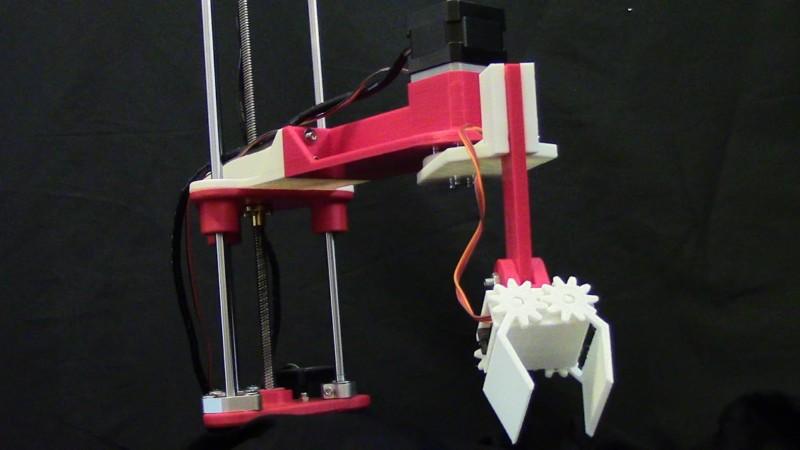
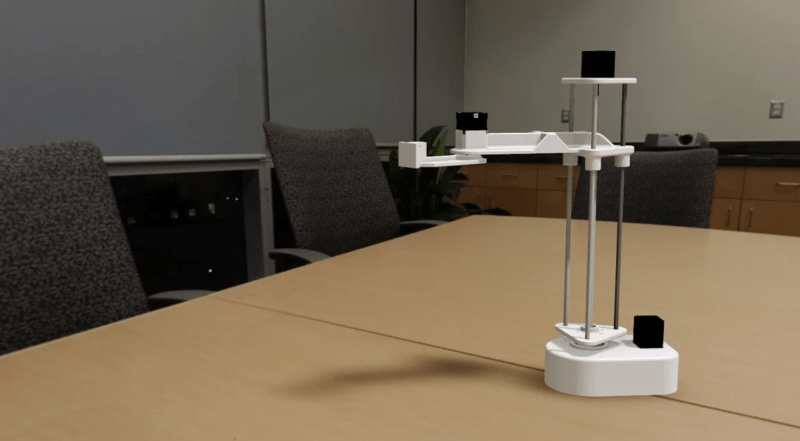
The ShopArm is a 3D printed robot arm that makers can build and the rest of us can just use. The ShopArm is meant to be used to perform some of the repetitive tasks in our lives.
The ShopArm currently can be trained to do anything it is physically capable of, by using a common PC. The ShopArm software lets the user select waypoints for the arm to move to. Just click on a place on the virtual workspace where you want the arm to go and it will move there. Then you can record a series of these to have the arm put bread in a toaster and start it.
Another way that Slant has created to train the ShopArm is with a camera. All anyone has to do is hold a green colored tracking marker over a camera on the end of the arm. Then arm will then follow the marker around and record the movements
Eventually, users of the arm will be able to bring it into their home, show it what they want done and then just leave it. They might train it to start the toast every morning at 7:00 AM or feed the pet on a regular basis. But the real value of the arm is in performing one-off repetitive tasks. Train it to decorate a Christmas cookie then have it do that 100 more times.
Slant is running the Kickstarter in order to continue developing the project to full implementation by normal consumers.
About Slant Concepts: Slant Concepts is a product design company based in Boise, ID. Slant was founded in 2014 as a product consultancy and micro-manufacturer. After completing numerous projects for client over its first two years, in 2016 Slant focused entirely on robotics and dedicated itself to producing internally developed products for the home, school and business.
Technology is rapidly evolving and changing the way that we go about living our daily lives. We’re living in an era were phones are able to do thousands of different things and cars can drive by themselves. Yet for all of this innovation, traveling and carrying things with you has remained relatively the same over the last couple of decades. Luggage hasn’t benefited from the rapid technological advances of the 21st century.
That is until now. Travelmate is a new type of robot that doubles as an affordable self moving suitcase. It moves by itself and thinks for itself thanks to a variety of sensors and integrated artificial intelligence. It’s fully autonomous, meaning that it moves on its own through all types of terrain. Travelmate easily navigates through crowds, uneven environments and other obstacles.
This robot doesn’t need any extra accessories and uses your smartphone’s location to follow you around. It adjusts to your speed and can go up to 6.75 mph, so it’ll never be far behind. It also has LED indicators which will show you where it’s planning to go.
David Near, Travelmate’s CEO, says that, “one of our top priorities is to make sure that Travelmate is as secure as possible”. That’s why you can see exactly where it is at all times through the Travelmate app on your smartphone. If someone else wants to take your Travelmate, it will sense that it isn’t following you anymore and will lock its wheels, which will prevent it from being moved. You can also activate audible alarms through the Travelmate app. These security features mean that it’s virtually impossible to lose it.
Travelmate has plenty of features. It has managed to re-invent the wheel – literally. Travelmate uses unique omni wheels that allow for precise adjustments in movement. It has such an incredible range of movement that it can turn 360 degrees without moving from its place.
You can tell your Travelmate to follow you from the side, from the front or from the back through the Travelmate application.
Travelmate is an autonomous suitcase, but it’s also the first affordable all purpose robot. It has the potential for hundreds of features and real world applications. It can be a camera operator, security robot, or a robot companion. There’s no limit to the potential that Travelmate has.
That’s in large part due to the team behind this one of a kind suitcase. Travelmate Robotics was formed as a separate company to launch consumer robots at an affordable price point. They’ve been developing Travelmate for over a year before officially announcing it. Their team consists of developers who have been manufacturing autonomous commercial robots for 8 years. They include robotics specialists, designers and even people who’ve worked on prototypes for space exploration rovers.
So it’s no wonder why Travelmate is so innovative and unique. You can pre-order a Travelmate right now through indiegogo at a starting price point of 399$. However, this price might not last long, because distributors are already in contact with Travelmate Robotics.
Distributors in more than 30 countries are already in negotiations to carry their suitcase in their stores. What that means is that pre ordering now may be your only chance to get one at such a low price. David Near says that, “we’re very happy that investors and distributors have expressed interest in our company. We are always open towards new partnerships and proposals”.
In any case, traveling is about to get a whole lot easier. Technology is constantly moving us forward and Travelmate is at the forefront of that.
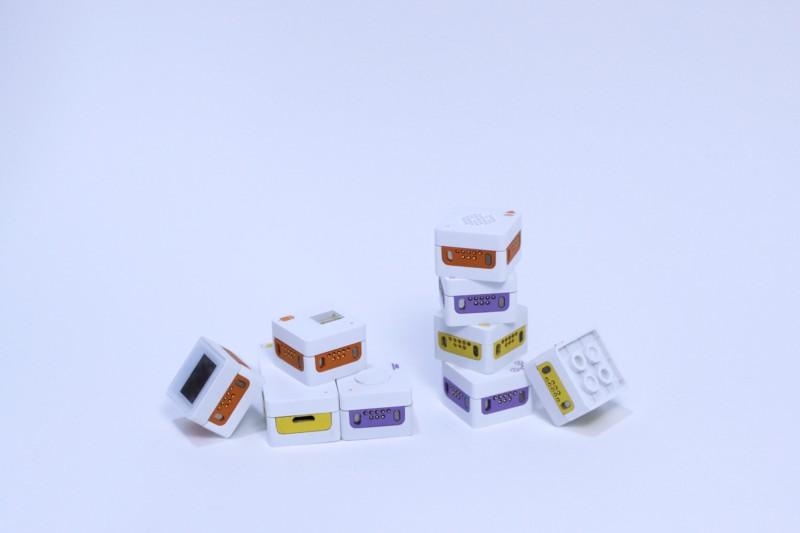
“JUST CONNECT.” LUXROBO wants you to simply connect its MODI modules to create an IoT or robotic device in seconds. MODI is a set of cube-shaped modules that LUXROBO launched on Kickstarter.com on October 14th. It has already reached its funding goal of $30,000 in less than three days. With MODI, you can quickly and easily create devices like a theft detector, an RC car, a mini Segway and much more.
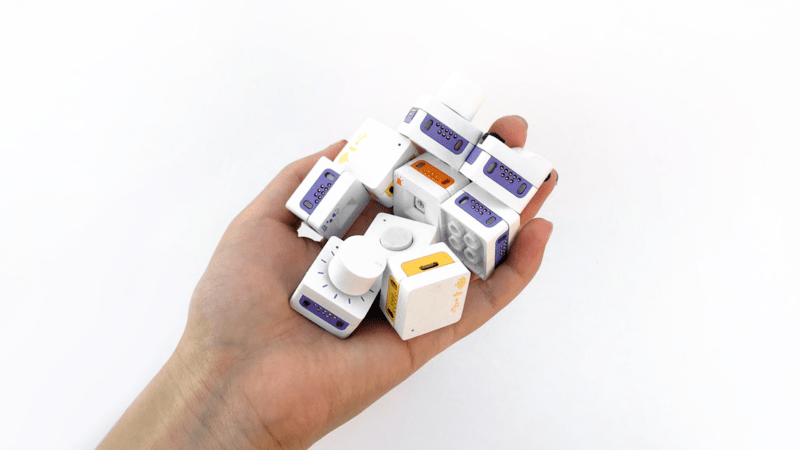
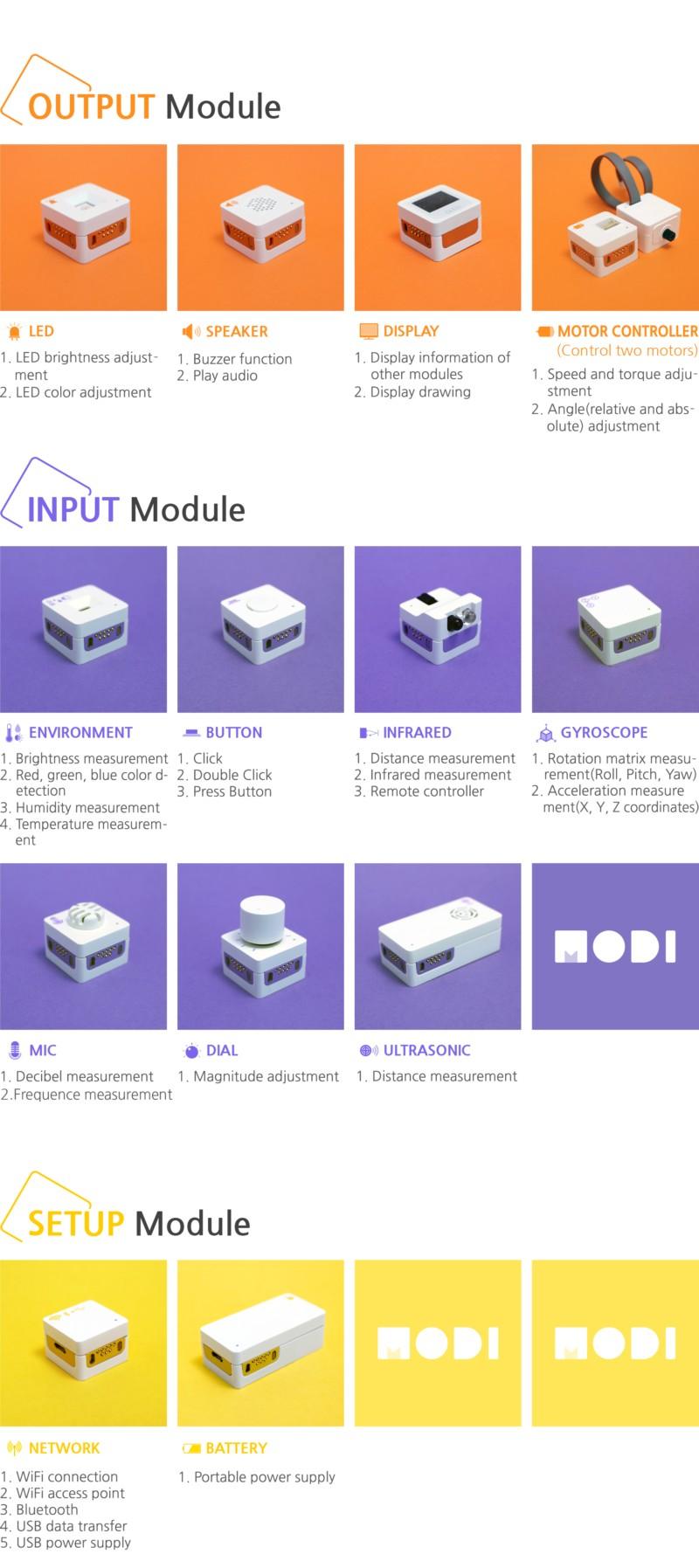
MODI comes with 13 different modules. They are color-coded into three different types: Input, Output and Setup. LUXROBO plans to add numerous other modules to its line-up soon. To take a full advantage of your MODI modules, you would customize the interactions among the modules through MODI Studio, LUXROBO’s simple graphic coding tool. You just need to drag and drop the commands. You can also convert the graphic coding into C Language (with other languages to be added) instantly.
The first thing you notice about MODI is its simple, elegant, minimalist design. You may also be surprised to see how small the modules are, only about 2.5 cm wide and long, and 1.5 cm tall. In such a compact dimension, LUXROBO has packed in PCB, MCU and its unique magnetic connection mechanism, in addition to the apparatus that supports each module’s unique function. Taking advantage of each module’s MCU, each MODI comes with MODI OS embedded. This feature enables each module to do its own processing and store memory. Each MODI is a smart module. One of the many benefits is MODI modules do not need to be connected to a PC or some other form of a master system to function on their own.
Putting MODI modules together is a pure joy. Each module’s four sides are all equipped for MODI’s unique magnetic connection. When placed close to another module, a pair of magnetic prongs come out slightly to form a tight and secure magnetic connection with the other. It is a lot of fun to try the automatic magnet connection over and over. Another advantage of MODI is its compatibility with Lego blocks. You can easily recycle the Legos or Lego-compatible blocks that you may have stored away to build a nice housing to your MODI devices.
LUXROBO aims to make IoT and robotic technologies more accessible for everyone, and that goal is captured in their vision of “Robotics of Things.” With its Kickstarter campaign, LUXROBO has taken a big step towards its vision of Robotics of Things. Until November 22nd, you can back LUXROBO and get MODI modules at approximately 40% off the estimated prices.
About LUXROBO:
LUXROBO’s roots are in robots. The founding team and core R&D members studied robotics together in college and have entered and won numerous international robot competitions together. LUXROBO was founded with the vision “Robotics of Things,” making robotic and IoT devices readily accessible for everyone.
LUXROBO is young and fearless. It was founded while its core members were still in college. It had no fear in developing its own OS for MODI and its own SW coding tool in MODI Studio. Even with MODI still in development and with no revenue stream to show, LUXROBO has been honored and recognized as one of Korea’s top technology-based startups, including being awarded Top11 at this year’s Echelon Asia Summit.
LUXROBO is ready for next big steps and challenges. LUXROBO has supplemented its young talents with experienced engineers and marketers from Samsung Electronics. With the Kickstarter campaign under way and supply of MODI modules to the UK soon to follow, LUXROBO is ready for a take-off.
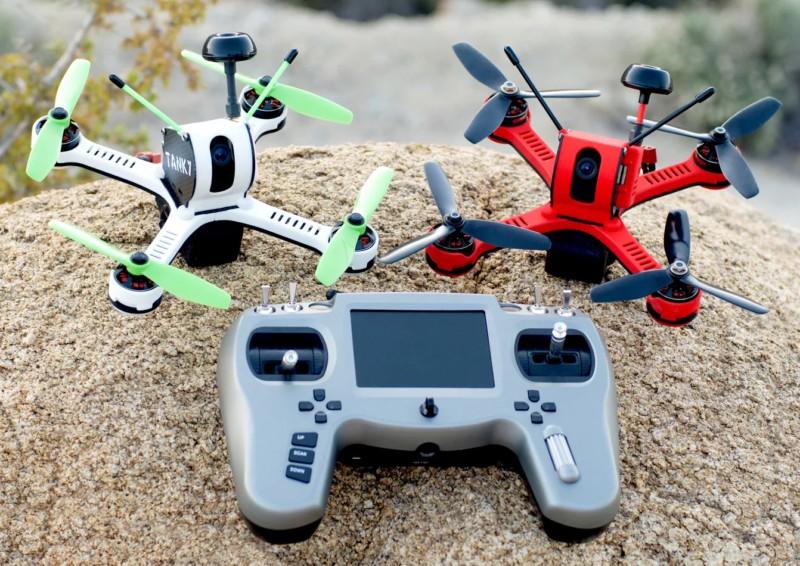
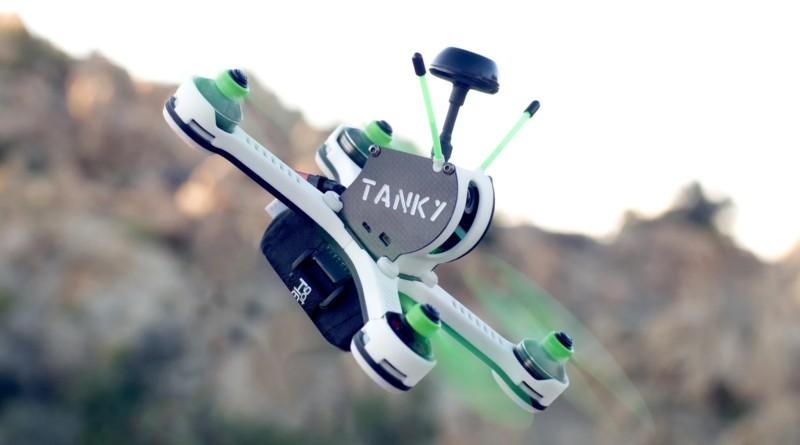
Los Angeles, CA — October 25, 2016 — Tanky Drone, a start-up drone design company in Southern California today introduced Tanky, a first person view (FPV) racing drone — at just 460 grams all-up-weight, Tanky features a remotely tiltable camera for ease of landing, tough-as-nails impact-resistant injection molded plastics, sleek aesthetics, and an aerodynamic design. Tanky delivers incredible performance. It can reach speeds upwards of 100 mph with 2305 motors and 1.0Ah 4S battery, a combination that delivers an amazing power-to-weight ratio. With its streamlined aerodynamic shape and obstruction free thrust column, Tanky performs on par with any custom made competition-bred craft.
“Tanky is a new generation of ready-to-race fpv drones. It’s not a toy. It’s a true speed machine, just like a sports motorcycle or a Formula 1 racecar. We optimized it for speed, minimized the weight, without compromising on design,” said lead designer, Bogdan Ryabyshchuk.
“One of the problems with drone racing today is the limited selection of ready-to-race crafts. This means that if you want to get into the hobby and sport of drone racing you need to build it yourself. This process usually takes a few weeks, rewards the naturally mechanically inclined, and does not guarantee a fast craft. After building your craft, you also run into another problem—learning to pilot it. So what do you do if you don’t have time to build a fast racing drone, but want to get into the sport? We decided to eliminate this barrier.
With Tanky, you have the option to buy it ready-to-fly, so you can start learning how to pilot it right away and become a drone racer,” said Yuki To, co-designer of Tanky, “So anyone can enjoy the exploding hobby of FPV flying and racing.”
“FPV drone racing is an immersive experience, enabling you to experience flight, speed, and exhilaration, without compromising on personal safety. When you inevitably crash, Tanky’s major components are protected with tough as nails polycarbonate. A polycarbonate skin not only protects the vital components, but also hides unsightly wiring. If the plastics do break on harsh impact, they are easily replaceable. This gives you the added benefit of being able to switch up your plastics to a different color, for a different feel, and to upgrade your components to stay on the cutting edge of innovation.”
All ages and skill levels can learn coding in an intuitive, interactive way.
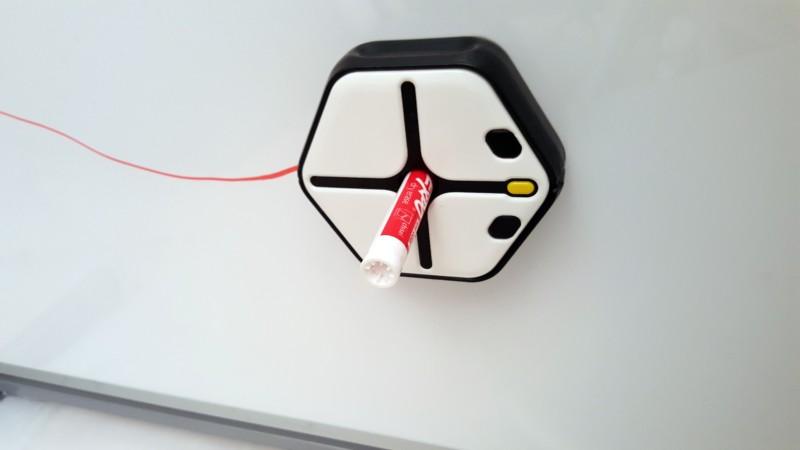
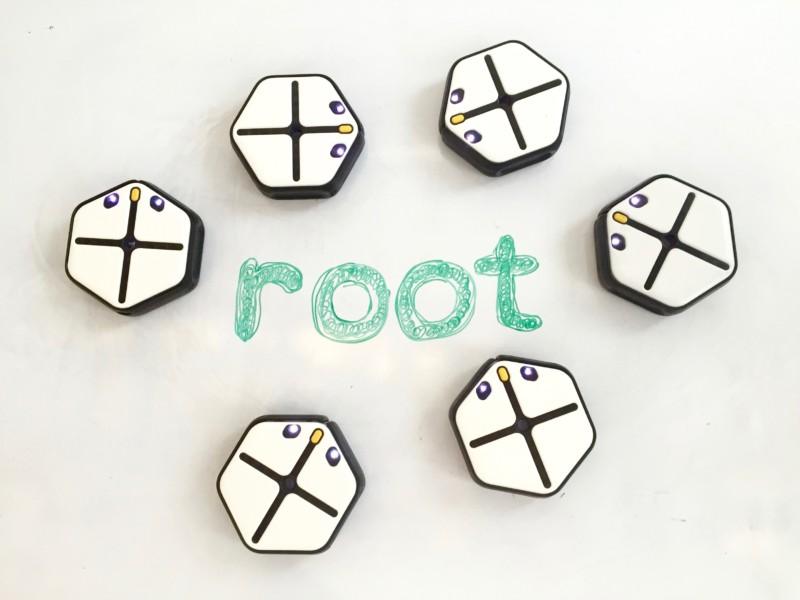
CAMBRIDGE, Mass. October 26, 2016 – Scansorial, a startup emerging from Harvard University, is on a mission to bridge the coding gap with the launch of their newest invention, Root: a fun, easy-to-use robot which teaches coding to anyone ages four to 99. Root has over 50 sensors and actuators with which it can draw, erase, play music, explore its world, and even defy gravity by using magnetism to drive on wall mounted whiteboards — making coding activities applicable to a range of topics, social, and way more cool.
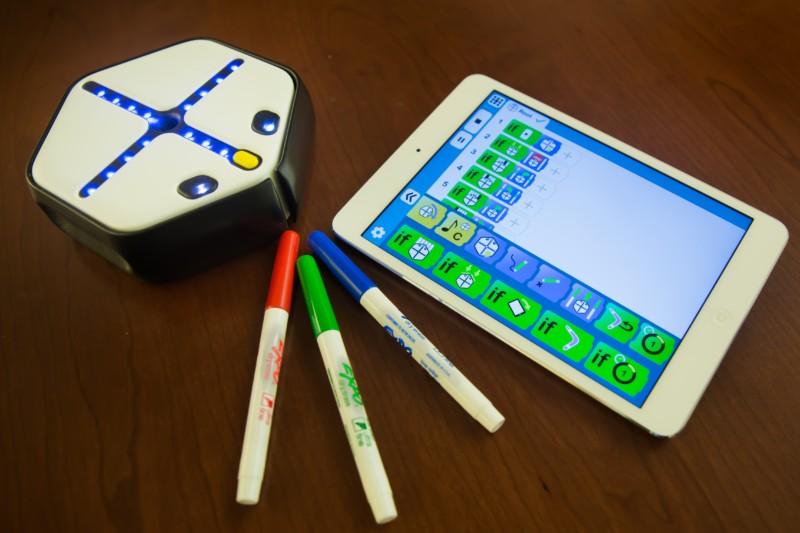
With its interactive nature and easy setup, Root is the perfect tool for learning from authentic coding experiences at home, with teachers in classrooms, and has a social platform to share programs around the world. Root appeals to children as young as four and grows with them as a familiar and consistent platform — offering years of learning opportunities rather than days. As their coding skills improve, they’ll advance from programming with a blocks-based graphical interface (a child can use it even before they know how to read) to programming with fully text-based languages like Swift, JavaScript, and Python.
Another thing that makes Root special is the interplay with iPad. Not only is it programmed from an iPad, with Root’s app the iPad sensors can be used to interact with Root in real-time (for instance, the iPad can be programmed to act as a steering wheel.) Programs can be modified even while they’re running which facilitates the real-time debugging of code as children flexibly pause, step through, or add instructions at any point. Root also promotes agent-based thinking by showing exactly what the robot sees on the iPad.
“We have a big problem in our country, nine out of 10 parents want their kids to learn computer science but only one out of 10 elementary schools actually teach it. This leaves 58 million kids stuck in the middle not knowing how to get a computer science education,” Zee Dubrovsky, CEO of Scansorial.
“We are thrilled to support Root as it heads out to change the world of education. iRobot is committed to STEM learning and excited to see one of our alumni carry this passion forward in a startup aimed at bringing robotics and programming into homes and classrooms.“ Colin Angle, CEO of iRobot.
About Scansorial, PBC
Founded in 2016, Scansorial is a Public Benefit Corporation on a mission to make coding accessible for learners of any age. Scansorial makes robots, apps, and curricula that allow people to instantly set up, create, and share interactive coding lessons. Robots are the best way to engage in the journey of learning how digital stuff really works. Scansorial is a privately-held company headquartered in Cambridge, MA.
Root Team
The Root team has over 50 years of collective experience in launching and building consumer products (iRobot, Sonos, Apple) and software/education services (Microsoft, Disney, PLTW, Harvard, MIT). This includes launching four coding robots (Create, Kilobot, AERobot, Multiplo), launching two graphical coding environments (MIT App Inventor, Minibloq), and launching three consumer robots (Roomba, Scooba, Looj).
It is now possible to pre-order Root exclusively through Kickstarter through November 30. A limited number are priced at $145 which is only a fraction of its retail value. With a pledge of only $10, the campaign will put that money aside for schools in need that can’t afford Root. For any backers with deeper pockets, a pledge of $10,000 will put 60 Roots in a school of their choice and the campaign will promote these backers as a School Hero. Follow #SchoolHero to see who out there will step up to the plate and join this cause.
A fundamentally new approach to real-time strategy games! We transfer the mechanics of genre from the virtual world into the real world, on the real robots.
Real Warbots is a strategy game for two or more players. Game mechanics is the same as computer real-time strategy games. As usual, players will collect resources, defend the base and eliminate the enemies. However, the game is not on the computer screen, but in the real world with the participation of real robots. Moreover, as there are robots, the control will be also different from the standard “clicking and dragging”.
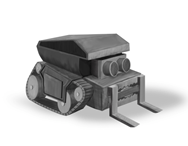
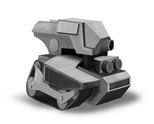
There are three types of robots: Scout, Worker and Tank
It is a seemingly well-known set of actions as in all RTS games; however, these are robots, and nobody is preventing players from racing with obstacles, hunting the cats, passing beer bottles or anything else that may spring into your mind.
Controlling robots
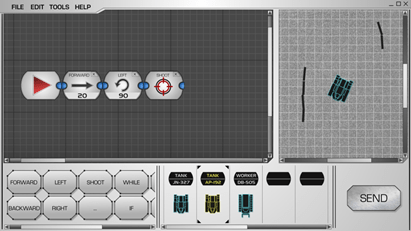
The player must make an algorithm of robot actions from simple blocks like shoot, move, turn etc. After that, the algorithm is wirelessly sent to the robot who begins to carry out his task. If the situation changes, the player makes a new algorithm, sends it to the robot and it starts acting in a new way.
The player is free to make algorithms of any difficulty. Someone will make them small, of several clicks, and will be sending new tasks to the robot all the time. Another player will spend some time before the game and make a big algorithm from maybe thousands of commands.
Which approach is right for you will show only practice and player experience.
Map.
Everything that the robots see by their sensors is displayed on the screen on the player’s map. Obstacles are shown as simple lines and help to understand where the robot can’t go. Other robots or resources are shown with the special icons.
It helps the player to understand the distance between robots and their surroundings even if he can’t see it by his eyes.
Personification.
Every robot has its own identification number given to him “at the factory” that will never be changed. That means every robot will be unique and have its own name.
The number of each robot will be placed in the general base and all its victories on official competitions will be written in the hall of fame of Real WarBots.
Accessories.
Apart from robots, there are several other things necessary for the game:
“Energy” and “Materials”.
Walls
Ammo for Robot-Tank
Beacons(optional)
Factory(optional)
Heroes.
Robots get experience points which can be spent on improving the various characteristics: hit points, speed, etc. or for the purchase of various perks.
Later, will be created the robots-heroes with the best abilities, possibly on a completely different chassis, such as hexapods
Interface
Players are provided with software environment. It can be divided into several areas for convenience:
a working area, where you can make the algorithm from several blocks;
a map with obstacles which robots see around them;
a list of buttons for program blocks;
a list of player’s robots. Every robot has its own identification number, the part of which will be shown in the list