$40 robot has a shot at Kickstarter crowdfunding

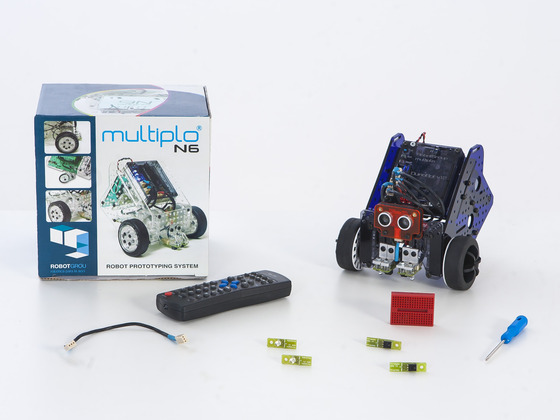
Robotics company, Microbric has done the impossible by developing Edison a small
robot with an amazing array of sensors for under $40, making it the most affordable educational robot in the market. Edison was launched today on Kickstarter. This small yet feature packed robot is set to revolutionise how robotics and programming are taught in schools thanks to its easy to use drag and drop programming software, modular design and intelligent sensors that react to light, sound and remote commands. Its unique design and compatibility with LEGO products lends itself to creativity – the seed of fun robotics to inspire the inventors of tomorrow.

Edison was created to make robotics more accessible to students and hobbyists alike and is the brainchild of Brenton O’Brien, himself an electronics engineer with a passion for robotics. For over 10 years his company, Microbric, has been creating educational robots for hobbyists but his dedication to bringing robotics into mainstream education paid off when the Australian Curriculum changed in January to specifically include robotics within the Digital and Design streams.

‘I realised that my goal was within reach but that the main obstacle to bringing robotics into every classroom was the cost of buying kits for schools with already tight budgets. So I created Edison with the functionality of a much more expensive robot, at a fraction of the price,‘ Brenton said.

But, whilst Brenton’s dream may be within reach, it’s still not a reality until the funding goal on Kickstarter is met and the capital is raised to manufacture Edisons en masse.

Microbric’s Edison Kickstarter campaign seeks to raise $20,000 in 30 days via the crowdfunding website Kickstarter. If they meet their goal, the funds raised will foot the manufacturing bill of an initial production run of robots, which will then be sent to backers wherever they are in the world. If you’re interested in supporting Microbric’s campaign, visit the Meet Edison Kickstarter page. If you want to follow the journey of Edison from idea to reality, track the project’s progress on Facebook, Google+ and the Edison website (www.meetedison.com).

Crowdfunding is an increasing trend in fund raising for new initiatives. It involves the collection of finance from backers to fund a project. Crowdfunding is expected to completely transform venture capital over the next decade.

“We are launching Edison on Kickstarter because we wanted to give people the chance to be part of something that will change the way our children learn about robotics in mainstream education,’ Brenton said

“Now, every child in Australia can learn about robotics and the importance of technology to their future careers. I’m really excited about this launch and hope that parents and teachers alike will back Edison.’

Microbric is a small Adelaide based company which has worked with the Adelaide Advertiser newspaper in producing two collectable robots and initially selling its robots through Dick Smith Electronics. Now, creating all types of robots for over 10 years nearly 100,000 Microbric robots have been manufactured and sold in Australia and overseas. Microbric anticipates that Edison will be its most successful robot yet.
http://www.meetedison.com

BlocksCAD Teaches Children Math and Programming while they Design their Own Toys

Have you ever discovered that you can’t find the exact toy your child wants? Your daughter loves robots, but she wants them to be pink. Your son wants a length of track for his race car set that doesn’t exist. Your nephew loves elephants and wants his own My Little Elephant set.
You could find someone with a 3D printer and a good grasp of CAD to design a novel toy for you.

But why do that when you can let creative children do it themselves?

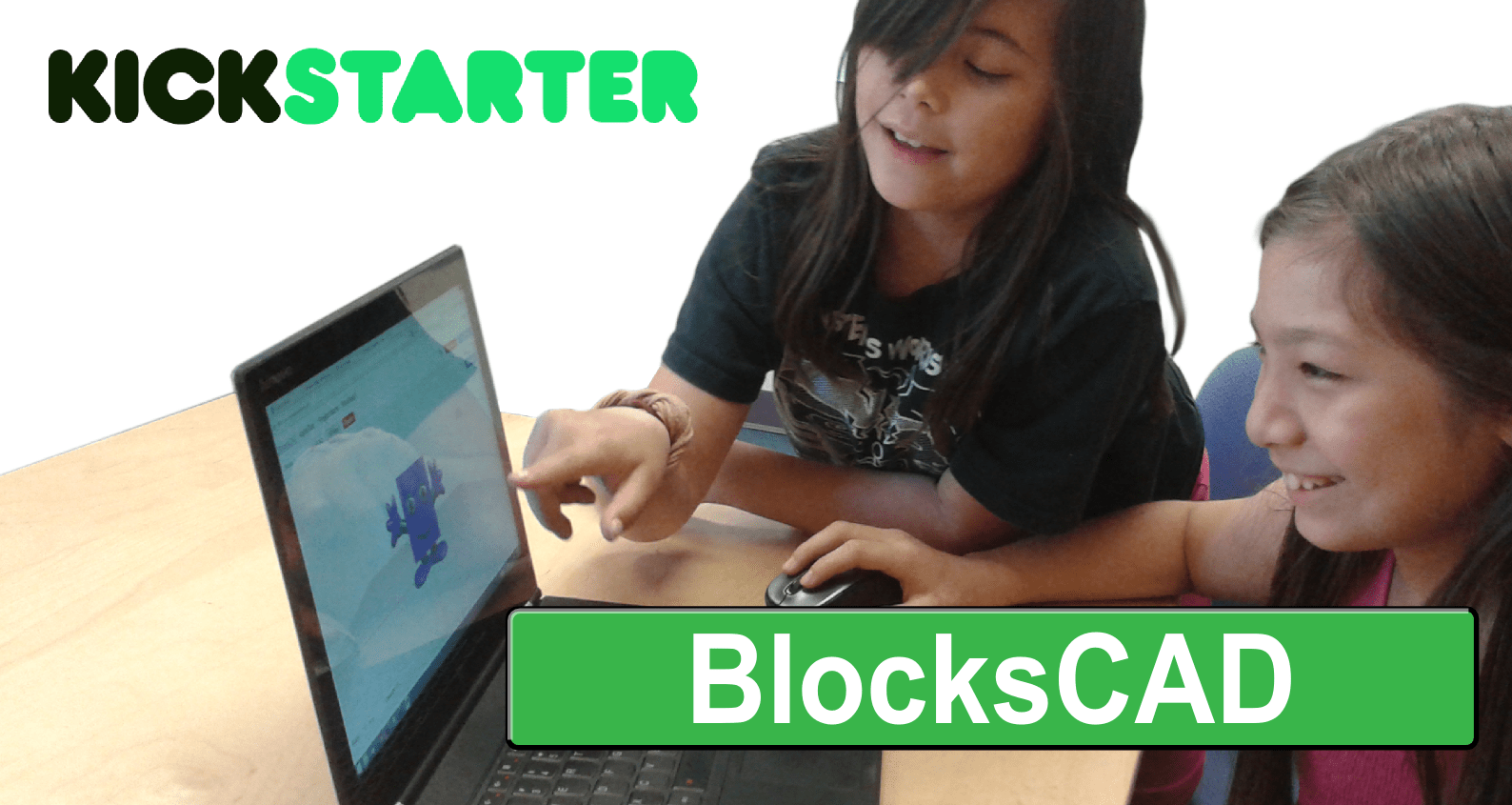
BlocksCAD, a new application  developed by Einstein’s Workshop, helps children as young as eight to design and create their own toys.
Einstein’s Workshop launched a Kickstarter campaign on September 6, 2014, to fund further development and release it under an open source license, free to everyone, everywhere.

BlocksCAD uses a simple drag-and-drop interface to create designs for 3D objects. It offers basic geometric shapes: cube, sphere, cylinder, cone, etc. Kids can combine these shapes to create their own unique toys. They assemble the building blocks of the object, like snapping together LEGO or assembling a jigsaw puzzle. The interface is so simple, even third-graders can use it.

Students have used BlocksCAD to create a wide range of objects, from doll furniture to Daleks, snowmen to strategy game pieces, rings to rocket ships. Annie, 10, is designing a table. She opens BlocksCAD and selects a rectangular block, thin and flat, to form the tabletop. She drags in another rectangular solid and makes it long and skinny – a table leg. Then she copies the leg three times and positions them to support the table. She saves her design and sends it off to a nearby 3D printer. Soon, the table is finished, three inches tall, just right for her dollhouse. She turns back to the computer and begins to design a chair.

Einstein’s Workshop, a STEM education startup in Burlington, MA, developed BlocksCAD to address a specific need. “We were seeing a lot of demand for 3D printing classes for younger children,” says Rebecca Rapoport, COO and co-owner of Einstein’s Workshop. “When we tried it out, we found that kids younger than fifth or sixth grade really struggled.
“On our staff, we have some talented developers who are also educators and experienced fabricators. So when we saw a need for software that’s easy for younger students to use, we did exactly what we encourage our students to do: we built it ourselves.”

“It’s a wonderful way to teach the practical side of math,” says Creative Director Katy Hamilton. “We can tell students that variables are useful, or how to describe a parabola, or we can give them real, concrete reasons to learn these concepts.”
The development team think BlocksCAD could be useful in schools and makerspaces everywhere.
“That’s one of the reasons we chose to do a Kickstarter,” says Henry Houh, president and founder of Einstein’s Workshop. “Not just to raise funds to make this application even better but also to get the word out that it’s going to be open source and freely available to the public.”

Einstein’s Workshop hopes to raise at least $42,000 by October 4, 2014. They offer a wide range of rewards to contributors, from T-shirts and 3D-printed models of the BlocksCAD mascot, The Blockhead, to a training class anywhere in the continental U.S. To support BlocksCAD, please visit the Kickstarter page at http://www.einsteinsworkshop.com/blockscad

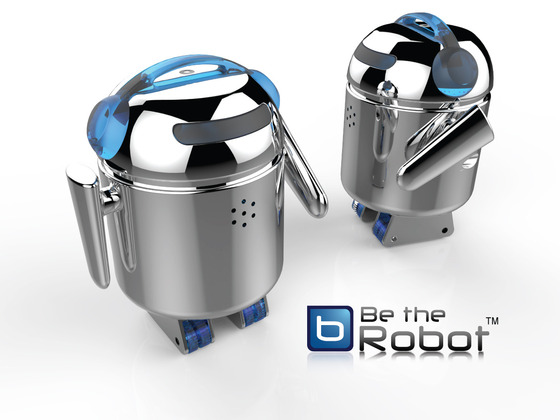
Be The Robot (BERO)-Bluetooth Controlled Open Source Robot by Reality Robotics Limited — Kickstarter

Reality Robotics Limited proudly presents the Be the Robot™ Project!

What is the Be the Robot™ project you may ask?

It is an expertly-engineered-multi-motor-wireless-animated-mobile-robotic-toy-platform that features an advanced internal operating system for communicating through an open source APP with an Android /  iOSsmart device through Bluetooth™.


Be The Robot (BERO)-Bluetooth Controlled Open Source Robot by Reality Robotics Limited — Kickstarter.