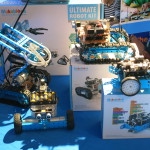
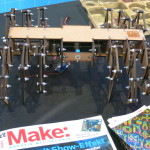
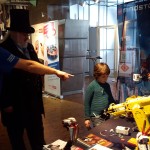
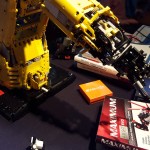
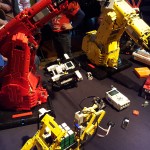
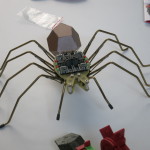
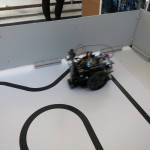
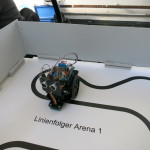
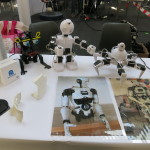
Pictures from Maker Faire Ruhr 2016
Antworten


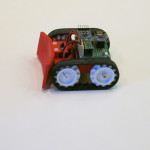
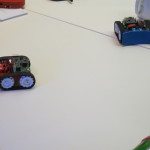





Daegu, Korea – February 16, 2016 – Kamibot, the first robot that makes learning to code truly fun for kids (and kidults), will launch on Kickstarter on Tuesday, February 16.
Kamibot is a cute, programmable edtech robot, about the size of a coffee mug. It is based around Arduino, so kids can easily program it by using a drag-and-drop programming language like Scratch. The programming skills kids learn with Kamibot are easily transferrable to real-world applications.
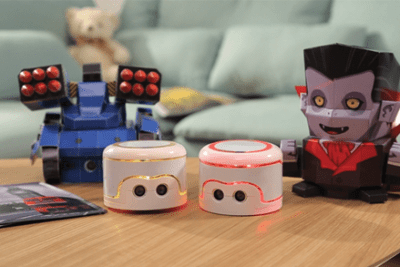
“Unless we make programming fun, kids are never going to stick with it,” said Alvin Chae, co-founder and CEO of 3.14, the company that makes Kamibot. “That’s why we put so much effort into the fun elements of Kamibot, creating colorful papercraft skins that let kids dress up Kamibot, and included the ability to control Kamibot with a smartphone or tablet.”
Papercraft Skins
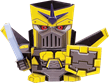
Kami (紙) is the Japanese word for paper, and is at the root of the word origami (折り紙), literally folding paper. The Kamibot team have already created about half a dozen unique papercraft skins that kids can print out, color, and fold to customize Kamibot and give it character. These include The Count, Frankenstein’s monster, a warrior robot, a tank and a missile launcher tank. The company is also working on striking licensing deals for popular cartoon characters.
Hardware
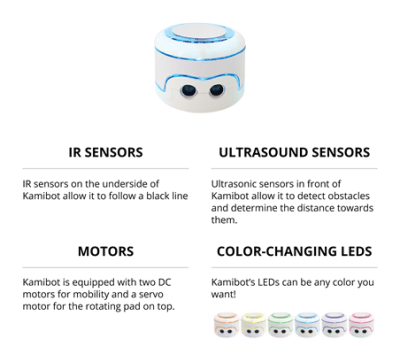
While Kamibot is undeniably fun to play with, it also packs some serious hardware. It’s brain is an Arduino compatible board, based on the open-source standard widely used by the maker community around the world. It also includes front-facing ultrasonic sensors that help it recognize and avoid obstacles and navigate through mazes or around a room. Downward-facing IR sensors allow Kamibot recognize and race along a black line on the floor. DC motors power the wheels, and a servo motor allows the heads of the papercraft characters to rotate from side-to-side. Color changing LEDs brighten up Kamibot and make it even more colorful.
Programming Kamibot
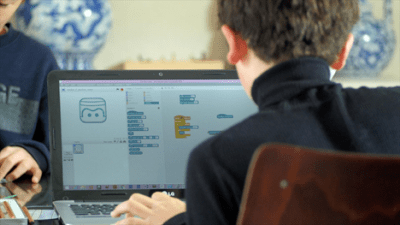
Kids can program Kamibot to follow complex courses and do complex actions, using all of its motors and sensors. One example of how to program Kamibot is a treasure hunt. Kids can set up a table-sized treasure hunt map that includes obstacles like plastic alligators and a treasure chest. Then, using Scratch, kids can program Kamibot to wind its way through the course toward the treasure chest. Several programming project plans, including the treasure hunt, are included with Kamibot. Others will be released on the company’s website in the future. Kamibot can be programmed wirelessly via Bluetooth or while plugged in via micro-USB.
Launching on Kickstarter
Throughout 2015, Kamibot was tested in Korean classrooms and earned high marks both from students aged 10 to 17, and their teachers. Now Kamibot is ready to launch on Kickstarter on Tuesday, February 16 at 7:00 a.m. EST. Super earlybird prices start at $79 plus shipping. Pre-orders close after 30 days and Kamibot will ship to backers in June. For more information, visit Kickstarter and search for Kamibot.
Mit Gesichtserkennung und -verfolgung: immer perfekt im Bild! Jetzt nimmt man Selfies und Gruppenfotos so bequem wie noch nie auf – ohne ausgestreckten Arm oder Selfie-Stick. Die Aufnahmen lassen sich genau so einfach auf Facebook, Google+ und Twitter teilen. Der Selfie-Roboter als die Selfie-Stick-Alternative von Somikon ist unkompliziert und effektiv: Einfach das Smartphone oder Tablet in die dafür vorgesehene Halterung klemmen und per Bluetooth und kostenloser App mit dem Roboter verbinden. Nur noch auf eine ebene Fläche stellen – und schon kann das SelfieVergnügen beginnen.
Der Clou: Per Gesichtserkennung folgt die Halterung den Bewegungen um 360°. Sobald alle fürs Bild still
stehen, startet ein kurzer Countdown und die Kamera löst aus. Für dynamische Aufnahmen: Per
Fernbedienung nimmt man jederzeit spontan Fotos auf, auch wenn Personen in Bewegung sind.
Ob alleine, zu zweit oder in der Gruppe: Die App bietet verschiedene Aufnahme-Optionen, sodass die Bilder
immer gelingen.
– Bluetooth-Selfie-Roboter mit Fernbedienung für Smartphones und Tablet-PCs
– Bluetooth 4.0, bis 10 m Reichweite
– Gummierte Klemm-Halterung: für Geräte bis 200 g mit 6 – 9 mm Dicke
– Kostenlose App (Wali von Unigear) für Android ab 4.3 und iOS ab 7.0 bei Google Play und im App Store
– Mit Social Media-Anbindung: Aufnahmen direkt auf Facebook, Google+ und Twitter hochladen
– 360°-Rundum-Aufnahme: Halterung folgt den Bewegungen dank Gesichtserkennungs-Option in der App
– Aufnahme per Gesichtserkennung, Fernbedienung oder voreingestelltem Timer
– Mit Upload-Funktion für Facebook, Google+, Twitter
– Status-LED: zeigt den aktuellen Modus an
– Gummierte, rutschfeste Standfläche mit 1/4″-Stativ-Gewinde
– Leistungsstarker Ni-MH-Akku: 800 mAh, für 2 Stunden Motorbetrieb (je nach Einsatzweise), wird per USB geladen
– Masse Roboter (Ø x H): 74 x 45 mm, 125 g
– Masse Fernbedienung: 75 x 41 x 20 mm, 44 g (inkl. Batterien)
– Selfie-Roboter inkl. Fernbedienung, 2 AAA-Baterien, USB-Ladekabel und deutscher Anleitung
Preis: CHF 89.95 statt empfohlenem Herstellerpreis von CHF 149.95
Bestell-Nr. ZX-1555
Selfie-Roboter mit Gesichtserkennung (https://www.pearl.ch/ch-a-ZX1555-1303.shtml)
Die 3. Make Rhein-Main findet am letzten Januarwochenende 2016 in Frankfurt statt. Wer bei der Messe rund ums Selbermachen mitmachen will, kann sich bis zum 10. Januar 2016 um einen Standplatz bewerben.
Wir rufen Bastler, Hacker, Crowdfunder, Robotik-Fans, Start-ups, Raketenbauer, 3D-Drucker, Guerillia Gärtner, Tinkerer, Circuit Bender, Fablabs, Musiker und alle anderen spannenden Projekte – KURZ „MAKER“ – auf sich zu melden!
Maker können auf der 3. Make Rhein-Main einen zweitägigen Stand aufmachen. Bewirb dich mit deiner Idee bis zum Sonntag, 10. Januar 2016 per Email an
[email protected]
Die Make Rhein-Main bringt alle kreativen Selbermacher zusammen, die du sonst wie Stecknadel im Heuhaufen gesucht hättest. Also raus aus den Hobbykellern, den Schulen und den Spaces und macht mit!
Außerdem suchen wir noch Helfer für die Orga, Auf- und Abbau.
Wann? Samstag und Sonntag, 30. und 31. Januar 2016
Wo? Hallen unter der Honsellbrücke (Ostbahnhof), Frankfurt
Kostet das was? Nein, Stände bei der Make Rhein-Main kosten nichts.
Kann ich verkaufen? Ja, aber nur nach Absprache. Wir sind kein Designmarkt.
Standgröße? Zwischen 1-4 Quadratmeter, je nach Bedarf
Wie viele Besucher? Wir rechnen mit rund 1.000 Besuchern übers Wochenende
Nach dem Erfolg der ersten beiden Messen sind wir jetzt Profis. Das heißt auch, dass wir die Make Rhein-Main in ein Start-up umgewandelt haben, damit wir bessere Messen ausrichten können. Trotzdem gilt wie immer, dass wir alles, was übrig bleibt in neue Projekt stecken. Wir möchten, dass mehr Menschen was bauen. Wir bauen die „Make Rhein-Main“ dazu.
GREENSBORO, NC — After graduating from college, designer and maker, Charles Wade, began his hobby by making unique animal stickers, which later morphed into woodcraft and papercraft creations. During a test for one of his woodcrafts he designed and built a poseable wooden robot. The Helper Bot was born.
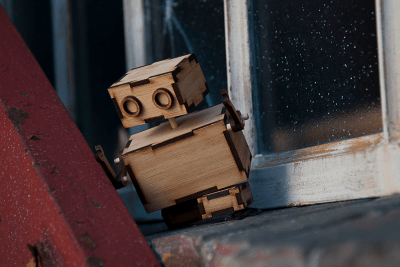
With the creation of the Helper Bot, Wade began experimenting with other ideas. After receiving feedback and appreciation for his work, he created more robots and designed assembly kits that would allow others to build his creations.
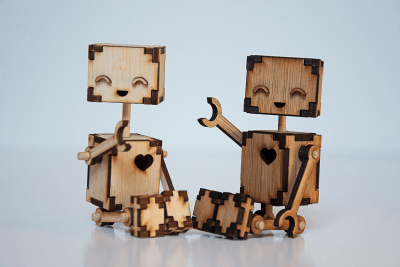
Wade has cultivated his hobby into a career by establishing RoboMustache; a collection of wooden robot assembly kits, accessories and merchandise. More than a collection of novelties, the RoboMustache hints at a rich world of storytelling as well. Coined from a found project in a derelict factory, as the company grows, so will the RoboMustache universe. The story will expand to tell more about the existing robots and bring in new robots along the way.
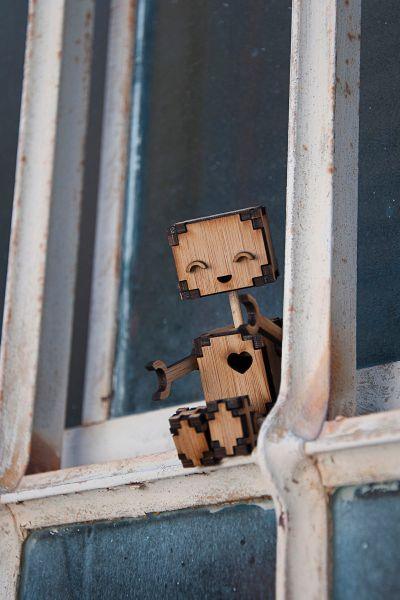
Wade is crowdfunding the project to take the RoboMustache universe to the next level. The Kickstarter launched Dec. 4, 2015 and runs through the new year.
Gemini, a waterdrop-shaped, two-wheel, self-balancing robot with two distinct personalities, will accommodate consumers’ leisure needs more than ever before. The Gemini Kickstarter campaign launches on November 10th, 2015.
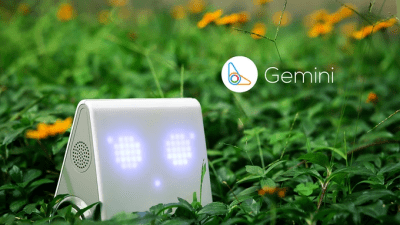
After the wild success of Makeblock, an educational robot kit series targeting makers and educators, the Shenzhen-based hardware startup Shenzhen Maker Works Technology Co., Ltd expanded its reach and designed the user-friendly smart robot Gemini, which requires no programming knowledge or assembling efforts on users’ behalf.
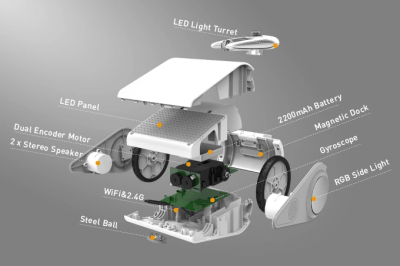
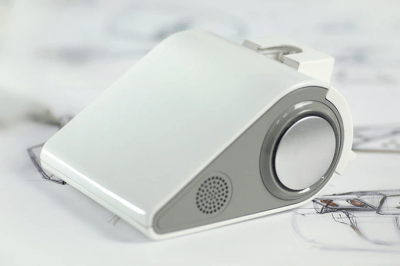
While standing, Gemini moves like a cute puppy, spreading joy via iridescent LED lights and flashing emoticons, and dancing to music at your command. When Gemini is equipped with a turret and crouches down, however, the robot transforms into a fearless warrior who is ready to combat.
The key to Gemini’s accurate signaling and angular actions lies in the self-balancing technology. With one MPU-6050 3-Axis Accelerometer and Gyro working with STM32 MCU, through real-time analysis of related state parameters, Gemini can minimize the displacement both vertically and horizontally, in a timely manner, and control the angular offset with the utmost accuracy, remaining level with ease.
Stable Movement
The waterdrop-shaped, two-wheel, streamlined structure, empowered by the dual encoder motors with high resolution, ensures Gemini’s extraordinary agility and mobility.
Innovative Control Systems
Based on the free iPad app, the robot can perform complex motions and tasks with tap-and-swipe finger movements, tilting techniques (gravity control), and voice control.
Fluent Intercommunication
Together, the 2.4G and Wi-Fi modules offer seamless and timely communication, instantly transmitting and updating all parties’ data throughout the game.
High-Sensitivity LED Blue Light
Inheriting the signature Makeblock blue LED lighting, Gemini improves the transmission efficiency and undermines unstable performance from the reflection of the sun, which is often encountered by IR light-enabled devices. Overall, Gemini offers users an enhanced interactive experience.
Starting at USD $99.00, the team provides different bundles for buyers. “Our mission is to make an ‘Apple product’ for consumer robot kits,” says the founder and robot hobbyist Jasen Wang.
See Kickstarter page: https://www.kickstarter.com/projects/1818505613/gemini-entertainment-and-educational-robot-for-kid
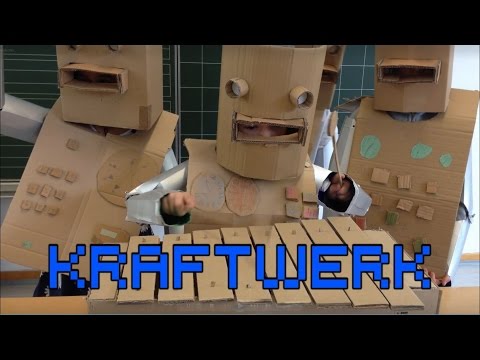
Kinder der 1. Klasse (GTS Lemmchen Mainz-Mombach) basteln, singen und spielen Roboter von Kraftwerk.
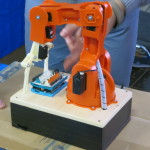
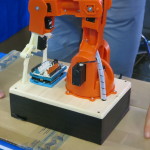
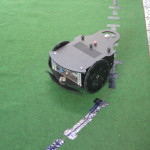
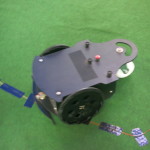
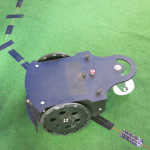
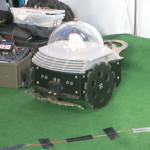
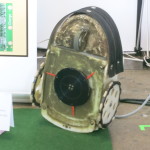
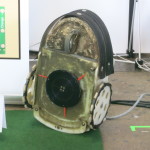
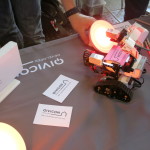
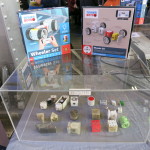
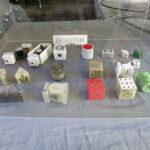
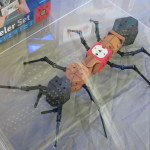
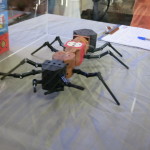
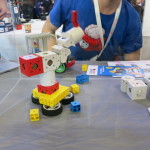
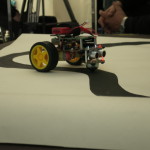
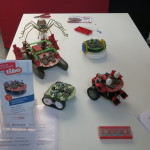
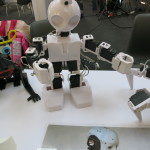
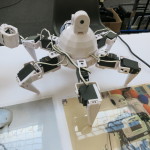
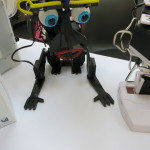
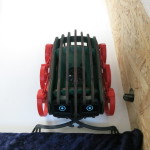
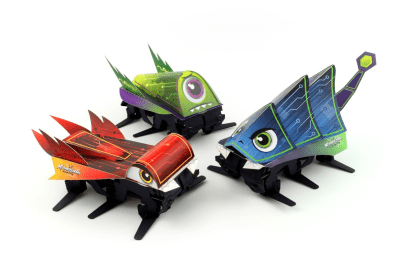
HAYWARD, Calif. (October 20, 2015) — Dash Robotics today unveiled the first generation of bio-inspired Kamigami robots, the first advanced robot toy available for less than $70. Kamigami are fast, lightweight, build-it-yourself robotic toys that snap together in an origami-like fashion. Kamigami fit in the palm of your hand, run very fast on six legs, and are controlled by a programmable mobile app (for iOS initially, Android coming in 2016). Kamigami will be available initially through Kickstarter, for $49 – a 30% discount off the MSRP of $69. Kamigami will be available directly from Dash Robotics and at Amazon.com in 2016.
Dash created Kamigami robots to bring programmable robotics to the mass market. Its low price point makes it the most accessible robotic toy ever. The DIY nature of Kamigami along with the simplicity of drag-and drop programming for changing and evolving each individual robot is intended to inspire kids everywhere to engage with, and learn from, advanced technology in a way that is easy, affordable, social and fun.
Kids can use easy drag-and-drop programming within the mobile app to modify the behavior of each individual robot, and can toggle between individual and team play modes. A simple yet sophisticated set of electronics included with each robot are easy for anyone to install. These include a small circuit board, battery, a light sensor, IR sensor, gyroscope and accelerometer, which combine to bring Kamigami to life. With the IR sensors, Kamigami robots can tag one another remotely in team play modes, such as tag or battle games. IR signals transmitted from one robot to another can cause different player-designed effects on the tagged robot.
Kamigami are evolved from the initial Dash Robot beta, released last year to test design and get early customer feedback. The core “skeleton” or chassis of Kamigami looks much like the original Dash beta, whose rapid movements mimic the movements of animals, particularly cockroaches and lizards. The founders of Dash studied biomimicry and robotics at the University of California, Berkeley. In a new twist, Kamigami feature interchangeable shells that snap over the chassis, turning the robot into a colorful creature from out of this world.
Nick Kohut, co-founder and chief executive officer of Dash Robotics, said, “We designed Kamigami so kids could discover a fun new way of learning. Our mantra is ‘build, program and evolve’ and Kamigami helps kids do just that. It’s the first DIY programmable robot that is affordable for everyone.”
Key Features of Kamigami Robots:
■ Do-It-Yourself: Kamigami can be assembled without tools in under an hour. No glue or soldering required.
■ High-speed: High speed and robust locomotion inspired by some of nature’s fastest runners.
■ iOS compatible: Free app allows you to control and program the robot. Android app coming soon.
■ Rechargeable: Built-in high performance rechargeable battery. Recharges in about 30 minutes. 45-60 minutes of playtime per charge.
■ Advanced sensor suite: Includes 10 different sensors, for things such as rotation, acceleration, sensing and responding to ambient light, sending and receiving infrared signals.
■ Robot-to-robot communication: Infrared communication allows robots to talk to each other, allowing the robots to cooperate or compete.
■ Durable: Robot’s flexible construction allows the robot to shrug off falls and collisions.
Each Kamigami robot can be programmed with a unique set of behaviors and characteristics.
This enables a wide range of individual and team play modes that take advantage of the robot’s sensors and functions. Games that can be created include:
■ Sumo-bots – first to fall off the table loses points
■ Build your own battle game where robots blast each other with the IR lasers
■ Robot relay – one robot cannot run until it gets tagged by another robot
■ Tanks – take turns trying to get into firing position
Most robots today are constructed either with hundreds of expensive injection-molded parts, or metal fastened together with steel bearings. They require an individual motor, or actuator, for each joint, making them slow, expensive and heavy. To overcome these fundamental challenges, Dash constructs its robots with a material made up of highly durable yet lightweight plastic.
This material fastens together using flexible plastic joints, or flexures, rather than ball bearings. Because of this design approach, Kamigami robots require only one or two actuators – another significant reduction in cost for both prototyping and manufacturing.
This rare combination of new composite material, intelligent design and innovative manufacturing results in robots that have much greater mechanical flexibility, are much faster, are lighter in weight and can be sold at a fraction of the cost of any competitor.
Dash Robotics was founded in 2013 by four UC Berkeley PhD students on a mission to make advanced robotics simple, fun and affordable for everyone. Dash has received a round of seed funding led by IronFire Capital, which has a track record of success investing in early-stage companies including Songza (acquired by Google), Streem (acquired by Box), Caviar (acquired by Square) and many others. Dash is headquartered in Hayward, California.