LOS ANGELES–(BUSINESS WIRE)–Today, Google Lunar XPRIZE announced the final MOONBOTS Challenge, an international competition that inspires the next generation of space explorers and innovators and is also known as the “Google Lunar XPRIZE for Kids.” The MOONBOTS Challenge, which invites kids ages 8 to 17 to create a video of what they would leave behind on the Moon as a legacy and design and program their own lunar rover, will for the first time provide an opportunity for finalists to send personalized video messages to the Moon, as part of the Google Lunar XPRIZE teams’ missions.
The MOONBOTS Challenge is inspired by the $30M Google Lunar XPRIZE, a global incentivized competition that was launched to challenge and inspire engineers and entrepreneurs from around the world to develop low-cost methods of robotic space exploration and ignite a new era of space exploration. The Google Lunar XPRIZE is in its final phase with five privately funded teams preparing to initiate their launch to the Moon by December 31, 2017. The sixth and final MOONBOTS Challenge will also provide an opportunity for one grand prize winner to go on a once-in-a-lifetime trip to meet with a finalist Google Lunar XPRIZE team.
“As we embark on the final leg of the MOONBOTS Challenge, the next generation of space travelers will get an opportunity to tell us what is most important to them, and actually leave that legacy behind on the Moon,” said Chanda Gonzales-Mowrer, senior director, Google Lunar XPRIZE. “We really want to get kids excited about space exploration and the associated STEM disciplines, and we welcome newcomers from all countries and communities to join the competition and help inspire kids all over the world.”
In order to enter the competition, teams, comprised of two to four members and one team captain that is 18+ years old, are asked to submit a two-minute video about what they would leave behind on the Moon as a legacy. Registration for the MOONBOTS Challenge is officially open through March 15, 2017 and there is no charge to enter.
A panel of judges from the International Space University will select 12 teams by April 2017 to qualify and those teams will be provided one of three robotics platforms (LEGO® MINDSTORMS® EV3, VEX IQ, MECCANO™ Meccanoid 2.0) to build and program a unique simulated robotic mission, based on the legacy in the video they submitted. Additionally, they are asked to provide a demonstration to the judges via live webcast and contribute to STEM (Science, Technology, Engineering and Math) education by sharing their innovation with children and adults in their community. The announcement of the grand prize winner will be made in July 2017.
Since 2010, MOONBOTS has had hundreds of teams sign-up and has challenged thousands of young people from all around the world. In addition to the Google Lunar XPRIZE, competition partners include FIRST® LEGO® League, VEX Robotics Inc., LEGO Education, Parentesis.com, MECCANO™, GeekDad, GeekMom, Robomatter, Inc. and Dexter Industries.
More information about the competition can be found at moonbots.org.
About the Google Lunar XPRIZE
The $30M Google Lunar XPRIZE is an unprecedented competition to challenge and inspire engineers and entrepreneurs from around the world to develop low-cost methods of robotic space exploration. To win the Google Lunar XPRIZE, a privately funded team must successfully place a robot on the Moon’s surface that explores at least 500 meters and transmits high-definition video and images back to Earth. Visit http://lunar.xprize.org/ or @GLXP for more information.
About XPRIZE
XPRIZE, a 501(c)(3) nonprofit, is the global leader in designing and implementing innovative competition models to solve the world’s grandest challenges. Active competitions include the $30M Google Lunar XPRIZE, the $20M NRG COSIA Carbon XPRIZE, the $15M Global Learning XPRIZE, the $10M Qualcomm Tricorder XPRIZE, the $7M Shell Ocean Discovery XPRIZE, the $7M Barbara Bush Foundation Adult Literacy XPRIZE, the $5M IBM Watson AI XPRIZE, the $1.75M Water Abundance XPRIZE and the $1M Anu & Naveen Jain Women’s Safety XPRIZE. For more information, visit http://www.xprize.org/.
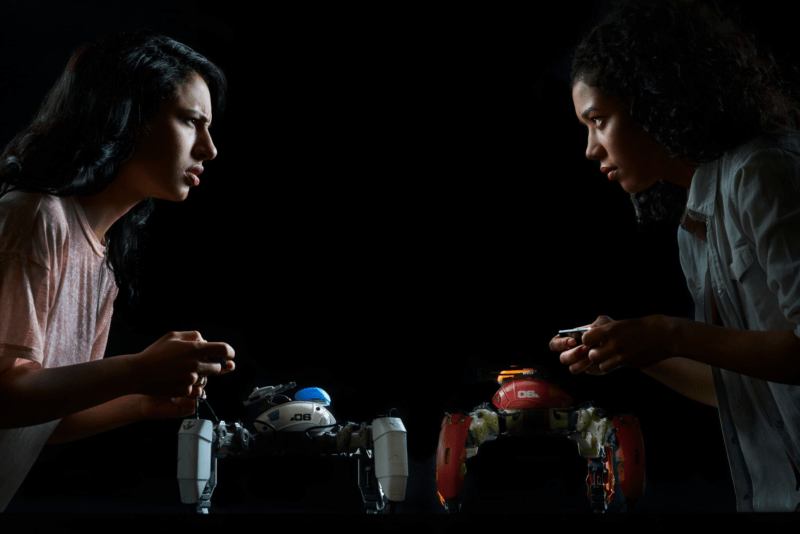
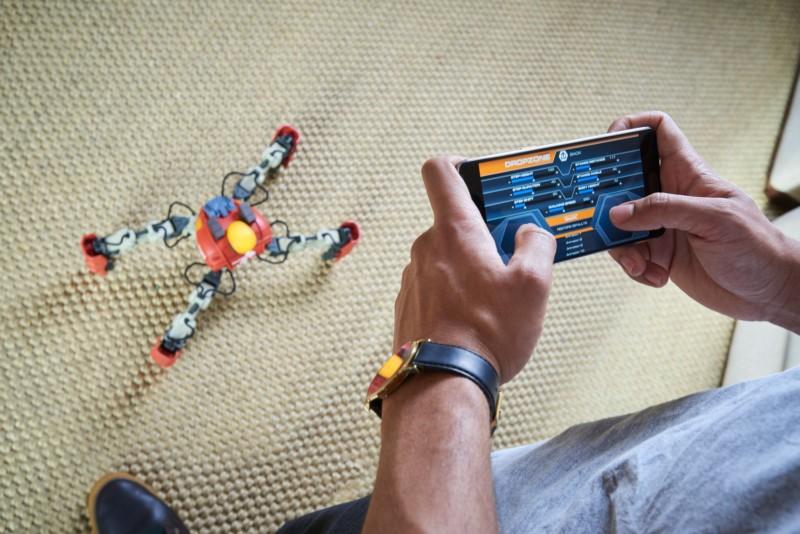



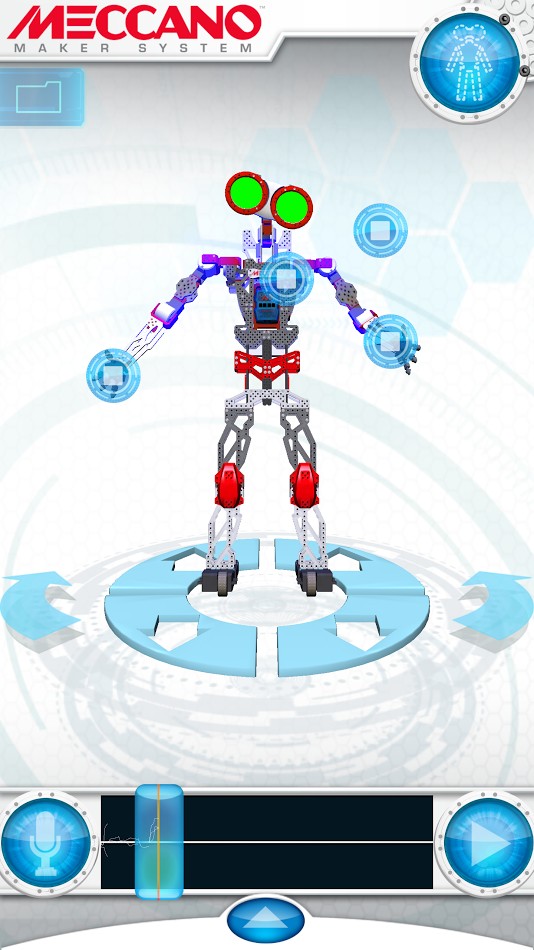
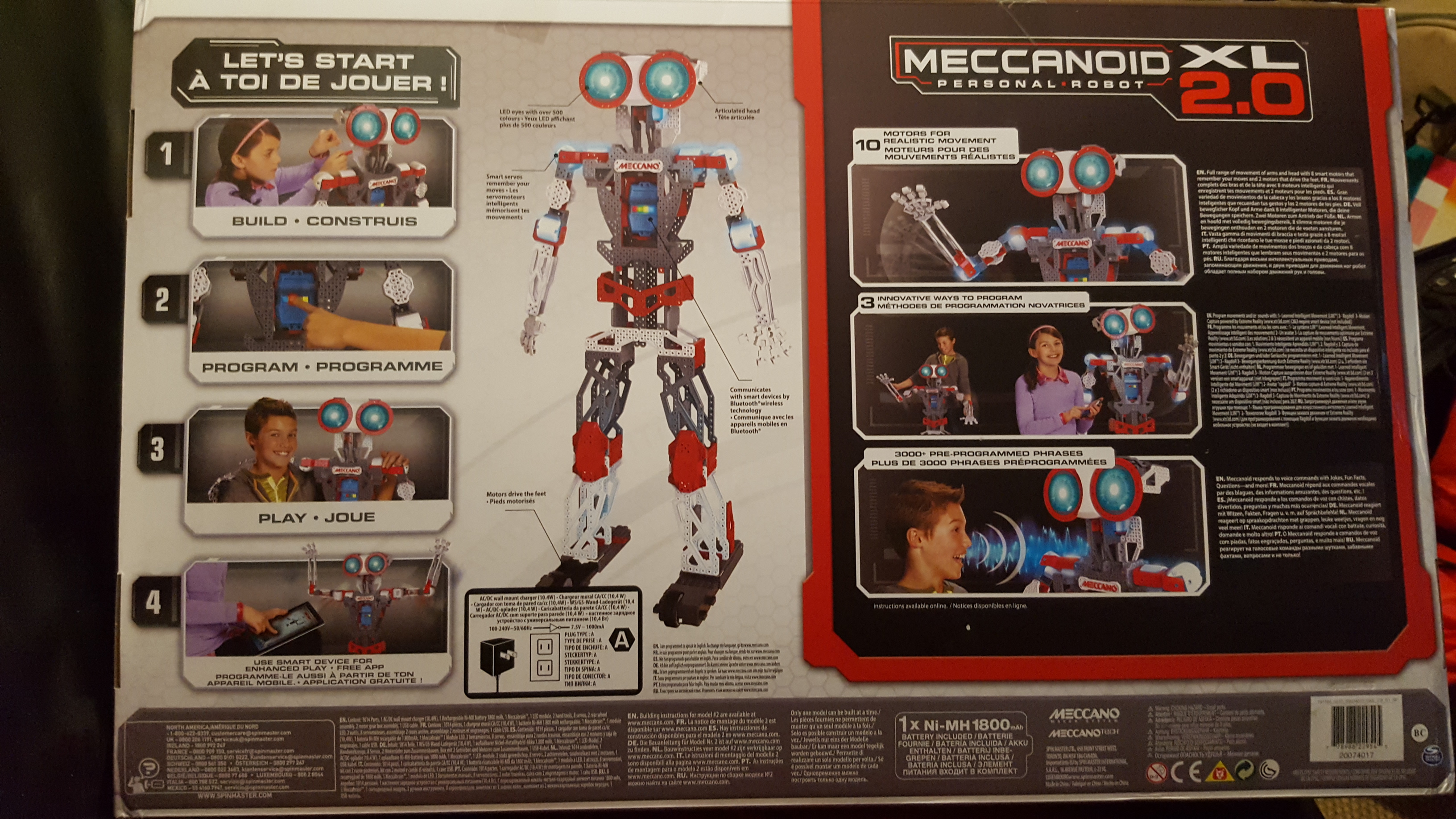
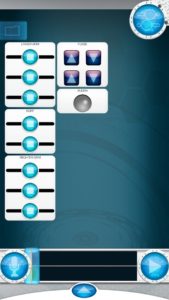
 Der Meccanoid lässt sich auf verschiedene Arten „Programmieren“. Bewegungen lassen sich aufzeichnen durch das bewegen der Gliedmaße und auf Knopfdruck wieder abspielen. Hierbei handelt es sich natürlich nicht um richtige Programmierung, aber es lassen sich sehr schnell Bewegungsabläufe speichern, die dann wieder abgerufen werden können. Dieser „Programmiermodus“ ist für jeden geeignet, der die richtige Programmierung scheut. Ein weiterer Modus ist das Aufzeichnen von Bewegungsabläufen mit der Meccanoid App (für Android und iOS). In der App steht ein virtueller Roboter zur Verfügung dessen Bewegungen sich auf den realen Meccanoid übertragen lassen. Auch diese Methode bietet keine richtige Programmierung, handelt es sich hierbei auch nur um das Aufzeichnen von Bewegungsabläufen. Richtige Programmierung ist hingegen mit der „Drag and Drop – Programmierung“ in der App möglich. Hier lassen sich einfache Programme zusammensetzen, die änhlich wie ein Ablaufdiagramm aufgebaut ist. Es kann auf Ereignisse (Inputs) wie Zeit,
 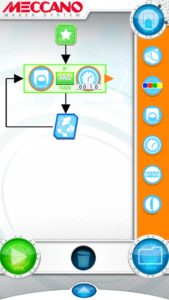 Motorenbewegung, Knopdrücke, etc reagiert werden und daraufhin Bewegungen, Sprachausgabe, LED Farbwechsel und andere Vorgänge gestartet werden. Hier lassen sich auch erste einfach Programmabläufe und Programmierkonstrukte (Bedingungen, Schleifen) erlernen. Da der Meccanoid keine zusätzlichen Sensoren enthält, sind die Möglichkeiten hier leider etwas begrenzt. Die App bietet ein interaktives Tutorial mit englischer Sprachausgabe und deutschem Untertitel. Ansprechend für Kinder ist hier der „Coach Meccanoid“ virtuelle Roboter, der einen Schritt für Schritt an die Benutzung der App heranführt.