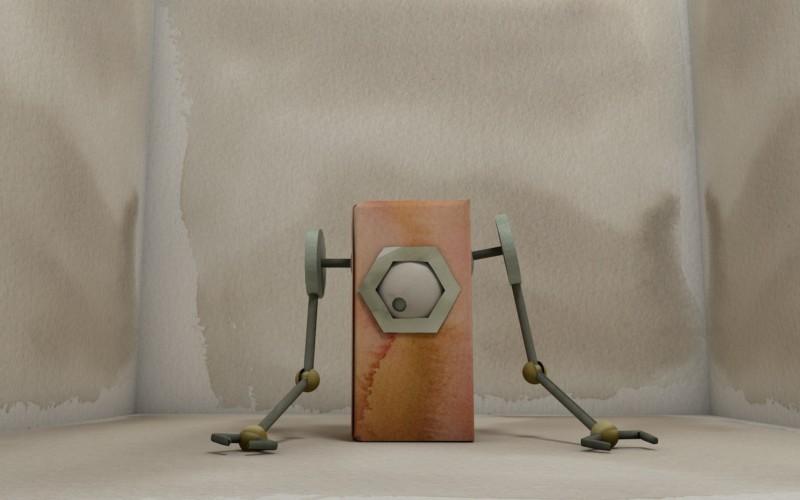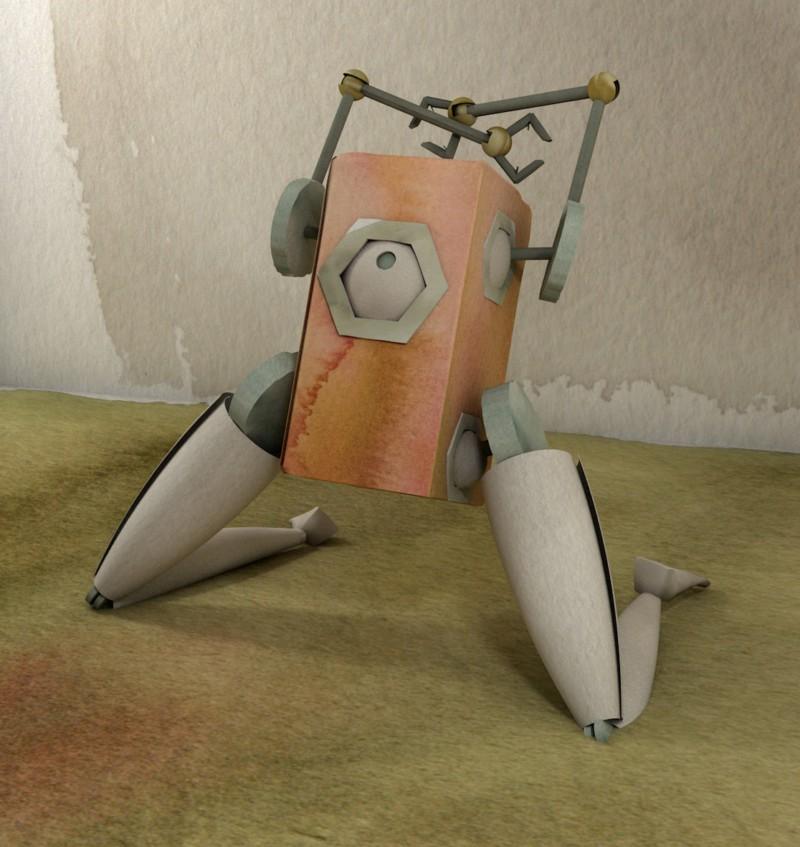
Canadian visual artist Andrei Feheregyhazi seeks to create a ‘Sexy Robot Pin-Up Calendar.’


Andrei came up with the idea while working on designs for an upcoming book project featured robots.  One of the designs was a box with one eyeball and arms.  He showed it to the woman sitting next to him and mentioned he still needed to add legs.  She said, “you should make them sexy legs.”  He did, and that gave birth to the Sexy Robot Pin-Up Calendar.

Andrei is intrigued by the fact that robots are not inherently sexy, but his robots do their best to look sexy.   As robots, they don’t they don’t understand human sexuality and attraction.  As a result, they look to sexy calendars, sexy Halloween costumes, television and movies, and burlesque shows.  Due to this the robots create an adorably awkward version of “Sexy.”

While the calendar is meant to be fun and enjoyable, it also explores issues of sexuality, objectification, and gender identity. The robots don’t identify as any gender.  This means that although a firefighter with washboard abs is typically seen as male, there’s no reason the viewer couldn’t decide it was female or not assign a gender.

The Kickstarter campaign has set a goal of $9,000 and describes the calendar as „featuring adorable robots trying their best to look sexy and romance their way into your hearts.“

„I like the idea of things that don’t understand human attraction trying their best to represent human attraction,“ said Feheregyhazi.

Tertill, The Weed-Killing Robot, Exceeds Kickstarter Goal

With 2 Weeks Left, Solar-Powered Gardening Bot Hits 170% of its Goal, and is Now Shipping Internationally

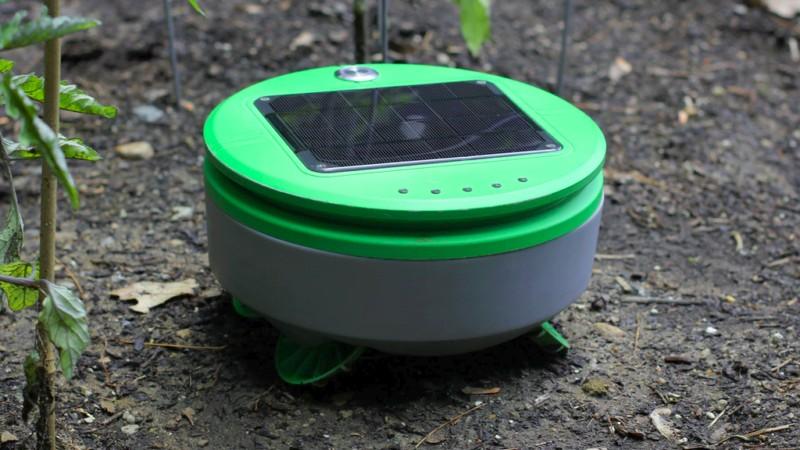
Boston, Massachusetts – Led by the inventor of the Roomba, the Boston-based Franklin Robotics is currently raising funds for their latest release – a solar-powered, robotic weed-killer for home gardens. Named Tertill, the 2.5-pound, disk-shaped robot patrols the garden and intelligently identifies – and whacks – unwanted plants.

Word is spreading quickly across the gardening and robotics worlds, and in the first five days of Tertill’s Kickstarter campaign it reached its goal. Now with just over two weeks of crowdfunding left, Franklin Robotics has already raised over 170% of their goal. MarthaStewart.com wrote that the “cute robot… works magic on your unwanted greens.” and Engadget adds that the “Roomba creator wants to do for gardens what he did for your floors.” After dozens of Kickstarter backers from Japan, Australia, Switzerland, Germany, and more have pushed for international delivery of Tertill prototypes, Franklin Robotics has decided to open up shipping to the entire world.

Tertill uses unique design elements and a variety of sensors to patrol the garden daily, avoid plants and obstacles, and look for weeds to eliminate. The robot has a simple method of telling weeds from desirable plants: weeds are short, plants are tall. A plant tall enough to touch the front of Tertill’s shell activates a sensor that makes the robot turn away. A plant short enough to pass under the shell activates a different sensor and turns on the weed cutter. Franklin Robotics provides protective collars to put around short plants and seedlings until they are tall enough for Tertill to recognize. Tertill uses a spinning string trimmer to cut the weed off near the ground. Because Tertill lives in your garden and goes looking for weeds every day, weeds are always small when the robot finds them. If the weed sprouts again, Tertill will be there to quickly whack it, and since the weed will never grow enough to have leaves, it will run out of energy and die.

Tertill is 100% solar powered, and knows the best times to patrol the garden to use its energy most efficiently.

Robotic garden weeding offers gardeners several important advantages:

  • Herbicide-free garden: Tertill helps you maintain a pesticide- and chemical-free organic garden.

  • Diligence: While humans might procrastinate or forget to weed, go away on vacation, or get distracted, Tertill doesn’t.

  • Productivity: Tertill prevents weeds from eating up your crops’ water, fertilizer, and sunlight.

  • Gardening limitations: Tertill is great for gardeners who have limited or challenged mobility, and allows them to spend more time having fun in their garden.

Tertill is $249 on Kickstarter right now, and is expected to ship in early 2018. Future Tertill models will include other functions, such as pest repellents, a scarecrow function, and soil quality sensors.

About Franklin Robotics

Founded in 2015, Franklin Robotics, Inc. is located north of Boston, Massachusetts.  Franklin’s imperative is to exploit rapidly developing, low cost robotic technology to accomplish tasks not previously automated.  The principals of Franklin Robotics bring decades of experience to this challenge.  A focus of the company is the creation of technology appropriate to home gardens, agriculture, and other outdoor applications.

Sony Global Education Launches an Indiegogo Campaign for KOOV, a Coding and Robotics Kit for the Next Generation of Young Innovators

SAN DIEGO, CA (June 20, 2017) – Sony Electronics in conjunction with Sony Global Education announced today the launch of a limited Indiegogo crowdfunding campaign for KOOV, a new coding and robotics kit for the next generation of young innovators.

The Sony Global Education team developed KOOV as a fresh approach to learning robotics and programming. KOOV is already available in Japan and China, and Sony is now looking to expand the program to the US in order to gain feedback and insight into the American market.

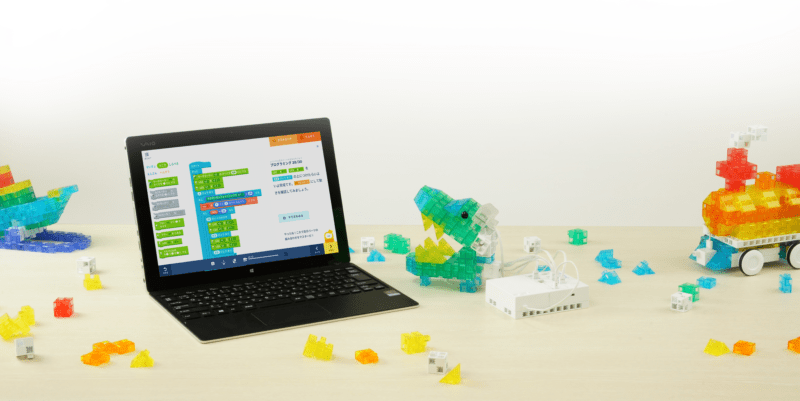
KOOV is a robotics and coding educational kit made up of blocks, sensors, motors, actuators, and a companion app that teaches children core concepts about design, coding and robotics. The app also features a secure social space, where children can share their designs and code with other young inventors from around the world.

The blocks can be assembled into any shape, with the final figure capable of being controlled as a robot. The kit encourages learners to „Play“ by building with 7 kinds of translucent blocks, „Code“ by controlling the assembled figure through the KOOV app, and „Create“ by embracing their creativity and imagination.

Sony Global Education believes that the teaching materials for robotics and programming will play a major role in cultivating STEM literacy and nurturing the next generation of problem solvers.

KOOV was built on the belief that STEM learning tools should be accessible to all children. Through the use of inclusive colors, shareable design and the goal of building a foundation for future STEM learning, Sony hopes to attract parents of children 8 to 14 years old, with equal emphasis on boys and girls.

Pre-orders are available for a limited time beginning June 20th via an Indiegogo, with product scheduled to ship to backers in early December. The suggested retail price is $359 for the Starter Kit and $499 for the Advanced Kit with limited quantities available at discounts of up to 40% for early backers. Interested consumers can learn more about KOOV, and place preorders at https://igg.me/at/KOOV.


Learn programming and more with the Hedgehog robotics controller

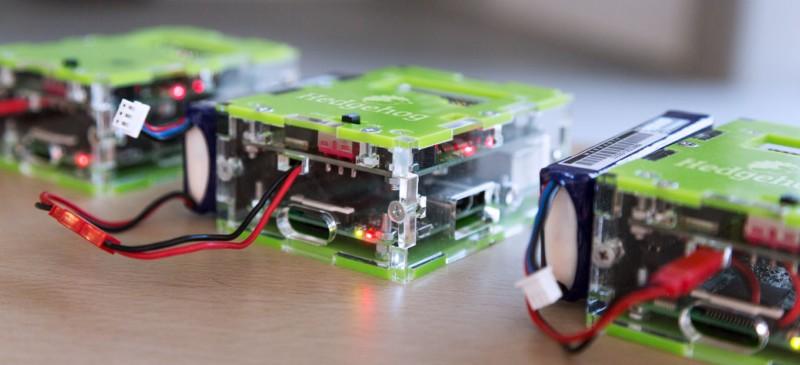
Hedgehog is for anyone who wants to explore robotics, no matter their age or expertise. It is particularly suited for learning programming, but doesn’t stop there: building your own robot allows you to explore mechanics as well, and experienced programmers can tackle complex projects, such as swarm intelligence, advanced image processing, or developing their own microcontroller firmware.

Hedgehog is developed by the Practical Robotics Institute Austria and is a robot controller: the control module and heart of any robot. It can be combined with standard RC servos, DC motors, as well as various kinds of sensors and push buttons. Its case connects easily to Lego building blocks, but of course robots can be constructed from any kind of pieces.

In many ways, Hedgehog is similar to other controllers, but what makes it stand out is its versatility. Hedgehog supports both visual and textual programming through Blockly and Python. It allows you to connect different kinds of custom hardware through its UART, I2C and SPI busses. You can connect to Hedgehog over Ethernet, WiFi, or by directly plugging in monitor and keyboard. Use either the beginner-friendly in-browser development environment, or use SSH to access Hedgehog’s Raspberry Pi directly. Augment your controller by using thousands of third-party applications & libraries for the Raspberry Pi. Get into Digital Manufacturing by downloading our blueprints and laser-cutting a customized acrylic case – the possibilities are endless.

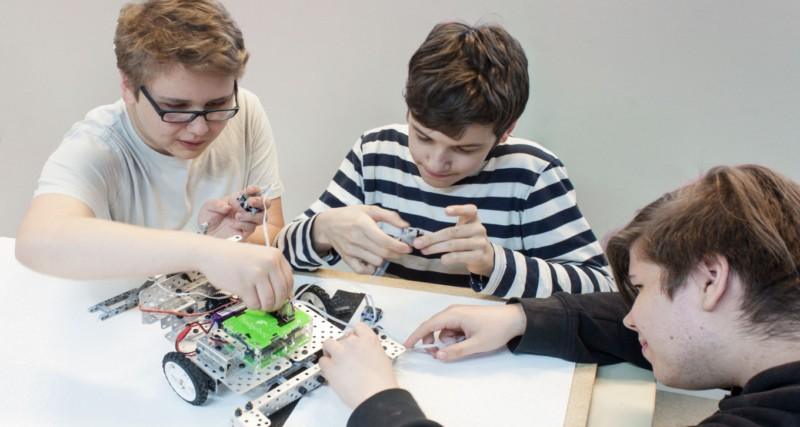
“We use Hedgehog in workshops all the time, and simplicity and versatility are two major requirements for us. Simplicity allows our learners to focus on exploring robotics, instead of handling the system. And versatility allows us to work with the same hardware in different settings, be it with elementary schoolers, in robot competitions, or in projects with students from technical high schools,” says Clemens Koza, one of Hedgehog’s developers. Workshop and classroom settings are indeed a focus of the controller’s design, but hobbyists profit from this as well: more possibilities potentially mean more projects and experiments, making the controller a cost-effective purchase.

All of Hedgehog’s hardware and software is open source, Clemens Koza explains: “when versatility is one of your goals, hiding details is counterproductive. We’re convinced of our system’s value and dedicated to its ongoing development. We try to enable a broad audience to explore technology and engineering, and I think Hedgehog is a great tool for this.” Hedgehog is currently on Kickstarter, and more information is available at hedgehog.pria.at.

Move Your Project From Prototype To Production With Evezor

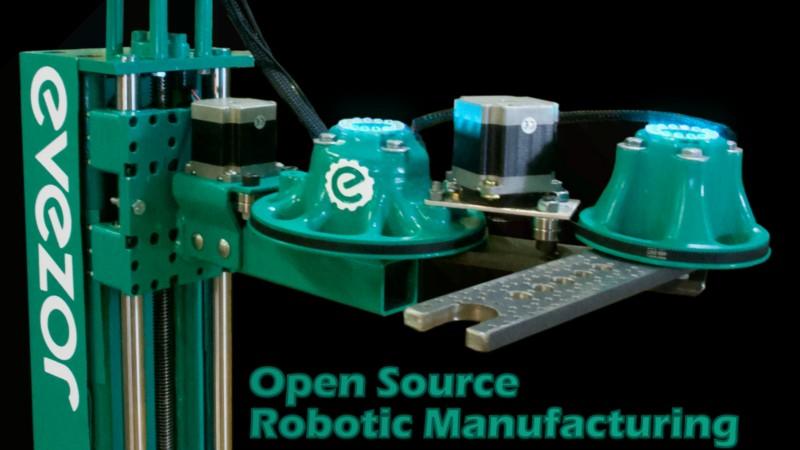
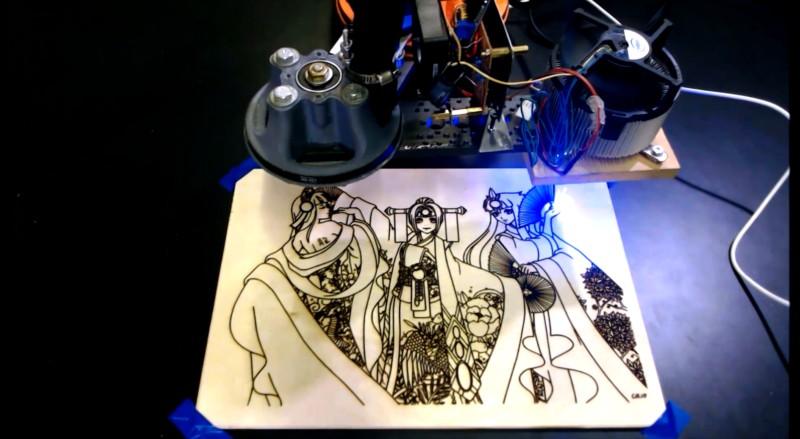
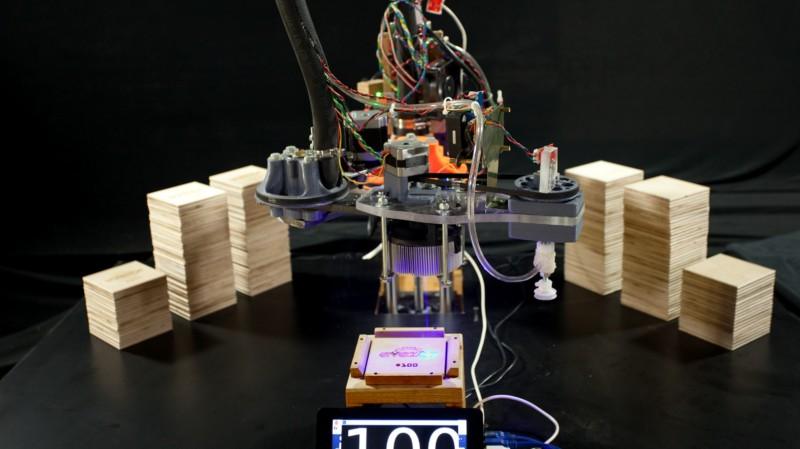
Evezor is a robot that can carve, draw, engrave, pour, pick,
place, cut, weld, 3D print, grab, mill, assemble and create your next
project or business.  Powered by Raspberry Pi, open source software and
hardware, Evezor is the most hackable robotic arm there is.  Evezor can
share and automate the hand tools you already own and with open tool head
platform, anyone can make tools for this machine.

A welded tube tower and steel skeleton give Evezor the strength
to support tools weighing over six pounds.  Precision machined components
and NEMA 23 motors deliver precise control, quiet operation and the power
for machining operations.  An 800mm wingspan provides the build area for
large projects.  Evezor has printed an entire single piece violin.

Magnetic encoders make this collaborative arm so user friendly a four year
old can program it, and closed loop control gives you the peace of mind that
you’ll never miss a step.

Make prototypes from a wide array of tool heads, then seamlessly
scale up to production with the same tool.  Evezor’s agility opens the door
to the entrepreneurial world for every maker.  What can Evezor make?  The
answer to this question is anything you can think of, and cocktails.

Evezor commits itself to giving back to the open source and open
hardware communities by contributing 10% from every arm.  „We think it’s
important to give back to the ecosystem that made this project possible“
says Andrew Wingate [Founder.]  Their mission is to democratize
manufacturing and increase access to opportunity.

„Chicago is one of the world’s megaregions and we often get
overlooked behind Silicon Valley and New York. I think this is the best
place in the world to kick start the next industrial revolution“ ~Andrew
Wingate

Evezor has launched a crowdfunding campaign that can be found at
http://evezor.com/kickstarter

ICON Corp. Toy Robot to Teach Programming to Infants and Toddlers

TOKYO–(BUSINESS WIRE)–On April 20th, 2017 (Thu.) ICON Corp. will begin a crowdfunding campaign for KUMIITA, an educational toy designed for 0 to 3 year olds to teach them the concepts of programming.

Kickstarter project page at https://goo.gl/MLkbjM.

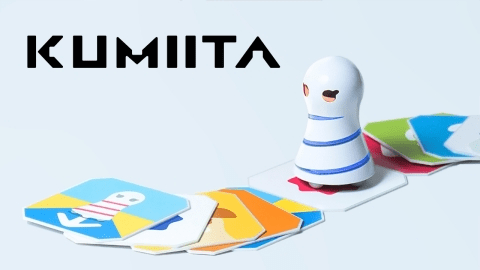
By providing a language-less and hands-on experience in the form of a puzzle game, children will be accustomed to programming from a young age. KUMIITA cultivates the basic thinking patterns and logic behind programming in children by allowing them to physically assemble command panels and see how the resulting programs are executed – and why they fail at times, as well. Failed programs can also be fixed by rearranging the panels in various ways, allowing children to figure out new solutions for themselves.

KUMIITA is played by placing down panels which the robot will roll over, following its path ahead. The robot scans each panel and executes different commands to change its color or direction, play a musical instrument, or make animal sounds.

The ICON Outlook
Through cultivating a rich culture of product development that has led us to solutions for searchable, encryption protected data systems, ICON Corp. will soon reach the 20th anniversary of our founding. The KUMIITA project represents a confluence of technical expertise and free thinking to realize the development, introduction, and furthering of new ideas under the banner of „well-being through technology“ that we have strived for since our inception.

To realize a prosperous future through technology, we have taken a stance of total integration, to include not only our programming software, but hardware products and services. And now we are venturing to build opportunities for children so that they may enjoy programming in the effort to accelerate the creation of new ideas, and value that will ultimately carry the future forward.

KUMIITA on Kickstarter
The Kickstarter campaign will run from April 20th through May 20th with a project funding goal of $30,000. For full details concerning the campaign including pledge rewards, please see our project page at https://goo.gl/MLkbjM.

PLEN Cube: The Portable Personal Assistant Robot, from PLENGoer Robotics Inc., launched on Kickstarter

PLENGoer Robotics launched a KICKSTARTER campaign to bring PLEN Cube:
The Portable Personal Assistant Robot, to the world. PLEN Cube can be your
customizable, palm-­sized companion featuring a smart camera and automation skills.
Visit PLEN Cube’s Kickstarter page to pre-­order it, meet the developers, and learn more
about the product that is changing our lives.


PLEN Cube is a portable robot that can consolidate your devices and favorite web
services;; capture moments with a smart camera that tracks your face and motions;; and
complement your life with hands-­free voice activation, and customization options.
Natsuo Akazawa, CEO at PLENGoer Robotics, explains: “Think of PLEN Cube as your
right-­hand man (in robot form). We’ve packed a lot into this playful 3-­inch powerhouse:
a powerful processor, Full-­HD camera, display, microphone array and speakers, along
with cutting-­edge software in facial recognition, speech recognition, and more.“


A HANDS-­FREE CAMERA THAT FOLLOWS YOUR MOVEMENTS

No need for a cameraperson. Simply use voice commands to take a photo or video. PLEN Cube also uses computer vision technology, and can rotate 360 degrees to follow you wherever you go. Because PLEN Cube is wifi and bluetooth-­enabled, you can instantly share photos or videos on social media.

KEEPS YOU INFORMED

PLEN Cube aggregates all your day’s essential info including the weather, schedule, reminders, social media and more.Use the PLEN Cube mobile app to connect your services. PLEN Cube will keep you informed through its display, movements, sound, or notifications to your mobile device.

ALL YOUR SERVICES AND DEVICES IN ONE PLACE

With PLEN Cube, you can control all your favorite devices via Wifi, Bluetooth and infrared.You can also connect and consolidate your social media, including Facebook,Instagram, and Twitter.

CUSTOMIZE TO YOUR LIFE -­ FROM MORNING TO NIGHT

Anyone can customize the PLEN Cube using IFTTT, a web-­based automation service that allows you to create chains of actions with your favorite web services. PLEN Cube can do everything else a personal assistant bot can do, and also expands the number of triggers (inputs) and actions (outputs) you can use. Advanced developers can access our open API and take customization to the next level. We’ll also launch a community forum where users can share ideas and collaborate, and PLENGoer can provide further developer information.

Specs:

  • Size: 75mm x75mm x75mm / Weight: 500g (1.1 lbs).
  • Intel Joule 570x
  • WiFi, Bluetooth
  • 320×240 LCD – full color
  • Full HD Camera – with stop motion, panoramic, and face and actiontracking
  • Microphone x2 – to locate sound source
  • Electromagnetic field-based sensor – detects hand presence and motion.
  • Program different gestures to activate certain application actions
  • Speakers – full range drivers, woofers and tweeters from GoerTek, a leaderin the global miniature electro-acoustic industry
  • Infrared home appliance control – through a partnership with Crossdoor
  • Motors – for PLEN Cube’s expressive movement
  • Linux OS
  • Robot Operating System (ROS)
  • Voice recognition software (we’re currently evaluating the best option for this)

About PLENGoer Robotics Inc.

Founded in 2016, PLENGoer Robotics Inc. develops personal service robots to achieve a richer quality of life. With the robot development technology our parent PLEN Project Company has cultivated thus far, and production technology of GoerTek group, we aim to develop unprecedented and truly functional service robots. PLENGoer Robotics will be an innovation platform for service robots.
Facebook:  http://www.facebook.com/plengoer/

WiSoccero, The Soccer Player Robot

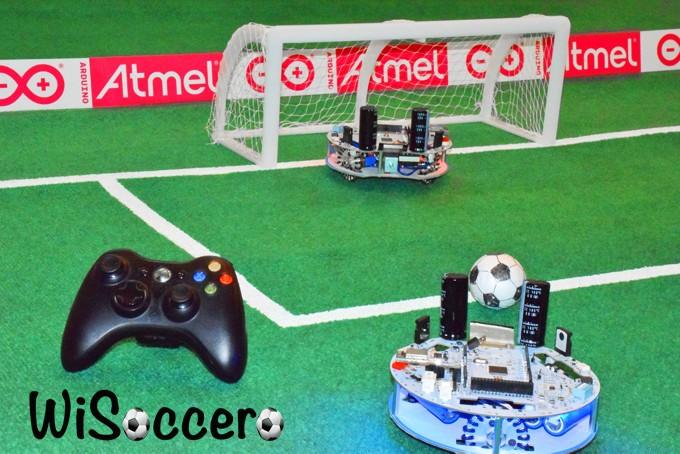
WiSoccero is designed to take advantage of the exciting art of robotics by removing all the struggles involved and also adding a little more fun. It makes entering the world of Robotics as easy as possible. It begins by just playing with friends and travels to incredible areas like learning about robots and even developing amazing robotic projects.

WiSoccero is agile and versatile. Unlike traditional RC Cars, it can move in any direction without any hesitation. It employs a special wheel arrangement and omnidirectional wheels which gives it more freedom in maneuvering.In order to take advantage of this flexibility, the pack includes a customized DIY joystick kit that gives complete control of all its various features and capabilities over WiFi.

This soccer player robot is capable of kicking and passing the ball. It utilizes an electromechanical part (solenoid) and the necessary electrical drivers. This system is capable of kicking the ball with different level of force that can be controlled effortlessly.

WiSoccero needs to be powered by 3 Li-ion 18650 cylindrical rechargeable batteries (at least 2200 mAh in capacity) that under normal condition lasts for about 2 hours.

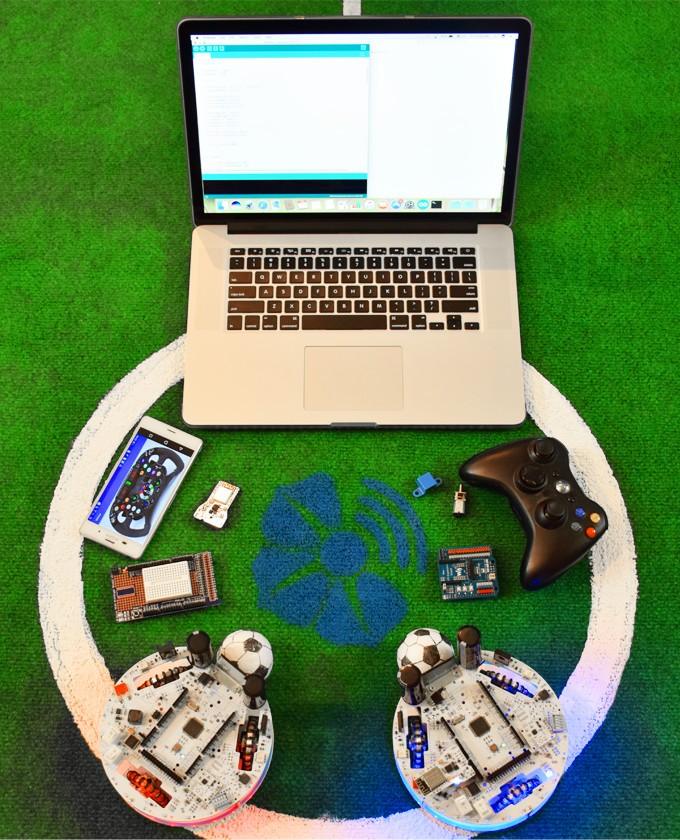
WiSoccero is based on ATmega2560 core and it has all standard Arduino Mega Headers. Also it’s equipped with WiLoader for WiFi programming and communication.

It also comes with a lot of great components for hobbyist and developers like three DC motor drivers, Gyroscope (for orientation setting), DIP switch, buzzer, two LED Strings, two configurable buttons, power and protection circuit, two rocker switches for turning circuit and motors on/off separately, isolated voltage booster circuit and power transistors  for kicker mechanism.

WiSoccero is truly developer friendly. Thanks to its Arduino compatible headers and component placement, its possible to use any Arduino Mega shield such as distance sensor shield for obstacle avoidance, camera shields for autonomous operations and much more. Also you can use all these amazing shields while playing soccer. It’s truly fun!

WiSoccero Kickstarter campaign starts on February 8 for a period of 30 days by PetuniaTech. It offers special discount for the first day only. The final products will be available on June 2017. Click here to view more on WiSoccero Kickstarter campaign.

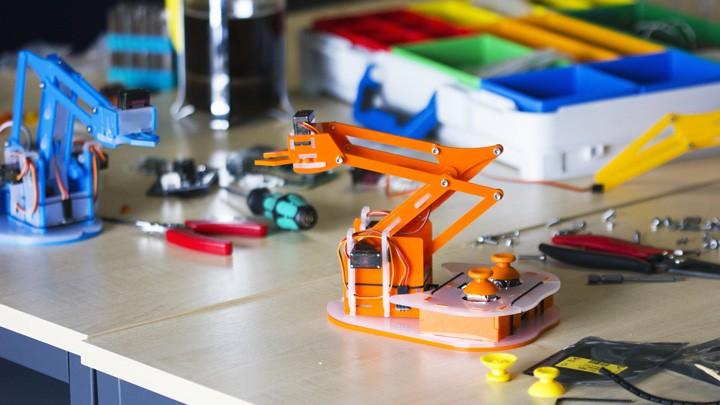
MeArm Pi by Mime Industries now on Kickstarter

Mime Industries launched their latest product on Kickstarter; a Raspberry Pi powered robot arm kit that’s simple enough for kids to build.

Ben Pirt from Mime Industries said “we believe in helping children to have fun whilst learning about technology and the MeArm Pi is completely designed around that goal”. Based on the original MeArm, which was launched on Kickstarter in 2014, this version has seen a complete re-working in order to make it much simpler for children to build.

The kit integrates smoothly with the Raspberry Pi, the ubiquitous educational computing platform, using a HAT (a plug-on board that fits on the computer) with on-board joysticks for control. Because of the large ecosystem of programming language support for the Raspberry Pi it is also possible to program the movements of the arm using a wide range of popular programming languages.

Mime Industries enables people to learn through play and exploration of technology. Their groundbreaking build-it-yourself kits have inspired children and adults to break through their own barriers and learn to build and code whilst having fun. Their products are simple to build and can be easily understood. Meaning you can use them to learn whilst playing, adding your own imagination to make something great.

Link to the Kickstarter Page

Hanson Robotics Launches Kickstarter Campaign for Professor Einstein, an Expressive Robot that Teaches Science

A scientific legend brought back to life

https://www.kickstarter.com/projects/1240047277/professor-einstein-your-personal-genius

Hong Kong (PRWEB) January 23, 2017 — Today Hanson Robotics launched a Kickstarter campaign for an uncannily human-like robot version of Albert Einstein. The company aims to honor the iconic and imaginative scientist and bring fully expressive robots direct to consumers.

Professor Einstein is a 14.5” personal robot with the ability to walk, hold a natural conversation, learn your name, maintain eye contact, answer questions, entertain and teach science. He’s cloud and Wifi connected, allowing for dynamic interaction with a tablet and the corresponding Stein-O-Matic app to learn and play games.

The robot guides users through the world of science and beyond by presenting interactive lessons, eye-popping slideshows, daily mental kick starts, thought experiments, jokes, brain games and more. With new activities added to the Stein-O-Matic every day, Professor Einstein’s robust reward system allows users to earn IQ points, which can be used to unlock special items, bonus games and avatar upgrades.

The idea for Professor Einstein was born out of toy inventor Andy Rifkin’s lifelong fascination with all things Einstein, and the values he stood for. Hanson Robotics founder and CEO Dr. David Hanson approached Andy about teaming up to create a robot, which led to the formation of a unique shared vision. Rifkin was invited to join as Hanson Robotics’ Chief Technology Officer and the robot was developed under the Hanson Robotics umbrella.

“Professor Einstein has an adaptive learning ability, which means that if you don’t understand something, he will modify the way he presents the information,” said Rifkin. “He has infinite patience. He will keep trying different ways of explaining things until it “clicks” for you. Plus, because he teaches through jokes, metaphors, and games, he makes learning genuinely fun.”

“It was crucial for us that Professor Einstein would embody a sense of playfulness and wonder,” said Hanson. “He had to inspire imagination, be a great conversationalist, and make the gestures and facial expressions that the real Albert Einstein was known for.”

The Professor Einstein Kickstarter campaign runs from January 23 – February 27, 2017. Early bird pricing starts at $249 USD. For a full rundown of the pledge levels visit the Kickstarter page.