Im Robots-Blog Interview gibt fischertechnik Geschäftsführer Martin Rogler einen kompakten Einblick in die aktuellen Robotik-Neuheiten und zeigt, welche Funktionen, Ideen und Einsatzmöglichkeiten hinter den neuen Modellen stecken. Dabei geht es um praxisnahe Anwendungen, spannende Lern- und Tüftel-Potenziale sowie darum, wie fischertechnik Robotik für Schule, Hobby und Technikfans weiterdenkt. Das Interview liefert einen schnellen Überblick über die Highlights und macht neugierig auf die neuesten Entwicklungen rund um fischertechnik und Robotik.
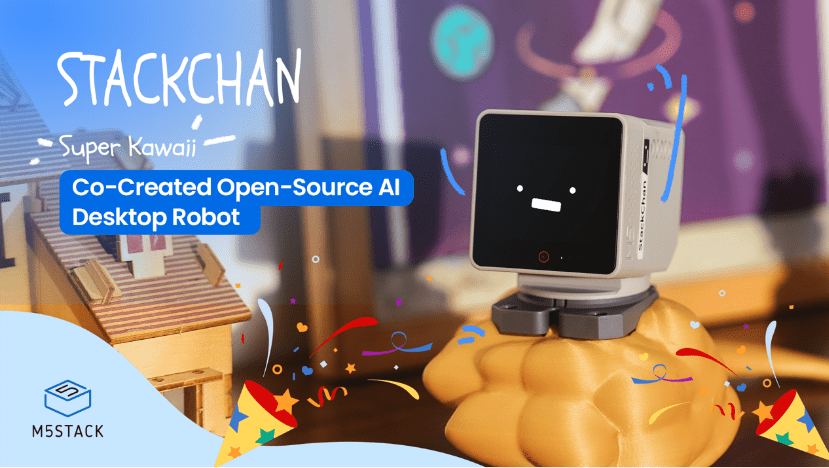
January, 2026 — M5Stack, a global leader in modular IoT and embedded development platforms, today launched StackChan, the first community-co-created open-source AI desktop robot, built on a proven ESP32 platform and designed to be endlessly hackable by makers worldwide.
Unlike closed, concept-driven AI robots, StackChan exposes its hardware, firmware, and interaction logic from day one — turning a playful desktop companion into a real development platform.
StackChan is now live on Kickstarter with a $65 Super Early Bird offer available for the first 72 hours.
From Community to the Globe: How StackChan Was Born
Before its official launch by M5Stack, StackChan had already existed as a community-driven project since 2021. Built on M5Stack standard controller, Core series, it began as a personal open-source project by maker Shinya Ishikawa, sustained and shaped through ongoing community contributions.
As more enthusiasts joined the project, contributors like Takao, who helped popularize the DIY kits, and Robo8080, who introduced AI capabilities, played key roles in expanding StackChan beyond its original form.
Inspired by StackChan’s expandability and creative potential, M5Stack officially brought the project to life as its first ready-to-play yet endlessly hackable desktop robot—while keeping its community-driven spirit at the core.
What Remains: Core Computing & Interaction Capabilities
As with the original version,StackChan continues to use the M5Stack flagship Core Series (CoreS3) as its main controller. CoreS3 is powered by an ESP32-S3 SoC with a 240 MHz dual-core processor, 16 MB Flash, and 8 MB PSRAM, and supports both Wi-Fi and BLE connectivity.
To enable richer interactions, the main unit integrates a 2.0-inch capacitive touch display, a 0.3 MP camera, a proximity sensor, a 9-axis IMU (accelerometer + gyroscope + magnetometer). It also includes a microSD card slot, a 1W speaker, dual microphones, and power/reset buttons. Together, these hardware components form a solid foundation for StackChan’s audio-visual interactive experiences.
What’s New: Ready-to-Play Functions Powered by Advanced Hardware
For the robot body, several advancements have been made to make it easier to get hands-on and improve the out-of-box experience. It features:
Power & connectivity: A USB-C interface for both power and data, paired with a built-in 700 mAh battery.
Movement system: 2 feedback servos supporting 360° continuous rotation on the horizontal axis and 90° vertical tilt—enabling expressive movements with real-time position feedback.
Visual feedback: 2 rows totaling 12 RGB LEDs for expressive system and interaction feedback.
Sensors & interaction: Infrared transmission and reception, a three-zone touch panel, and a full-featured NFC module enabling touch- and identity-based interactions.
On the software side, StackChan is ready-to-play for starters with no coding required. The pre-installed factory firmware delivers:
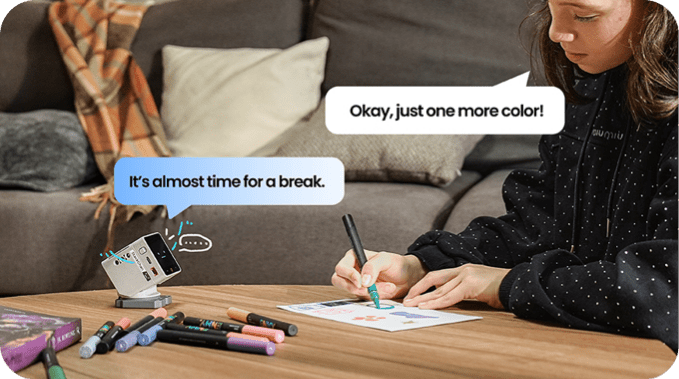
Expressive faces and motions: Preloaded with vivid facial expressions and coordinated movements that bring personality and liveliness to StackChan.
Built-in AI agent: Integrates an AI agent for natural voice-based interaction and conversational experiences.
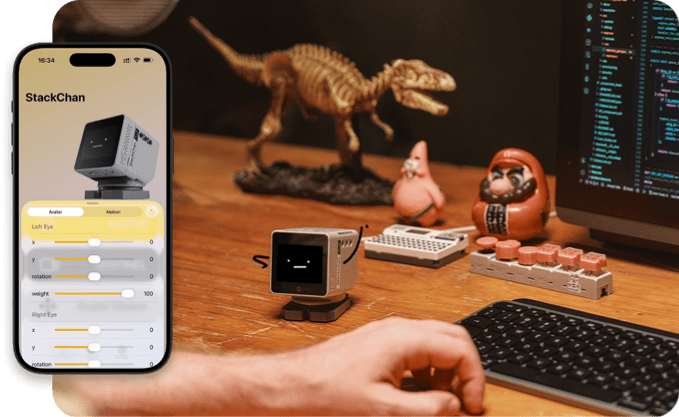
App-based remote interaction: Supports official iOS app for video calls, remote avatar control, and real-time interaction with StackChan.
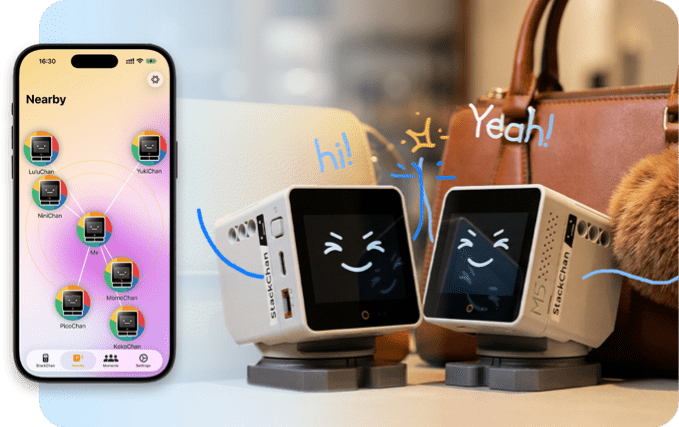
Chan-to-Chan Friends Map: Enables discovery of nearby StackChan devices, unlocking playful multi-device and social interaction scenarios.
Open for customization: While beginner-friendly by default, the firmware supports further development via Arduino and UiFlow2, making it easy to create custom applications.
100% Open-Source: Built to Be Customized and Extended
In an era filled with closed, concept-driven “AI robot” products, StackChan stands out with its open-source core. From firmware and hardware interfaces to development tools, every layer is designed to be explored, modified, and extended by users.
Beyond code, StackChan also encourages physical customization. With 3D printing and creative accessories, users can personalize their StackChan’s appearance and turn it into a unique desktop companion.
Fun with Global Community: Share, Extend, and Evolve Together
Since its birth, StackChan has grown into a vibrant global community of makers, developers, and enthusiasts. From sharing projects and source code online to hosting meetups and anniversary events offline, the community continues to expand what StackChan can be.
Owning a StackChan is not just about building a robot—it’s about being part of an open ecosystem where ideas and creativity evolve together.
StackChan is not built to its end at launch. It is built to grow—through open technology, creative experimentation, and a global community that continues to redefine what a desktop robot can be.
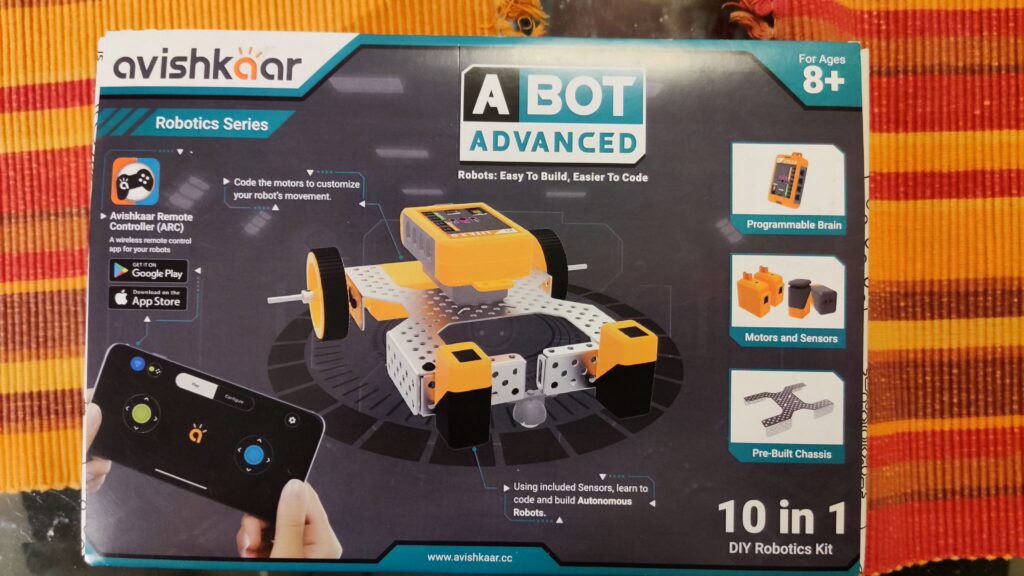
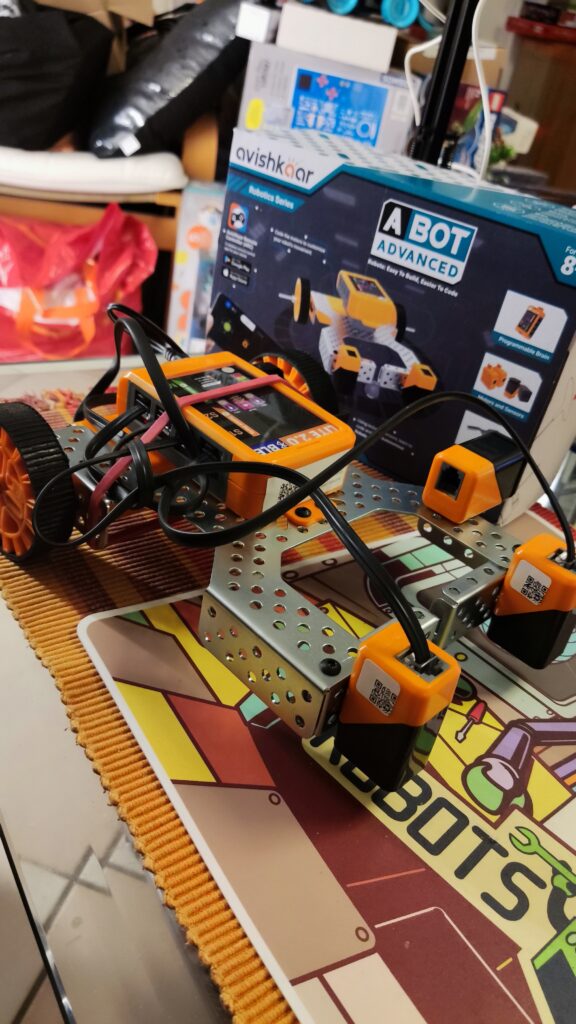
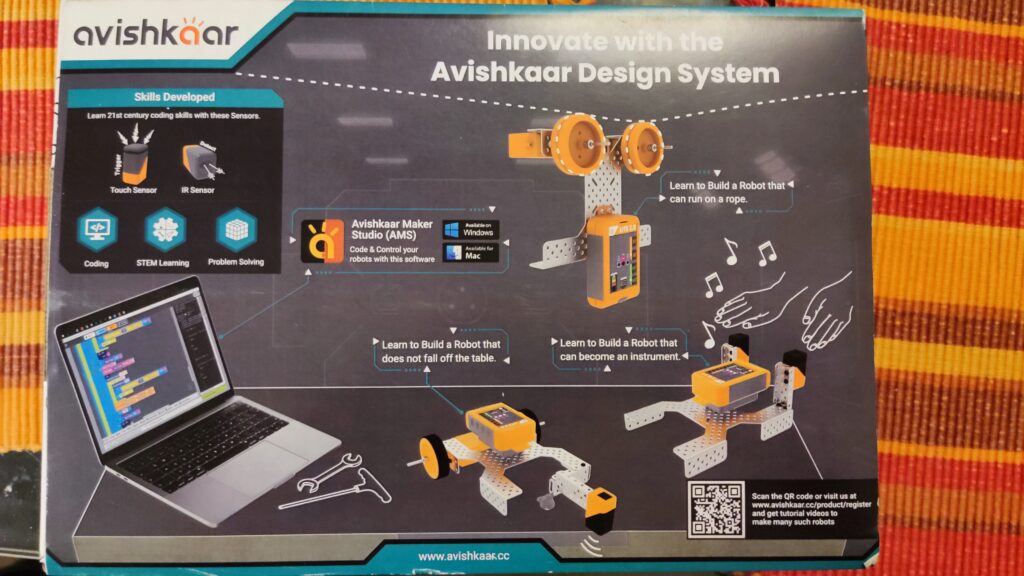
The Avishkaar ABot Advanced Kit is a comprehensive DIY kit for STEM robotics and coding designed specifically for children aged 8 and up. It contains over 60 parts, including metal parts, motors, sensors, wheels, USB cables, screws, nuts, an Allen wrench, and a wrench. With these parts, children can build 10 different robots, from simple vehicles to more complex constructions The set reminded me of the mBot when I set it up, as it was also based on a sturdy metal construction. The included stickers and the tool are nice. The instructions were easy to understand and I didn’t find any errors or had any problems assembling. The app for remote control and programming must be activated with the product code and the user must be registered before using it for the first time. When deploying, e.g. in the classroom, you should have done this in advance. By the way, the 9V block battery visible in the video is not included when purchased from a dealer, but a full-fledged battery pack. I only use the 9V battery because of delivery problems. Overall, however, it is interesting that the robot makes this possible at all. I’m playing with the idea of connecting a solar cell here and operating the robot with solar energy…like a real Mars rover…
Here is more detailed information:
Easy to build programmable robots: With this kit, kids can create 10 different robots with over 60 pieces. This includes metal parts, an easily programmable brain, motors, sensors (2x light sensor, 1x touch sensor/button), wheels, USB cables, screws, nuts, an Allen key, a wrench, cables, and instructions.
Control via mobile app: The robots can be controlled via a remote control app. They can also be programmed using a visual block-based programming environment (similar to Scratch/Blockly).
Learning Objectives: With the ABot Advanced Kit, children learn robotics, programming, construction, mechanical design and problem solving.
Compatibility: The mobile app is compatible with iOS 11 or later and Android 10 or later.
Inexpensive Kit: The ABot Advanced Kit offers a sturdy metal frame to which motors and sensors can be attached. For the equivalent of about 60€, the set offers good value for money. Maybe the set will soon be available at a German retailer.
You can find a comprehensive assembly video of one of the 10 robot models here: